


If you’re under the age of say 50, you’ve probably never heard of William K. Porter, a former managing editor of the Barre-Montpelier Times Argus. Outside of the journalists and editors who worked for Vermont newspapers and wire services in the 1970s and 1980s, or those who wore a political hat and roamed the echelons of state government, Porter’s was not a household name.
But his death early Friday morning, at the age of 81 at his home atop a hill in the village of Adamant, was deeply felt in the small, tight-knit and intensely competitive cohort of reporters and editors who worked in the heydays of Vermont print journalism. He was a beloved editor and lifelong friend to those who worked with, and for, him. Porter’s outsize personality and fierce devotion to fearless reporting, no matter whose ox was gored, were legendary, and he stood for the public’s right to know and for holding public officials accountable.
But beyond that, it is no exaggeration to say that Bill Porter, in a way, embodied an era and zeitgeist in how Vermonters understood their world and got their news, one that is almost incomprehensible today.
Today, news arrives in a daily tsunami unfettered by deadlines or schedules. Not so in 1970.
Let’s set the scene: No cellphones, no internet, no instantaneous news dissemination, no Google or searchable databases, no cellphone videos to post, no fingertip swiping to find out almost anything, no Siri or Alexa or browsing distant archives on a screen. No Twitter to let us know a politician’s position or comments, no texting top state officials to get their views, not even email. No TikTok or memes on news either.
Press releases came by snail mail via the U.S. Post Office. Or someone dialed and hoped to get an answer (this was before even answering machines or voicemail).
Yes, it was the Dark Ages, when you think about it.
Into this era sauntered William K. Porter, a tall, wickedly handsome Alabaman with a mumbling drawl and an unlikely landing spot, first as a reporter and then editor at the Rutland Herald starting in 1964, and then in 1973 as managing editor of its smaller sister paper, the Barre-Montpelier Times Argus. Both were family papers then owned by Robert Mitchell and they fought like hell every day to beat the archrival Burlington Free Press in breaking state news. Together with equally competitive journalists at The Associated Press and United Press International capital bureaus, if it happened in Vermont, this was how you would find out.
For a decade, Porter ran the Times-Argus, turning it into a feisty news source in the heady post-Watergate era, when highly talented people were eager to work for peanuts in service of the First Amendment and the fleeting glory of a byline on a leading story. Unlike his famed and legendary editor compatriot leading the Rutland Herald, Kendall Wild, Porter was a behind-the-scenes guy, preferring to pull strings, not lead a charge.
Some editors are screamers, some are cerebral, some cordon themselves from the daily fray in corner offices. Bill Porter loved the newsroom fray and interplay. He sat at a key desk in the newsroom, facing all his reporters, peering over his typewriter, with an intense and infamous stare that scared reporters to meet their deadlines or get the story. It turned out to be a useful facade.
Porter’s gifts were many, prominently a deep kindness and open nature that meant he was willing to talk to anybody. And he did, since this was back in the day when anyone could enter the paper’s headquarters and walk up to speak with an editor or reporter. It was always entertaining, and sometimes loud. It was never scary.
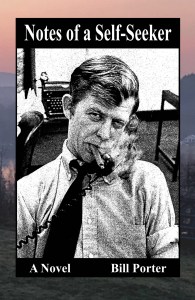
Another gift was that in an era in which contacts were gold, and history and context were valuable currency, and having someone’s number was the bomb, Porter had no equal. Somehow he knew whom to call, whom to ask for comments, the backstory, the future story, the possible fallout, all the leads a reporter needed. He never wanted credit; he just wanted the story.
As Steve Terry, who served stints as Rutland Herald editor and with Porter undertook the herculean race of starting up a joint Sunday newspaper to beat the Free Press’ own plans, noted in an email, “Bill was a very competitive newspaperman. Nothing was more satisfying to him than to beat the competition. After a victory, he would lead the celebration with much beer and cigars. He instilled this spirit in all — or most of — his reporters.”
According to Terry, “The result was that in the mid-’70s, these two newspapers really covered Vermont, its people, its politics and the issues.”
Terry, who at one point worked for Sen. George Aiken, R-Vt., in D.C., later worked at Green Mountain Power as director of corporate relations, where he was joined by Porter after the latter’s stint as editor. Truth was, many fine journalists eventually bailed or left Vermont when they realized raising a family on Vermont newspaper pay was like expecting lush fertile soil to turn up on a Northeast Kingdom hillside. Porter was no different. What was different is that anyone who worked for him never forgot him.
I was one of those lucky enough to land at the Times-Argus in those days, holding a fancy degree from Columbia Journalism School, an affinity for the rural state and the prevalent back-to-the-land ethic. I was absolutely clueless about practical daily journalism. That made me perfect for Porter’s molding and banter.
I walked in cold one day in August 1974 and started the next week. Soon Porter was shouting across the newsroom, using one’s last name as was his wont.
“Nemethy, you know how to spell ‘separate’?”
Meeting my mumbled response or apology, he’d say: “Didn’t think so.”
I quickly learned how to spell. There was no room for overly sensitive journalists back then or not catching on. (Longtime Times-Argus and Herald cartoonist Jeff Danziger viewed Porter’s penchant for last-name calling as a badge of affection.)
What there was room for was shared passion, eclectic characters and backgrounds, and a rambunctious joy of physically being in a newsroom with smart, funny, opinionated and verbal people, day in and out. Porter’s was the archetypal movie newsroom with teetering piles of files and papers, cigarette smoke (Porter thankfully gave up cigars and eventually cigarettes, as well), hilarity and joshing, infused with deadline angst.
How much they loved the newsroom atmosphere is usually the first thing anyone who worked there mentions. Bill Porter was a gravitational force that captured and held us all in the orbit of his unique personality.
And not just at work. He threw epic bashes at his home in winter and summer, and TA and Herald staffers, current and past (many who landed at prestigious national media), returned from far-flung locales, like alumni returning to their alma mater. They brought later degrees and professions with them and an abiding affection for a man whose spacious porch was always available for advanced chewing of the fat, usually with a cold can in hand.
“Those years were the best time of my life,” says Amanda Sessell Legare, who was one of many women Porter hired as a reporter and as a photographer, marking another way in which he stood out. Back then, the news corps was almost all male. Porter quickly changed that. Legare is known now for the big produce farm she ran with Merrill Legare in Calais and the nursery she now runs in Cabot.
Chris Chinlund showed up on her motorbike wearing leathers and carrying her helmet in hand to apply for a daily reporting job, she recalls, “for which I was clearly not qualified.”
“I informed him that the Burlington Free Press (which had in fact published a couple of stories of mine) had just offered me $10,000 a year to create a bureau in Washington County, where I had previously worked as a VISTA volunteer. Porter listened to me, paused, and then said he would offer me a job — but at half the pay the Free Press offered. I said that would be fine. The scrappy TA was my kind of paper. I started the next day, and never looked back. It was probably the luckiest day of my life,” she wrote via email.
Chinlund went on to hold numerous positions for The Boston Globe, including reporting for its famed Spotlight team and eventually rising to become managing editor.
Reporter Bob Sherman began by covering Stowe and Waterbury, showing up to work in shorts and dashiki-type shirts and sandals. It was the ’70s, and what you wore didn’t matter. What you wrote is all that counted.
He later went on to wear suits and founded Kimbell and Sherman as a groundbreaking lobbying and PR firm in Montpelier.
Marialisa Calta, another Columbia Journalism School grad, was hired in 1977 to cover doings in Plainfield and Marshfield and today marvels at the endless procession of evening meetings required for her reporting job, and the “granular” nature of the commitment to reporting news, from road grader decisions to sewer pipes and selectboard squabbles. Like others, she eventually fled for greener income pastures, working at the Providence Journal before returning to live in Calais and a long, very successful freelance career working for national newspapers and also writing and publishing about food.
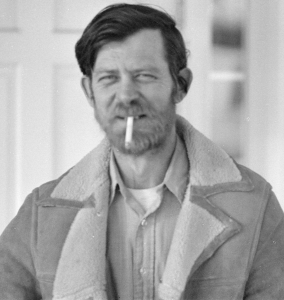
During the 1970s, incredibly, the Times Argus had eight news reporters, plus some stringers, and the three state reporters who worked for the Vermont Press Bureau in Montpelier, jointly run by the two papers. It is hard to comprehend in the diminished circumstances of daily papers, but the Times Argus aspired to cover basically every town and school district in Washington County, as well as the Stowe resort area in Lamoille County.
Somehow, with ancient typewriters on cheap sheets of paper, all those local stories got written, edited by hand, headlined and punched onto tape and then turned into type to run off the press. It all seems a wonder today. Porter was the head magician.
Most editors live, eat and stew in their jobs, but not Bill Porter. He had a whole separate life — as a farmer, tending an ever-changing menagerie of cows, pigs and lambs, horses and chickens, tended with his wife, Ruth, all while raising four kids.
Many editors head home or out for a beer after deadline. Porter went home and did chores (probably with a beer). It was a life afforded by the fact the Times Argus in those days was an afternoon paper and he could head home in early afternoon after deadlines. A wag might suggest shoveling animal deposits was what made him so good at digging for the news the politicians and cops and lawyers didn’t want you to find. I like to think he was literally and figuratively so well grounded because of his hillside farmstead and rambling assemblage of barns and outbuildings and all the animals that gave him pleasure (and food).
Sadly, especially for someone so vital and with an encyclopedic memory, Bill Porter’s last few years were diminished by dementia. But even when short-term memory was gone, he still went out to do chores. And the humor and smile that was quintessential to his personality could emerge at times.
A couple of weeks ago, Terry finally made a journey through the muddy quagmires of Bill’s back road to visit his longtime friend one last time. Told Terry was coming to visit, Bill replied, “Is he coming to see me die? And you better have a beer ready!”
Said Terry, “As we know, this captures Bill’s humor and always his blunt reality.”
Andrew Nemethy lives in Calais, within walking distance of the Porter homestead and his longtime neighbor.
Correction: An earlier version of this story misstated the day of Porter’s death.

