


Lauren Culler spent 10 years watching the Greenland landscape change firsthand, until the pandemic abruptly halted the Dartmouth College professor’s in-person research.
Plans for her team to go back there in 2020 faded into the realization that the pandemic would continue indefinitely. Because of Covid-19, “it’s hard to almost imagine what the future could hold for research, given all the disruptions,” Culler said.
Culler hasn’t been back to the Nordic island since the pandemic closed borders. Instead, she had a child, published research she had earlier shelved, and helped adapt Dartmouth’s Institute of Arctic Studies to operating without access to the field sites.
Traveling to do Arctic research was already complex, frequently taking a year in advance to plan, she said, but the pandemic compounded the problem. On the other hand, “it was really nice to have a chance to kind of take a step back and really focus on getting some more of my work published,” she said.
V. Ernesto Méndez, a University of Vermont professor and co-director of the Agroecology and Livelihoods Collaborative, whose team is working in a number of countries in Central and South America, found his group unable to travel to work with local partners and research subjects because of Covid travel restrictions.
Méndez said his group “studies agroecology as an approach to research and transform our current food systems and agricultural practices, particularly those linked to Indigenous knowledge systems and local knowledge, to create ones that are ecologically sound and socially just.”
The group experienced significant Wi-Fi connection issues with one of its projects in southern Mexico, where it was working with a coffee-growing collaborative.
While one of his postdoctoral students is able to visit research sites in Mexico because she has Mexican citizenship, the majority of his graduate students and postdocs have been forced to do their research virtually, troubleshooting their way through bad Wi-Fi connections or collaborating with local partners.
“You do the best you can and it’s worked so far. But many times, four people here get together to talk to someone down there (in Mexico), their internet doesn’t work, (and) we just have to reschedule,” Méndez said.
However, Rachel Joo, a professor of American studies at Middlebury College who studies golf within South Korean and Korean American communities, said she found herself in New Zealand, able to do international research throughout 2020 and 2021.
She had taken a research leave for 2020 that couldn’t be delayed and was trying to figure out a plan to homeschool her children after Covid locked everything down. With their original visa denied, it was unclear what the next year of her family’s lives would look like, until another visa was approved through her husband, a doctor who in preparation for her research leave was already working in the island country.
In August 2020, Joo moved to live the academic year in a practically Covid-free Wellington, which, during the pandemic, felt “like being on a lifeboat while everyone else is sinking. … The only restrictions that we had were … we had to wear masks when we were on a plane, and that was it,” she said.
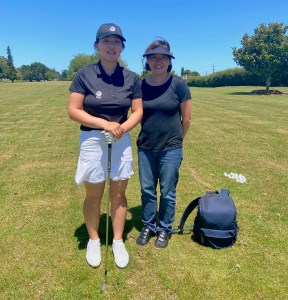
Her family loved their experience, she said. Her husband didn’t see a single Covid case while he worked there as a doctor, and her children attended a K-7 grade school in person throughout 2020 and 2021.
“It was just an amazing time. I mean, it was great to do research, but also just for our lives. It was this fantasy year,” Joo said. “My children just loved being in New Zealand; it was just (a) great (play-based) school. There were no real classrooms; everyone just had this open space.”
Although Joo didn’t have access to international travel research funds until her return trip in the middle of the fall semester in 2021, luckily golf is not expensive, she said.
“I was able to do all of the research I wanted, and the only odd thing was that some of the players I was following were not able to leave the country to do international tournaments, because most of them were canceled. So they were playing each other.”
But the pandemic did make it more difficult to do fieldwork in countries with authoritarian leaders, she said.
“At least in my field — anthropology — a lot of doors have been closed for doing international research due to geopolitics,” Joo said. “So I think the pandemic was just like, the biggest reason why people couldn’t go to China, for instance. But everyone I know who did work in China is no longer doing that work.”
While Culler and Méndez hope fieldwork can continue, the future of their research has become more uncertain. Culler doesn’t know what field sites will look like when she returns to Greenland, which she hopes to do this summer.
“I do expect that things have changed and I also am curious how my perspective will change, having gone from every year to this longer stretch of time,” she said.
“Over maybe the next five to 10 years, I suspect that, you know, people won’t have access to the data that they need to even write a good proposal, or they won’t have had a chance to make those connections,” Culler said.
A big part of international work has depended on the ability of researchers like herself to travel and make important connections. “And we haven’t been able to do that for a couple of years,” she said.
Méndez is also concerned with the pandemic’s impact on the local connections researchers make in foreign places. “The human connections with our partners is probably what has suffered the most,” he said.
But given the cost of travel and the carbon emissions associated with those trips, Culler hopes fewer researchers will be going on Arctic fieldwork trips, with more collaboration through Zoom and other technologies.
Getting community members and local researchers to help collect data, especially when one can’t be there, is a possible way forward and “could really reshape how research is done,” Culler said.

