Picture this, Barbara Ann Cochran heard the NBC producer say late one night last month: a split-screen shot of the Vermont mother who scored Olympic gold 50 years ago congratulating son Ryan Cochran-Siegle just after he won silver half a world away.
The 71-year-old champion envisioned something else.
Days earlier, Barbara Ann had tried to fly to the network’s star-spangled 2022 Winter Games watch party in Park City, Utah, only to see a nor’easter cancel her plans. Then family and friends gathered for a home-state viewing, where they witnessed high winds in Beijing scratch the opening downhill race.
As the sun rose on Ryan atop the super-G course two days later, the moon and his mother’s laptop were seemingly the only lights shining past midnight back home.
Barbara Ann watched as her son finished an exhilarating yet excruciating 0.04 of a second behind the defending men’s gold medalist.
“I was screaming like I was on the side of the course,” she recalls.
That’s when NBC rang with the request to go live to what it hoped was a telegenic tableau of Vermonters spilling onto the streets as they collectively hugged and cried for their hometown hero.
Barbara Ann eyed herself alone in her bedroom.
“It was just me in my pajamas,” she recalls with a laugh, knowing the reality behind the veneer of Olympic hype often leads to a rude awakening.
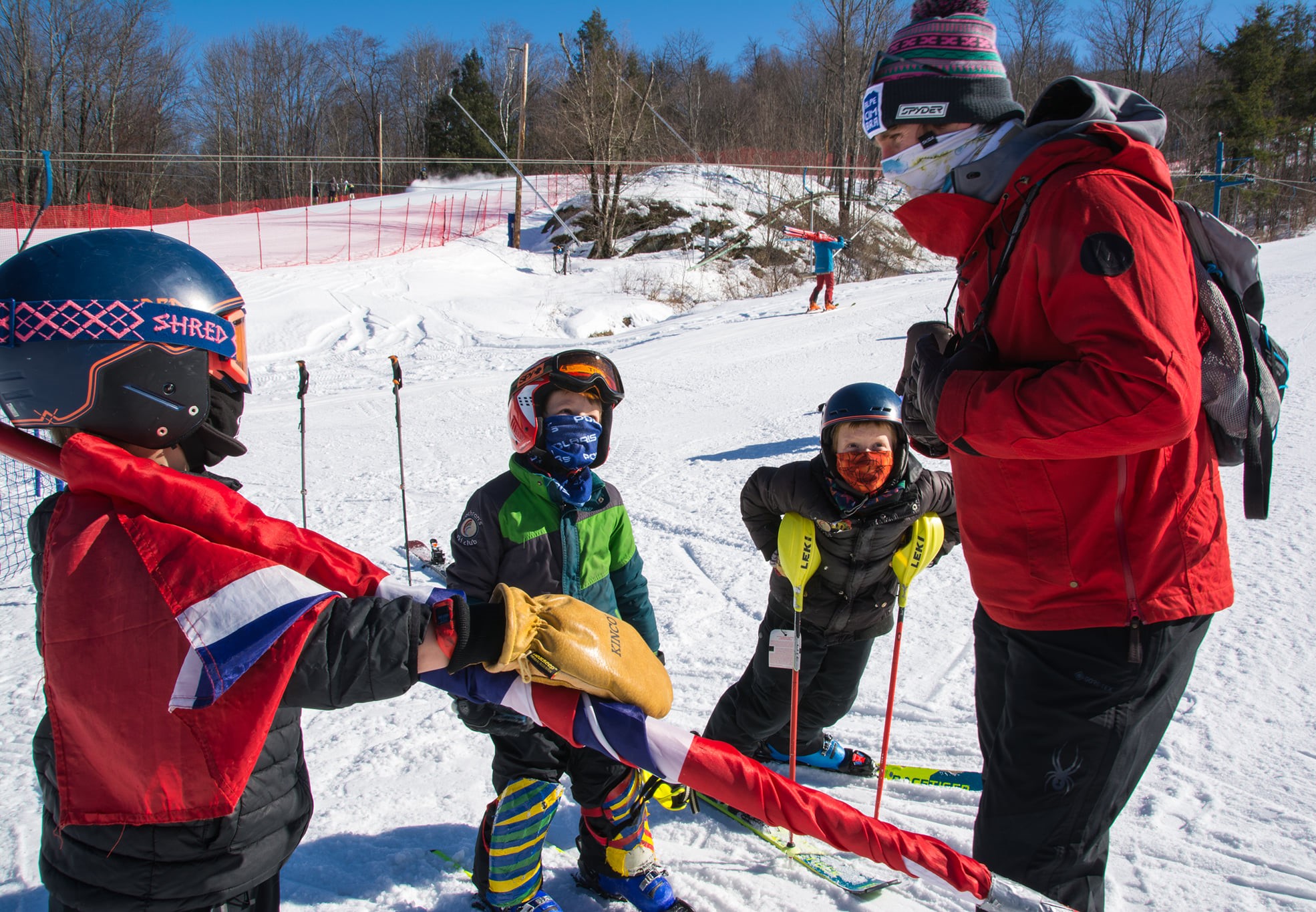
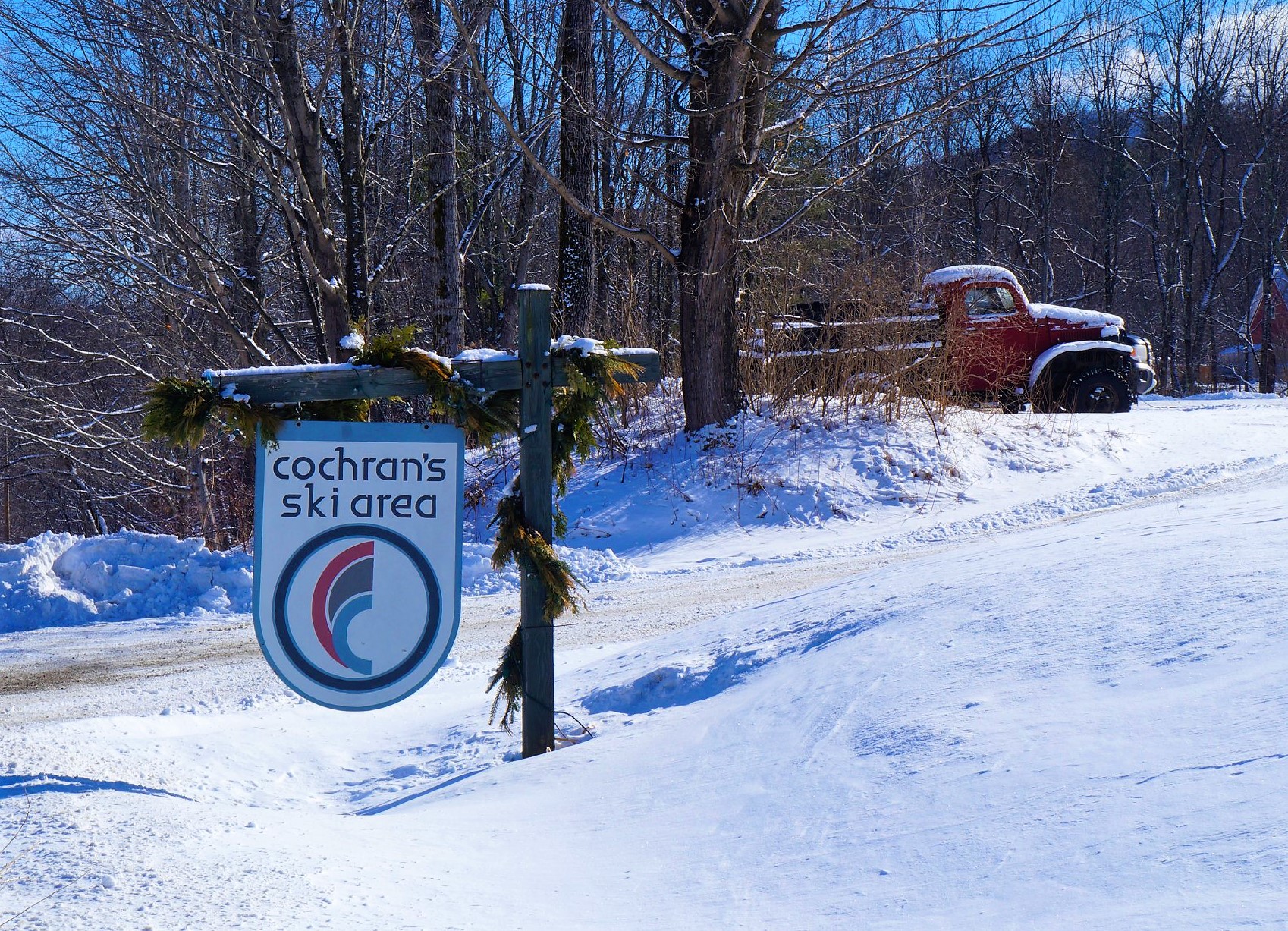
Tune into CNN after Ryan returned, for example, and you saw mother and son together via satellite at the base of Cochran’s Ski Area, the four-generation Richmond training ground where the family’s newest flagbearer had recuperated last winter after breaking his neck in a competition crash.
“The media grabbed on to this,” Barbara Ann says of her son’s medal, “not only because of his neck but also it was 50 years since I won.”
Remembering her 1972 victory, she knows the full story isn’t as simple.
“When people found out that I won a gold medal and my family owned a ski area, they just assumed I was massively rich,” she says. “And the thing is, I wasn’t.”
And still isn’t. Barbara Ann can tell stories about single-handedly raising Ryan and his sister “paycheck to paycheck” while juggling jobs teaching physical education and home economics.
Cochran’s Ski Area, for its part, is the nation’s first nonprofit slope, offering free tickets to its youngest and oldest patrons and charging no more than $19 to everyone else. But that’s a challenge when climate-change necessities like a 500-gallons-a-minute snowmaking system add up to an annual budget of nearly $500,000.
“We depend on fundraisers to keep going,” Barbara Ann says.
And so she’s revealing the rest of the story in advance of the ski area’s coming “Rope-a-thon,” an annual make-or-break moment for one of the state’s most prolific Olympic launch pads.

‘A hill so we could train after school’
Cochran’s Ski Area began unwittingly in the fall of 1960 when Barbara Ann’s parents bought a small Richmond house with a big hilly backyard.
Some families might have installed a swing set. Gordon “Mickey” Cochran, a mechanical engineer, instead planted some poles, fastened a few pulleys and strung up some rope. Neighbors thinking it was a clothesline reeled when he hooked up a tractor engine and set the contraption spinning.
“Dad bought the property to put in a rope tow, but he had no idea what he was starting,” Barbara Ann says. “It was never about making the Olympic team. He just believed for us to do the best we could, we needed to ski more than just weekends. His idea was to have a hill so we could train after school.”
As her father hewed saplings into racing gates and hammered floodlights onto trees, a school-age Barbara Ann and her three siblings finished their homework early on wintry Tuesdays and Thursdays, ate supper and skied until 10 p.m.
“He wanted it to be fun for us, but he wanted us to learn life lessons as well,” she recalls. “He wanted us to realize that in order to get better at something, you needed to work hard and pay attention to the details.”
Schoolmates and fellow skiers traveled 15 miles from Burlington or 30 miles from Montpelier with donations of gas for the rope tow. The slope, in turn, fueled success. The U.S. Ski Team welcomed Barbara Ann and older sister Marilyn in 1967, younger brother Bobby the next year and younger sister Lindy in 1970.
Three of the four Cochrans qualified to compete at the 1972 Winter Olympics in Sapporo, Japan. There, a 21-year-old Barbara Ann won the slalom to become the third U.S. female alpine skier ever to snag gold.
One of the first, fellow Vermonter Andrea Mead Lawrence, landed on the cover of Time magazine in 1952. The ninth and latest, Burke Mountain Academy-trained Mikaela Shiffrin, signed more than $3 million in sponsorship deals after her wins in 2014 and 2018.
Barbara Ann, in contrast, graduated from the University of Vermont and took a less glossy job. Make that jobs. Weekdays she taught at Mount Abraham Union High School in Bristol. Weekends she instructed a new generation of downhill upstarts in her old backyard, where her father added a T-bar tow and her mother, Virginia “Ginny” Cochran, invited everyone inside to warm up.
Athletes today can accept commercial endorsements and retain their amateur status. But a half-century ago, U.S. Olympic organizers prohibited anyone from competing if they signed such contracts.
Barbara Ann, wanting to continue racing, was never able to translate her win into a windfall.
“I remember when my mom asked me if I was interested in doing a commercial for some laundry detergent,” she says. “I didn’t want to endanger my amateur status, so I said no. Now there’s a part of me that wishes I had been able to capitalize on some of that so I’d be financially secure. I’m sure people think I am set for life, and I’m not at all.”

‘Passing on what you learn and what you gain’
The rope-tow slope that once needed little more than a can of gas now requires costly advancements such as liability insurance. By the time founding father Mickey died in 1998, his backyard hill faced a potential mountain of financial challenges.
Family and friends proposed an unusual solution: They asked the Internal Revenue Service to grant the slope nonprofit status — a national first — exempting it from taxes.
A volunteer board of directors featuring eight family members now oversees a nearly $500,000 annual budget. Tickets cover about 60% of costs. Grants and community giving pay the rest.
Some people attribute the area’s success to its old-fashioned ambiance and affordability, but more credit the family’s continued presence. All four siblings raised at least one child there who went on to the U.S. Ski Team. Barbara Ann, in turn, still teaches the “Ski Tots” program for ages 3 to 5.
Ryan’s win adds a new chapter. The 29-year-old silver medalist was a month shy of his third birthday when he was skiing on his own. He went on to look up to several older cousins who would compete for the U.S. Ski Team, including 2006 and 2010 Olympian Jimmy Cochran.
“I grew up in a cool atmosphere where being at the Olympics was attainable,” Ryan told reporters in Beijing. “Just seeing how many people in my family were able to be here, I was fortunate.”
Returning to Vermont last month, Ryan walked out of the Burlington airport and into a gaggle of grade-school fans. He took off his pristine, 100% pure silver medal and, surprising everyone, tossed it to the group.
“Having them be able to touch it and hold it and see it’s real — it’s what Cochran’s is about,” he explained to the press. “Passing on what you learn and what you gain and trying to give it to the next group of skiers.”
The future, his mother knows, already has arrived. Days after Ryan’s televised victory, Barbara Ann eyed two older-age yet newer-acting skiers trying out the hill.
“What brought you here?” she asked.
“We saw this on the Olympics,” the Chicago couple replied, “so we decided to come here and ski.”
Cochran’s hopes to harness that energy into its annual “Rope-a-thon” fundraiser, in which supporters pledge money to skiers who’ll take to the slope March 18-20 in hopes of collecting $100,000.
The event Friday from 4 to 8 p.m. and Saturday and Sunday from 9 a.m. to 4 p.m. will feature pancakes with syrup from Cochran’s Maple Farm, cheddar from Cabot Creamery and ice cream from Ben & Jerry’s.
“The goal beyond today’s random to-do list of fix it, find it, cajole it, kick it,” the ski area says on its website, “is to ensure that generations of Vermonters to come will have the opportunity to ski or ride on this iconic hillside.”
And hopefully grow into the state’s next crop of Olympic medalists.
“The kids I see on the hill remind me so much of when Ryan was little,” his mother says.
That’s why Barbara Ann personally is soliciting pledges as part of the “Rope-a-thon Rankings” scoreboard, one of the few places where the 5-foot-1 mother can tower over her 6-foot-1 son.
“We can get a little competitive,” the perennial top fundraiser says with a smile.