

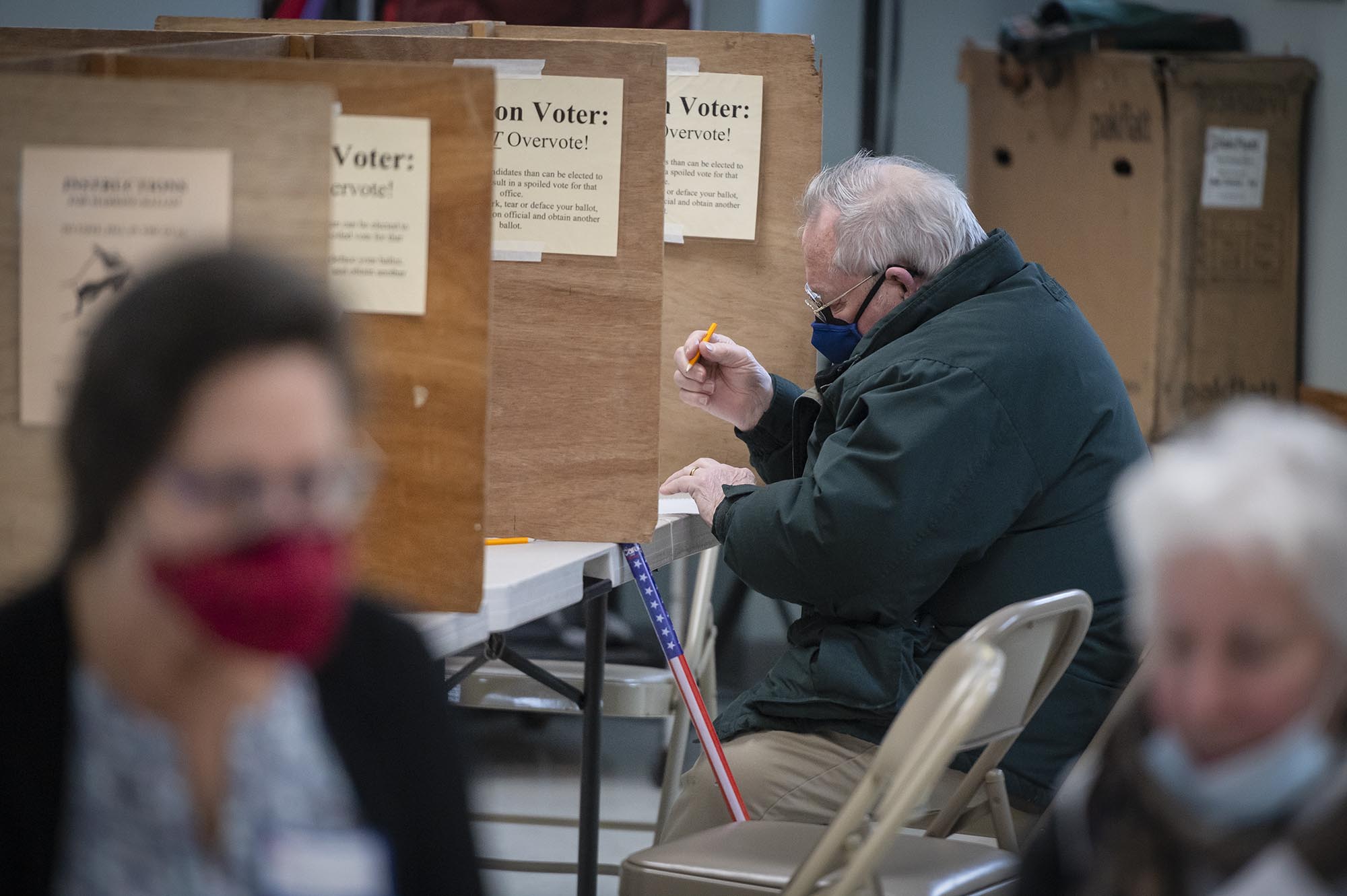
BURLINGTON — Voters gave mixed support to Democratic Mayor Miro Weinberger’s agenda Tuesday and signed off on two other ballot items in the city’s annual election.
Voters rejected a 5.5% hike in the municipal tax rate, but approved a $23.8 million capital bond and $25.9 million “TIF” bond to upgrade Main Street, as well as the Burlington School District’s $98.2 million budget and a measure that would bar the City Council from regulating sex work.
While Weinberger said he was heartened by the success of the two infrastructure bonds, the results of the election will require a shift in strategy if the city hopes to weather historically high inflation without dropping services or laying off employees, the mayor warned.

“It won’t be easy,” Weinberger told reporters during a post-election gathering at Halvorson’s Upstreet Cafe. “This may be, in some ways, the toughest operating budget of any that I’ve been in charge of for the last 10 years.”
Weinberger said he couldn’t commit to avoiding layoffs for city employees as a tool to balance the budget.
“It's too early to make blanket statements about where we're going to land exactly with services and personnel,” the mayor said. “It'll certainly be my goal to retain both as much as possible.”
The 5.5% municipal tax rate increase was rejected by 52% of voters, despite assurances by city officials that it would not raise the rate of their property taxes due to a surplus in the state’s Education Fund.
Yet, because many homeowners saw the values of their home skyrocket during the city’s reappraisal last year, a property tax rate decrease doesn’t necessarily mean a property tax decrease.
Still, 70% of voters approved a measure that is set to raise their property taxes for the next decade: the $23.8 million capital bond. The 70% support gave the measure more than the two-thirds threshold it needed to pass.
The success of that measure was a significant win for the mayor after a $40 million version of the ballot item failed in a December special election. Weinberger credited the slimmer version’s victory to a 90% decrease in the amount slated for the upkeep of Memorial Auditorium, as well as a more focused allocation of the cash dedicated to drawing down federal funds.
Voters showed 62% support for a separate bond that would renovate Main Street from Battery to South Union streets. That bond — unlike the capital one — is not projected to raise the property tax rate, because it is paid for with the added tax revenue brought in by new development in the area.
Weinberger said the two infrastructure bonds were his administration’s priority, because they had longer-term impacts on the city than the budget squeeze presented by the failure of the tax rate increase.
“We were hoping to get all three. If we had to choose (one ballot item to not pass), this is the one that I think we’re most able to manage and still stay true to our priorities,” Weinberger said.
Also on the ballot, the Burlington School District’s budget of $98.2 million passed with 76% of the vote, while a proposed charter change removing the City Council’s power to regulate sex work won 63% of the vote. That measure now heads to Montpelier for final approval by the Legislature and the governor.
Burlington’s indebtedness is slated to grow this November, when school officials ask voters to approve a bond financing the construction of a new high school. Officials expect the price tag on the new facility to range from $161 million to $207 million, they announced late Tuesday afternoon, but Weinberger stressed that the city won’t borrow money for the building’s entire cost.
While Weinberger maintained that the election’s outcomes were overall a strong win for his party, he acknowledged that the failure of the municipal tax rate increase — which he said was necessary to account for record inflation — left his administration with some soul-searching to do between now and the start of the new fiscal year in July.
“Many Burlington residents have had to sit down at the dinner table and get out calculators and work on their household budgets, and they want us doing the same thing with next year’s city budget,” Weinberger said. “I respect that, and we're going to work hard at that.”


