

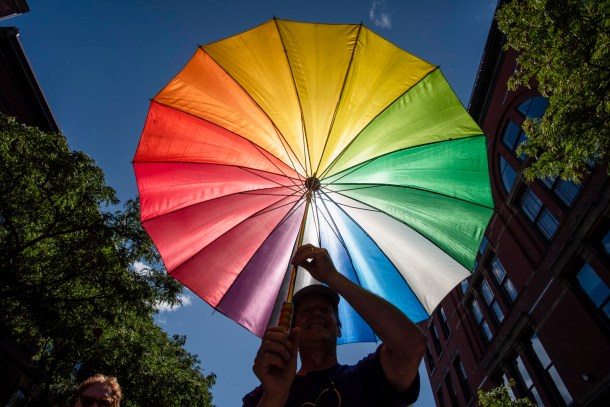
Vermont has the seventh-highest rate of LGBTQ people in the nation, according to a survey analysis from the Williams Institute at the University of California-Los Angeles. It also has the highest rate of same-sex couples in the nation.
The data comes amid a recent report that the number of LGBTQ-identifying adults is rising nationwide. About 7% of adults said they considered themselves to be lesbian, gay, bisexual, transgender or something “other than heterosexual” in 2021, compared to 3.5% of respondents in 2012, according to Gallup.
Members of “Generation Z,” born from 1997 to 2003, were the most likely to report as LGBTQ, according to the national survey. About 21% said they identified that way, compared to 11% of Millennials and even lower rates among older generations.
In Vermont, too, young adults are leading the state in LGBTQ identification. About 25% of LGBTQ Vermonters are between ages 18 and 24, according to the Williams Institute.
The data is a rare insight into the demographics of LGBTQ folks in Vermont, since data collection on those communities has historically been fairly limited, said Kate Jerman, director of the Prism Center, an office that supports LGBTQ people at the University of Vermont. The 2020 Census was the first decennial Census to collect data on same-sex couples.
“I hope this Williams (Institute) data is kind of a piece of that puzzle, but I think we need much better data collection,” Jerman said.
Vermont leaders in the greater LGBTQ community said the state is known for comparatively high legal protections and cultural acceptance of their peers. That may contribute to people being more willing to openly identify LGBTQ, they said, or even encourage folks to come to the state seeking a more welcoming environment.
“We were first on the bus (of) a lot of places to get those legal protections,” said Kell Arbor, health and wellness director of the Pride Center of Vermont, which advocates for the health and safety of LGBTQ people. “So that creates that draw … then people look at your state as ‘Oh, you’re ahead of the curve, you’re safe and welcoming.’”
Vermont introduced civil unions for same-sex couples in 2000, making it the first state to do so. It then became the fourth state to legalize same-sex marriage in 2009.
The state also bans discrimination in housing and public places by sexual orientation or gender identity, bans conversion therapy on LGBTQ minors and requires health insurers to cover gender affirmation surgery.
Vermont has passed bills to protect LGBTQ rights as recently as last year, when Gov. Phil Scott signed legislation banning the LGBTQ+ “panic” defense, which uses a victim’s gender identity or sexual orientation as justification for criminal actions.
The Prism Center at UVM provides services and runs programs for LGBTQ students. Jerman said it’s common for UVM’s “queer-friendly campus” to be part of the draw for incoming students.
“Sometimes we get students who feel like they’re the only one, and it wasn’t until they got here to college that they discovered community,” she said.
But being LGBTQ in Vermont comes with its own challenges. Arbor, at the Pride Center of Vermont, said that hate crimes and other harassment remain prevalent in Vermont, particularly in the post-Trump era.
Vermont was ranked among the highest in the nation for the rate of hate crimes against LGBTQ individuals in a Security.org study in 2019, although the study did not adjust for the prevalence of LGBTQ people in the population.
Asked about hate incidents in Vermont, Arbor rattled off several recent examples just off the top of their head, like someone repeatedly taking down one teen’s pride flag in Montpelier and anti-trans stickers being placed around Burlington’s New North End.
“People call us (because) they don’t know who else to call. They especially don’t want to call the police right now,” they said. “So they’ll call us and it’s like, sometimes there’s nothing to do with a complaint like that other than listen.”
In the New North End, the Pride Center placed trans-positive lawn signs so that trans people in the area at least “have an uplifting message, too,” Arbor said.
LGBTQ Vermonters can also have more difficulty depending on their specific identity and how it intersects with their race, they said.
“If trans feminine women of color feel safe walking in these rural neighborhoods and can live there, that’s my indicator of, we’re a safer space,” Arbor said. “Because right now it is very dangerous for those identities to be out and open and visible, especially in some of these very rural pockets.”
Even though Vermont has an overall high rate of people who support same-sex marriage and other LGBTQ rights, they said, in a smaller town, “it just takes one jerk.”
“And then you think the whole town is like that when it’s like, ‘but is it, or is it just this one jerk who’s so loud?’” they said.
There’s some reason to believe that LGBTQ Vermonters are at an economic disadvantage, too. Same-sex couples have a lower mean income, according to Census data. At a national level, LGBTQ adults report a higher rate of food insecurity and poverty.
Arbor said that may be partly because LGBTQ people are less likely to have familial support to rely on, especially as young adults make their way into the world. The Pride Center and Prism both run food banks for LGBTQ people in need.
Another disadvantage to Vermont’s small-town life is how isolated it can be for LGBTQ residents. The Pride Center helps promote pride events across the state, and Arbor said rural Vermonters often travel long distances to attend pride celebrations in Rutland and White River Junction.
Gay bars and other LGBTQ-specific spaces are also few and far between. Arbor said dating and meeting other LGBTQ people in town can be difficult.
“Even though I know all these small towns, there’s so many queer people living there, we don’t have the spaces to converge,” they said.
They said that would be the next phase of the Pride Center: “How do we become a welcome anchor, and then help network people to each other so that they can just connect and live freely and have that fun stuff?” they said.
Jerman said having community centers and places where students can be their full selves is critical to their well-being. “The more we allow people to be authentic in that way, the more and more positive change, the better the world gets,” she said.
