

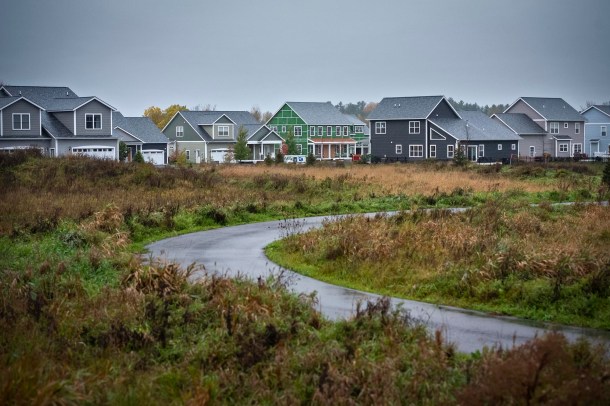
One of the most densely populated municipalities in Vermont has taken much of its remaining open land out of consideration for possible development.
In a 3-2 vote Monday night, the South Burlington City Council approved land development regulations that would prevent housing and other development on about 1,000 acres in the city’s Southeast quadrant.
The land, in an area of forests, pastures and wetlands that borders Williston and Shelburne, constitutes the largest undeveloped part of South Burlington. It includes the last former farmland in the city. At its core is an area called the Great Swamp.
The area accounts for 10% of the land in the city.
The decision to remove it from development comes amid vigorous debate in Vermont about how to address the scarcity of housing.
Monday night’s vote came after public comments from people in the auditorium and online displayed the divisions between advocates of open space and supporters of more affordable housing.
Opponents of the regulations called South Burlington an ideal city for construction of more housing, as it’s part of the region with the largest concentration of jobs in Vermont.
“We’re part of the big jobs and growth center, the biggest in the state,” said Sandy Dooley, vice chair of the South Burlington Affordable Housing Committee. “We have a housing crisis. That’s a lot of housing units that were taken off the map.”
But some supporters pushed back against the need to build more housing at the expense of open space, arguing other areas were better suited.
“We do not have to provide housing for everyone,” said Barb Sirvis, a retired college administrator who favors preserving the land. “It’s the only place in my town that I can find a little bit of outdoors.”
“Let’s be a bobcat and fisher town,” said council Vice Chair Meaghan Emery, one of three councilors who voted for the regulations.
So did council Chair Helen Riehle, who said it was “vital” to have “some open space” in the city. She said the city has “many other places where affordable housing could be built.”
The South Burlington Economic Development Committee, in a resolution prior to Monday night’s vote, argued that the regulations would erode the city’s future tax base, drive up the cost of new housing construction and reduce South Burlington’s ability to attract employers.
At the meeting, Mike Simoneau, a realtor and board member of the South Burlington Business Association, urged councilors to hold off on adopting the regulations, which have been discussed for three years.
“You should slow down,” Simoneau said. “You move too fast. The biggest response to (the housing) crisis is an increase in inventory. We need more supply.”
Simoneau argued that businesses’ ability to survive hinges upon affordability of housing in the area.
Opponents also argued that the regulations would worsen carbon emissions, as they would force people to find housing farther away from their jobs.
“If you want to reduce greenhouse gas emissions, you build where the jobs are,” said Councilor Matt Cota, who voted against the regulations.
Some opponents warned that the regulations would turn South Burlington into a preserve for the rich.
“What kind of city we’re building and for who?” asked Chris Trombly, chair of the Affordable Housing Committee.
Cota argued that South Burlington needs to “make space so we’re not an exclusive, ritzy suburb,” while Councilor Thomas Chittenden — who also voted against the regulations — said he wants the city to be “an inclusive, welcoming community.” Chittenden is also a Democratic member of the state Senate.
Emery argued against that thinking, saying Habitat for Humanity could provide homes for $125,000 on some smaller parcels in South Burlington.
“This plan in no way prevents us from developing affordable housing,” she said, arguing it’s “so essential that we look at our already developed areas.”
But Jeff Nick, a real estate developer, disagreed. He told councilors the regulations would set aside about 20 acres of the land he and his partners own at the southwest corner of Hinesburg Road and I-89, making that portion exclusively wildlife habitat.
“It’s a significant amount of land that you’re poised to take,” Nick told the council before the vote.
Nick told VTDigger that some 140 to 160 homes would not be built as a result of the regulations, as the city currently allows up to seven homes per acre on the land.
Asked if he is going to court to stop the regulations, Nick replied: “Looks that way.”
Correction: An earlier version of this story inaccurately named the towns bordering South Burlington.
