

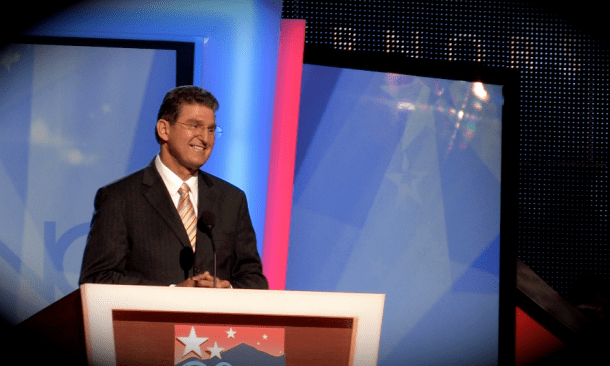
On Sunday, U.S. Sen. Joe Manchin of West Virginia, the lone Senate Democrat still withholding support from the president’s sprawling Build Back Better social spending package, made a surprise announcement in a televised interview with Fox News.
He was done negotiating, Manchin told the right-wing network’s Bret Baier, and would not support the legislation.
“I’ve tried everything humanly possible,” the conservative coal-country Democrat said. “I can’t get there.”
In a Senate split 50-50, Manchin basically enjoys veto power over President Joe Biden’s domestic policy agenda. The president has worked for months to get Manchin on board, whittling away at the package’s price tag and key climate change provisions.
Manchin’s declaration has since sent shockwaves through Washington and in Montpelier. State officials held out hope Congressional action might, in one fell swoop, put a significant dent in some of the state’s most pressing — and expensive — policy problems.
Vermont Senate President Pro Tempore Becca Balint on Sunday tweeted out a litany of ways the $2.2 trillion package might have helped Vermonters. She pointed to a cap on the cost of insulin, for example, as well as clean energy investments and anti-poverty measures.
“@Sen_JoeManchin is hurting Vermont, betraying the President and holding hostage the most important piece of human infrastructure at a time when COVID continues to rage,” Balint, who is running for Congress, wrote from her campaign Twitter account.
In a phone interview with VTDigger on Monday, U.S. Rep. Peter Welch, D-Vt., expressed shock at Manchin’s announcement and called his decision a “huge betrayal.”
“He’s betrayed the people he represents — the families of West Virginia — and he totally betrayed the president. He was never negotiating, it appears, in any kind of good faith,” he said.
It is unknown how much funding, in total, would come to Vermont if the Build Back Better framework were to become law. Such analyses are typically performed once a bill is closer to the finish line, and the House-passed version was expected to change dramatically once it got to the Senate.
But a number of its marquee proposals — which tackle climate change, health care, housing and early childhood education — would have had a transformative effect on policy conversations happening in Montpelier.
State lawmakers recently passed legislation stating that no family in Vermont should pay more than 10% of its income toward child care. But on this goal, the law was largely symbolic and entirely silent on how it might be funded. A consultant has been tasked with costing out the proposal and pitching a plan.
The most recent iteration of Build Back Better would have ensured that about 9 in 10 Vermont families would not pay more than 7% of their incomes on child care.
There is strong support on both sides of the aisle in Vermont to make real inroads on the state’s ever-worsening child care crisis. But the solutions called for by advocates would likely cost hundreds of millions of dollars.
Money is “what has hung up this issue for so long,” said Aly Richards, the CEO of Let’s Grow Kids, a child care advocacy group. The passage of Build Back Better would have all but “ensured victory” for those calling for a total overhaul.
On Sunday, U.S. Sen Bernie Sanders, I-Vt., one of the proposal’s biggest champions, called on the Senate to hold a floor vote on the reconciliation package, despite Manchin’s vow to vote against it.
“If he doesn’t have the courage to do the right thing for the working families of West Virginia and America, let him vote no in front of the whole world,” Sanders told CNN’s Jake Tapper.
U.S. Sen. Chuck Schumer, D-N.Y., the chamber’s majority leader, has since announced that he would do just that when the chamber reconvened in 2022, the New York Times reported. But the prospect of a floor vote is not one that appears to worry Manchin.
“I said, ‘Bernie please put it on the floor,’” he recounted in an interview with a West Virginia radio station, according to the Times. “Maybe it’ll sink in that we have to look at a different direction in this far-reaching social agenda of yours.”
Some hold out hope that Democrats may be able to summon the necessary support for parts of the package once it is parceled out on the floor. Richards is among them. Child care and pre-K investments are bipartisan “darlings of the bill,” she said, and “are being discussed as possible things that might survive.”
While Sanders and Welch have come out swinging against Manchin, U.S. Sen. Patrick Leahy, D-Vt. — who plays a key role in budget negotiations as chair of the powerful appropriations committee — was conspicuously silent.
His office has not released a statement about the matter, and one was not “currently … in the works,” a spokesperson said Monday afternoon. Leahy was not available for an interview, according to his office.
All three members of Vermont’s delegation have been staunch supporters of the Build Back Better package. But they have not seen eye-to-eye on tactics to get it over the finish line.
Sanders has not hesitated to spar publicly with Manchin and wholeheartedly endorsed a strategy tying the fate of a bipartisan infrastructure bill together with the Build Back Better plan. Simply passing the more limited infrastructure deal without a negotiated agreement on the more ambitious social spending package would give up all leverage for the Democrats, he argued.
But Welch disagreed and joined his more moderate colleagues in advancing the infrastructure deal as a standalone measure.
Welch argued Monday it was impossible to know if Sanders’ strategy would have worked. It might have also doomed the infrastructure bill, he said, which is now expected to send at least $2.2 billion Vermont’s way.
“It’s anybody’s guess whether Manchin would have been willing to torch that as well,” Welch said. “There’s no limit, in my judgment, in how much he’s willing to turn his back if that’s what the corporate interests want.”
