


BENNINGTON — Brian Leach and his wife, Breya, have been raising grass-fed cows since 2014. But in all this time they’ve been running Haystack Farmstead, located in Pawlet, the business has been operating at a loss.
Leach, 33, has had to depend on steady work as an electromechanical engineer to keep his family farm going.
Part of the problem he sees is Vermont’s limited consumer market for premium agricultural products. To reach more customers, Leach said, small local farmers like him need to expand into urban areas such as Boston and New York City in the Northeast.
Entering bigger markets would also enable small farmers to sell “value-added products” that turn a bigger profit. Leach’s grass-fed beef, for instance, can add value as smoked and cured meats.
But manufacturing these types of products requires specialty equipment and extra processing space — which small farmers cannot easily acquire.
“These are major investments for farms, especially for young farmers,” Leach said. “It can be tough to make that leap.”
The difficulties Leach has encountered as a small farmer are among the issues that the forthcoming Bennington Food Hub seeks to address. The food hub is slated to open in fall 2022.
The food hub, a project of the Southern Vermont Regional Food System, is being set up as a nonprofit organization that would help small farmers do business with corporate buyers and households. It would work with producers from Bennington, Rutland and Windham counties in southern Vermont.
Southern Vermont Regenerative Food System from Regenerative Food Network on Vimeo.
On top of boosting farmers’ livelihoods, the food hub aims to make healthy food more readily available at affordable prices. The people who would benefit include Bennington households experiencing food insecurity, project proponents said.
The group is an outgrowth of the $1 million grant Bennington College received from the Mellon Foundation in 2019 to address the systemic causes of food insecurity in Bennington County, said Susan Sgorbati, director of the school’s Center for the Advancement of Public Action and co-organizer of the Southern Vermont Regional Food System.
“In some ways, what this is is really a citizen-based response to too often a lack of governmental attention to the southwestern part of the state,” said Kyle Philipp, CEO and co-founder of the Regenerative Food Network, another organizer of the regional food system.
“This ability to bring together these three communities in the southern part of the state is really powerful and necessary,” he said.
Members of the regional food system who spoke to VTDigger for this story include Liz Ruffa, director of institutional advancement at Merck Forest and Farmland Center; Philip Ackerman-Leist, director of the Regen by Design research, educational and media group; Shannon Barsotti, the Bennington town government’s community development director; and Tatiana Abatemarco, a Bennington College visiting faculty member specializing in food studies.
The Regenerative Food Network is also helping to fund at least $5 million worth of renovation work on a former car-parts plant, which would become the location for its subsidiary Southshire Meats, as well as the Bennington Food Hub. Organizers are calling that location the Southshire Regenerative Food Center.
From manufacturing plant to food center
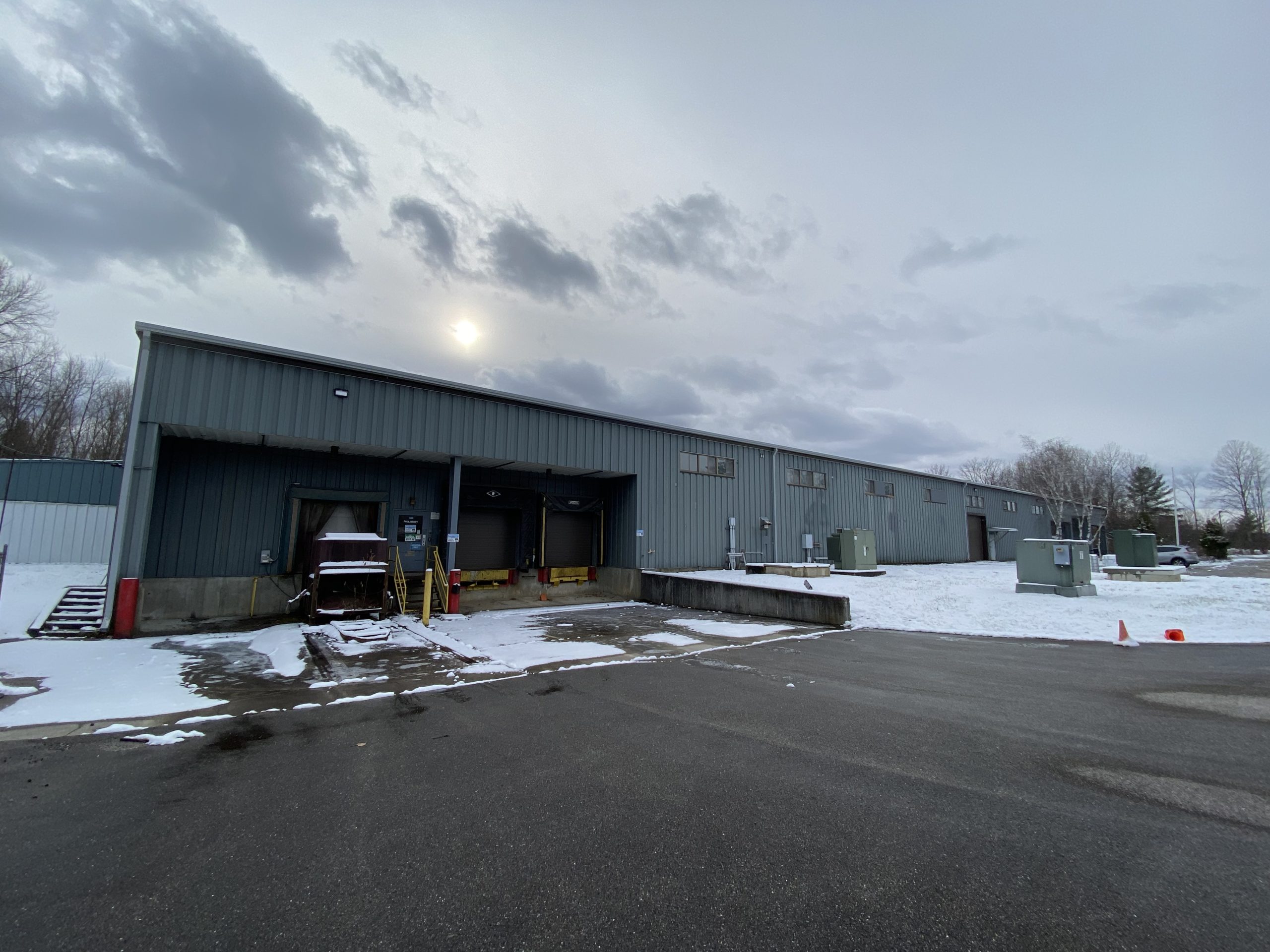
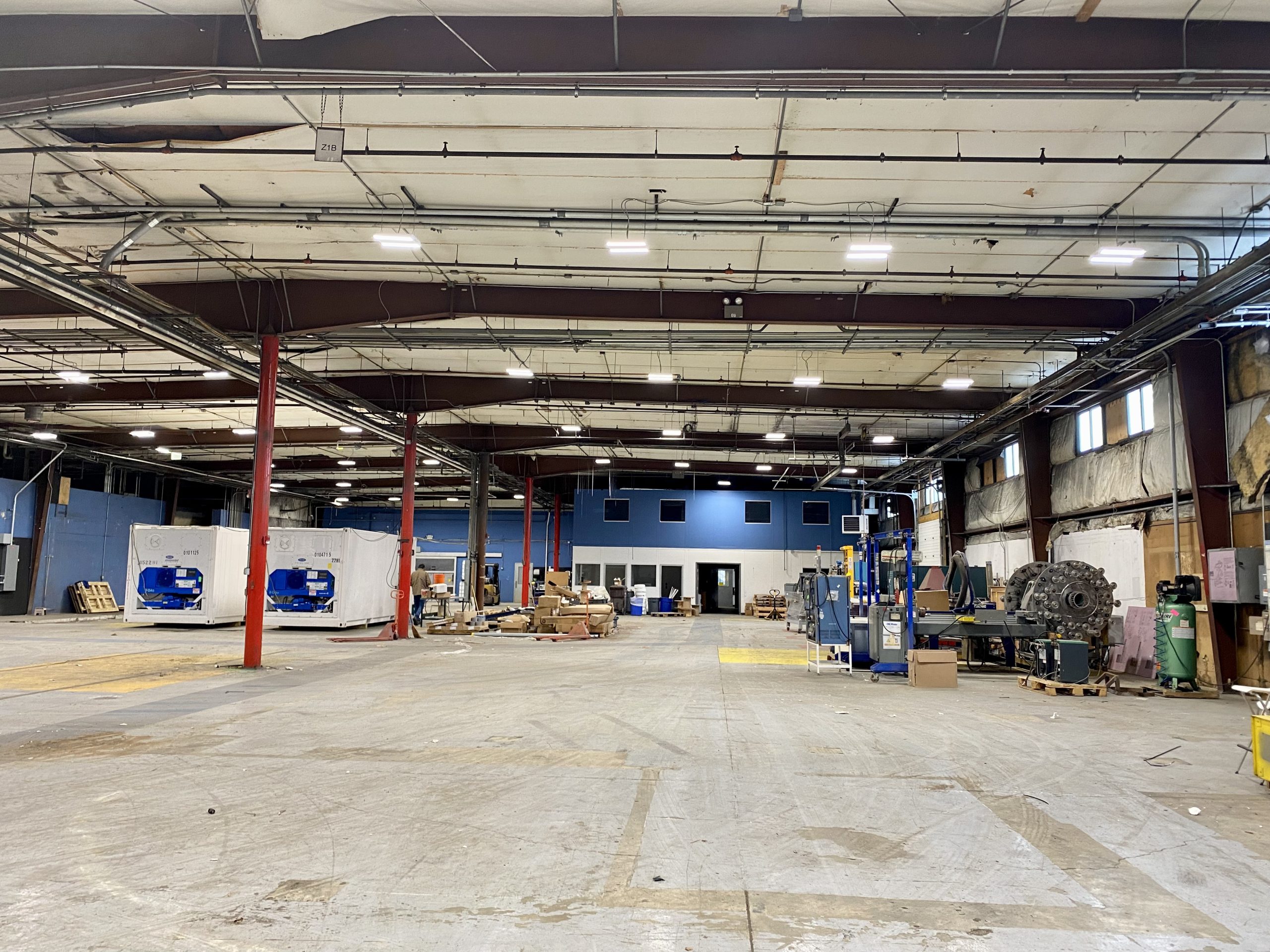
No. 139 Shields Drive in Bennington used to house Plasan Carbon Composites, which until 2014 manufactured carbon-composite car parts, specifically for the Chevrolet Corvette and Dodge Viper SRT. The massive building remains largely empty, save for some machinery, office furniture and workplace detritus that the former occupants left behind.
A Manchester resident, who bought the building from Plasan, is now leasing it to the Regenerative Food Network. The company plans to start renovation work for the food center in February.
During a visit to the site one recent afternoon, Bill Laberge, co-founder of the Regenerative Food Network and its director of energy, explained how the main floor would be subdivided to serve Southshire Meats, the food hub and other future tenants.
He pointed out the loading dock where farmers would drop off their products and an adjacent wall where the poultry section would be set up. There would be separate areas for vegetables, dry goods and meats.
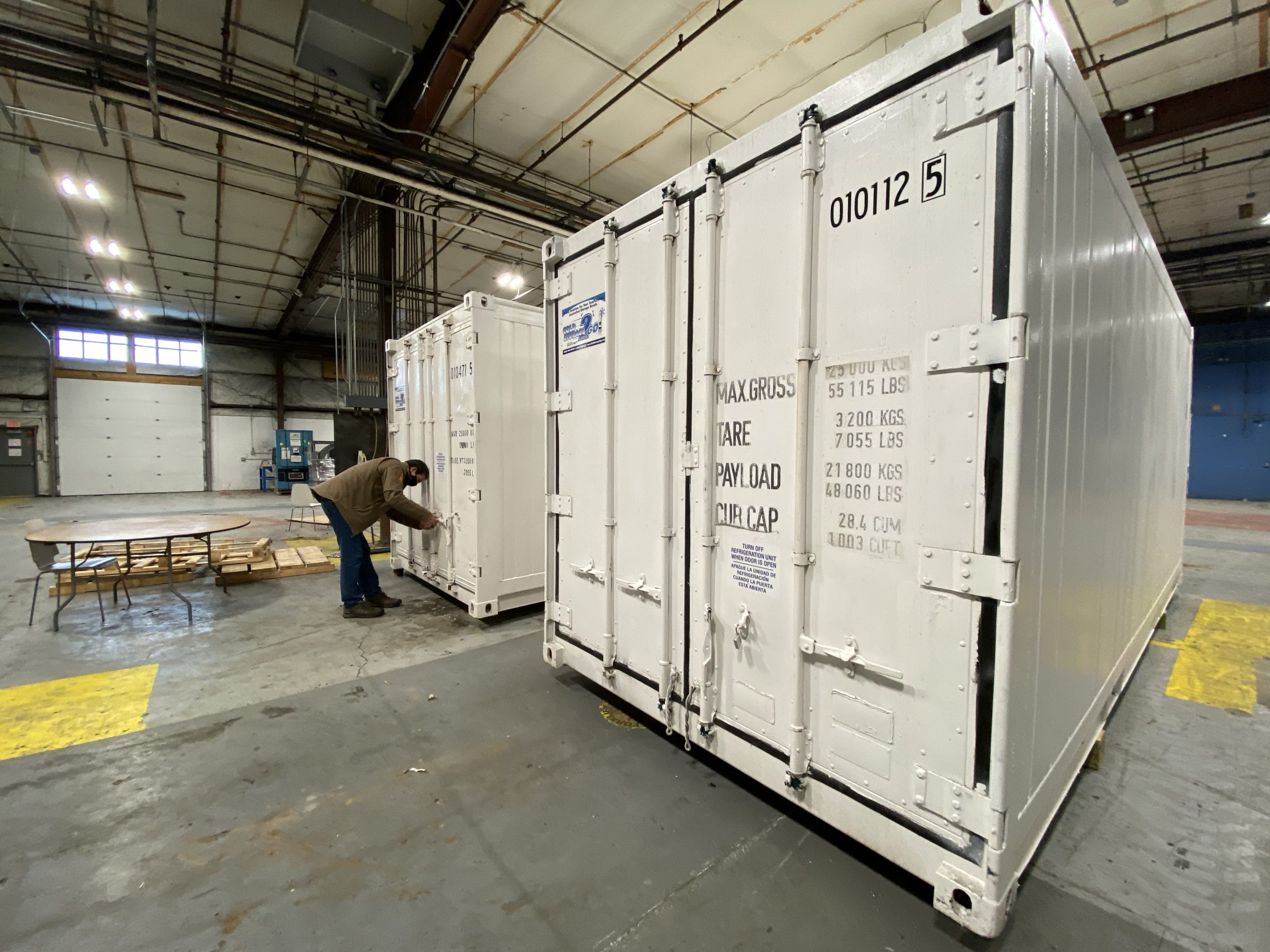
The facility would also provide spaces where farmers could refrigerate or freeze their products, or store them at room temperature.
Proponents said the food hub would help small farmers handle the logistics of doing business with big buyers. That often includes meeting with clients, understanding their billing system and timing deliveries.
“That’s a lot for a farmer to figure out when, really, they’re working on getting their crops grown well,” said Erin Ackerman-Leist, the Regenerative Food Network’s director of community in Vermont, whose work includes connecting local farmers to the food hub.
For corporate buyers, the food hub would also streamline their ordering and buying process. The idea is they would get in touch with the hub rather than dozens of local farms.
Institutions in the Bennington area that have already expressed interest in buying through the food hub include Southwestern Vermont Medical Center and the Southwest Vermont Supervisory Union, according to organizers. Together, these two entities serve meals to thousands of people a day.
Laberge said the food hub would install specialty equipment that farmers could use to make cheese, sausages and smoked meats, among other products.
There would also be a commercial kitchen for use by community members, such as small-business owners and cooking students.
Being a for-profit entity, Southshire Meats would financially support the building’s operations. Its business processes meat and poultry from the Regenerative Food Network’s slaughter facility in Wilmington, including cutting, packaging and shipping the products.

Regenerative agricultural practices
The regional food network also aims to expand regenerative farming practices in the region.
Regenerative agriculture refers to “farming and grazing practices that, among other benefits, reverse climate change by rebuilding soil organic matter and restoring degraded soil biodiversity — resulting in both carbon drawdown and improving the water cycle,” reads a definition by California State University’s Regenerative Agriculture Initiative and The Carbon Underground.
“When we started this whole conversation, it was really looking at the Northeast,” Laberge said. “Can we get 30% of the food grown in the Northeast to be raised with regenerative practices by 2030?”
Laberge also owns Grassroots Solar, a Dorset-based company that aims to help wean people off fossil fuels. He said the Regenerative Food Network has a similar goal: to eliminate carbon emissions from the food system.
While the project will include local farmers employing traditional practices, Laberge said farmers who transition to regenerative practices will be paid a premium, and even higher prices when that transition is complete.
“We can show farmers that they can get paid for how they grow things, not just what they grow,” he said.
The project also aims to help farmers lower electricity bills by assisting them with installing solar panels and switching to solar-powered electric equipment. Laberge said he is working on a financing mechanism for that project.
A market for electric tractors and other farm equipment is developing fairly slowly, Laberge said, but in time, he hopes to develop a network that will allow farmers to borrow electric vehicles until they are able to buy their own.
Three electric distribution trucks will pick up food from the farms and deliver it to the food hub, he said.
Organizers hope the Southshire Regenerative Food Center — with its nonprofit and for-profit partnership — could serve as a model to other areas looking to set up a healthy, sustainable food system.
Anson Tebbetts, secretary of the Vermont Agency of Agriculture, Food and Markets, has been involved in meetings about the project. He said it adds energy to ongoing state efforts to incentivize regenerative agriculture and focus on markets closer to home.
“I think it aligns with many of our goals of trying to improve a regional approach to our food system, as opposed to maybe a national system that may have broken down during the pandemic,” Tebbetts said.
Leach, who works with the Regenerative Food Network as a farmer and engineer, plans to be part of the food hub. He says it won’t solve all the problems of small farmers, but it could help create a better business climate for them.
He hopes that someday his grass-fed cow farm will be profitable enough that he can give up his engineering work.
“I would love that,” Leach said. “If I could have a profitable enterprise here, there’d be more than enough to keep me busy.”

