

When Kristin Stewart walks into a store and sees people not wearing masks, she feels angry.
“It is like more than salt in a wound,” Stewart said. “It is like a kick in the teeth when you’re down, when we’re grieving.”
She recently lost her mom, Kimberly Sue Pollard — affectionately known in their family as Gigi — to Covid-19.
“Gigi was my person. She was my eyes. She was my driver in snow because I hate snowstorms,” Stewart said.

As of Friday, 451 Vermonters have died of Covid-19, including 193 people since July, when the Delta variant became the dominant strain. And while the world enters its third year of contending with the virus and the public grapples with pandemic fatigue, the data on the death toll can at times feel disconnected from real people and families.
But for the hundreds of Vermont families left behind, the losses are profound. Many have had to grieve while in quarantine with the virus themselves. In some families, death has upended the infrastructure of their lives, causing people to postpone their education or change jobs so they can manage child care.
“People forget quickly,” said Ruth Goodrich, whose mother, Mary Carter, died of Covid in September. “And they think, well, everything’s back to normal, but it’s not by any means.”
‘Anchor’ of the family: Mary Alice Carter, 98
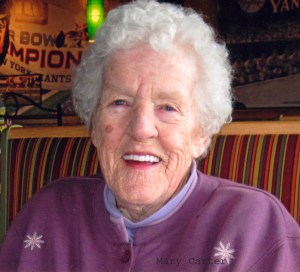
Carter was born in Waterbury in 1923, the seventh of nine children. She survived the 1927 flood, which wrecked her family’s home. She graduated from high school in Middlebury and joined the navy during World War II, where she worked as a pharmacist’s mate and a physical therapist.
After she married Clyde Carter, the couple bought a farm in the Richmond village of Jonesville, where they raised their four children. Carter was well-known for her warm hospitality and delicious food.
“Our farm was a mecca for everybody in the neighborhood,” Goodrich said. “Especially during deer season … it would be not unusual to have 15 people coming in for deer hunting and breakfast and that sort of thing, for meals. She was a very good cook, famous for her pies and doughnuts.”
Goodrich now runs a 150,000-tap maple farm with her family, and is an EMT with the Cabot ambulance service. Since the pandemic began, after every shift she’s immediately showered and washed her clothes and shoes.
Carter moved to a Colchester nursing home this summer and was infected with Covid-19 just a few weeks later. Covid worsened an existing heart condition, but for a while, Carter was “holding her own,” Goodrich said.
Carter was angry about her diagnosis, Goodrich said. Her mother was social, feisty, and sharp of mind, and disliked being confined to her room.
“When she couldn’t get out, she couldn’t understand why my sister couldn’t come and get her and bring her home with her, so that was probably frustrating,” Goodrich said. “Just helping her understand, as an elderly person, what this really was and what it now means.”
After she was transferred to the hospital, “she was arguing with the doctors and nurses, which is very typical,” Goodrich said.
Carter was hospitalized for about a day and a half before she died on Sept. 21. She was 98.

Carter was the anchor of their family, Goodrich said. Even when relatives moved apart from each other, her mom was a “human communication station,” because she always knew what was going on in everyone’s lives.
“And so now it’ll be interesting to see what happens,” Goodrich said. “It changes the dynamics tremendously.”
“I have not changed my view on Covid at all. I’m very respectful of it, I’m very cautious about it,” she said. “I’m not an alarmist, but I want to make sure that my family is safe and that I am safe.”
‘A rock ’n’ roll heart’: David Robert Callahan, Jr., 51
Unlike Goodrich, Laura Callahan didn’t realize her loved one had been sick with Covid until after he died. Callahan’s brother, David Robert Callahan, Jr., had hypothyroidism, an endocrine system disorder, but had always called her when he got really ill and needed help.
David Callahan — Davy, to Laura — had offered to help an older woman in the community pack up her house to move, Laura said. When he didn’t show, a friend went to peer through the blinds of his Montpelier apartment, and saw his body lying on the floor. He died on Sept. 16.
A few days after his death, Laura received a letter at her house from the Vermont Department of Health. It was addressed to Davy, informing him that he had Covid.

He was just 51 years old.
Davy was a talented musician and an avid cyclist, Laura said. He was drawn to the outdoors since childhood, and once biked all the way from Vermont to Nevada and back.
“He was outdoor camping, which basically turned into being homeless for 30 years,” Laura said. His apartment in Montpelier had been his first, and was his home for the past five years.
Though Davy dropped out of formal schooling when he was 16, “he knew everything about science,” Laura said. “I didn’t even realize growing up how much I learned from him, just being around him.”
He loved taking TVs and gaming systems apart and putting them back together to see how they worked, and he was working on getting his GED diploma when he died. He was an enthusiastic greeter at the Barre-Montpelier Seventh-day Adventist Church and recorded music for them to use in remote worship services.
“He loved singing about Jesus, but he also loved rock ’n’ roll,” Laura said. “He had a rock ’n’ roll heart.”
Growing up, neither Laura nor her brother received vaccines. Laura, now 50, decided to get standard childhood vaccines once she became an adult, and she got vaccinated and boosted against Covid as soon as she was eligible.
Davy, however, was strong-willed, and not enthusiastic about the health care system, Laura said. It took urging from his church community for him to seek care for his thyroid condition.
Laura said she tried to encourage Davy to get vaccinated against Covid, but he stayed firm in his opposition.
“Those are individual, personal decisions that everyone should have a right to make about their own health, and their own body and their own life,” she said. “But then when the person dies, it’s like, it’s too bad they picked the wrong door. It was door number two, Dave.”
Laura, who also lives in Montpelier, was taking classes toward an associate degree, but withdrew from classes after Davy died. Balancing everything — work, classes, family, funeral arrangements, grief — “took the wind out of my sails,” she said, but she plans to return next semester.
“My brother was my hero,” she said.
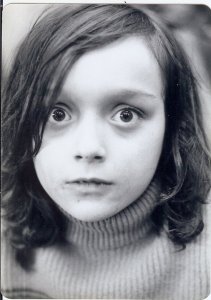
Her grandson was ‘her everything’: Kimberly Sue Pollard, 60
For Stewart, one of the hardest parts of losing her mother was telling her 7-year-old son, Karson.
“Since I was pregnant, I have dreaded this time, that at some point, I was going to have to tell him his Gigi died,” she said. “It’s the worst thing I’ve ever done.”
The three of them lived together in Rockingham, where Karson and his grandmother were inseparable. Gigi and Karson loved watching “NCIS,” and would stay up late eating snacks whenever Kristin had to spend a night out of town. On Thursdays, they’d get a square pizza for dinner. They cherished long walks, looking for birds’ nests or interesting rocks.
“Oh my god, the stones,” Stewart said. “When you had to do their laundry, you had to check their pockets, not for anything else, but you have to check for stones, because they had rocks everywhere.”
Pollard, who was 60, became sick one Friday in early October. She started to feel better by Sunday, when she got her positive Covid tests results. But Stewart measured her mother’s blood oxygen level, was alarmed by the low number and drove her to the hospital.
They hugged before hospital staff escorted her mom inside, and that was the last time Stewart saw her mother in person.
They video chatted a few times, and from her hospital bed, Gigi coached Stewart on how to make a stew. When she got the call from the hospital that her mother had died, Stewart had also tested positive for Covid, and she and Karson were quarantining at home.
“It was really rough because when you need your family around, you can’t have them around,” Stewart said.
Gigi always did her Christmas shopping early, Stewart said. This year, she left behind a tree full of presents for Karson.
Stewart has since left her office coordinator position at Springfield Hospital, where she’d worked for the past 15 years. Her mom had always helped her with child care, but now Stewart needs her work hours to match Karson’s school schedule, so she’s in the process to become a substitute teacher.
Pollard had worked at a Walmart in Claremont, New Hampshire, since early 2020, right before the pandemic began. Stewart said her mom was always diligent about mask-wearing, even when work no longer required her to, largely because she worried about Karson. She was fully vaccinated when she got sick.
Stewart says now when she goes into stores, she tries to smile with her eyes at the other shoppers in masks: a silent thank you.
If someone complains to her about masking up or other Covid-related rules, “I’m probably going to come unglued,” Stewart said.
“In the midst of the stupidity, we’re losing our loved ones.”
Get the latest statistics and live updates on our coronavirus page.
Sign up for our coronavirus email list.
Tell us your story or give feedback at coronavirus@vtdigger.org.
Support our nonprofit journalism with a donation.
