


State health officials learned something in October: An animal sedative is increasingly contributing to opioid overdose deaths among Vermonters.
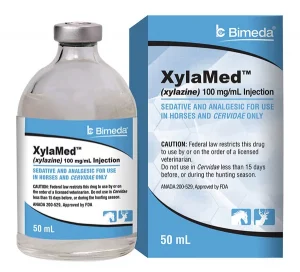
The drug, xylazine, is used as a sedative, muscle relaxant and pain reliever in animals such as horses and cattle. It is not approved for human use.
In people, researchers say, it reduces the functioning of the central nervous system and can cause respiratory depression, slowed heart rate and low blood pressure.
But some Vermonters have apparently taken the drug along with opioids such as fentanyl and heroin.
Between January 2019 and July of this year, 26 Vermonters who died from an opioid overdose also had xylazine in their system, according to a report issued Thursday by the Vermont Department of Health.
There already were 15 xylazine-related deaths through July of this year, up from five last year and six in 2019.
“We had to build analytics to look for this drug,” said Amanda Jones, a public health analyst with the state health department. “This is not one we’ve ever looked for.”
Jones learned of xylazine’s increasing involvement in fatal opioid overdoses in September, through a report published by the Centers for Disease Control and Prevention. The report states that, when used with illicitly produced opioids such as fentanyl and heroin, xylazine might increase the risk of a fatal overdose.
And because xylazine is not an opioid, it does not respond to opioid antidotes such as naloxone. “If illicit opioid products containing xylazine are used, naloxone might be less effective in fully reversing an overdose,” the document reads.
The report said that, of the 826 xylazine-related deaths recorded around the U.S. in 2019, 67% were from Northeastern states, including New York and New Jersey.
Jones’ team, which tracks data on substance use and overdoses, tried to figure out how Vermont might be affected by the drug. What the team discovered in October so concerned health officials that they decided to publicize their findings before the month ended.
“This is a very quick turnaround,” Jones said in an interview Friday. “We’re trying to save lives.”
Numbers show a worrying trend
In the two-and-a-half-year period the data team surveyed, they found that xylazine contributed to around 7% of opioid overdose deaths in Vermont. But zooming into the first seven months of 2021 shows a bleaker picture: The animal sedative was involved in 13% of the 116 fatal opioid overdoses recorded so far this year.
The drug has been identified only in opioid overdose deaths, with all 15 xylazine-related deaths through this July also involving fentanyl, a powerful synthetic opioid.
Cocaine was found in eight cases, heroin in three and methamphetamine similarly in three, according to the health department.
When asked if xylazine deaths were more prevalent in certain counties, Jones said the picture reflected the overall opioid fatality trend. Looking at this year’s opioid death toll based on population, Bennington County appears at the top of the list, followed by Windsor County and then Caledonia County.
“Just because it didn’t happen in your county doesn’t mean that it couldn’t,” Jones said.
Though naloxone might not work well when opioids are taken with xylazine, the state health department still advises users facing an emergency situation to administer the antidote and to call 911.
It’s unclear from the department data right now, Jones said, if illicit opioids in Vermont are increasingly being manufactured with xylazine and if users are aware that they’re ingesting an animal sedative not approved for human use.
The emergence of xylazine in opioid overdoses has similarly surprised groups helping people recover from substance use disorder.
The Vermont Recovery Network, made up of nine recovery centers around the state, hadn’t heard of opioid overdoses involving xylazine prior to the health department’s report on Thursday.
“No one had talked about that at our various meetings,” said Gary De Carolis, the network’s executive director.
He said naloxone’s lack of efficacy against xylazine is unfortunate, since recovery centers regard the antidote as an important tool against opioid overdose deaths. The emergence of the drug, he said, is going to “require a whole new different approach.”
What police are seeing
Law enforcement agencies across the state have had varying degrees of contact with xylazine.
“It’s in most of the stuff that is on the street,” said Lt. Casey Daniell, commander of the Vermont State Police narcotics investigation unit. “It’s used as a cutting agent in most of the product we’re purchasing or are seizing.”
In Montpelier, Police Chief Brian Peete said he has seen a recent increase in overdoses, though he is awaiting toxicology testing to determine the drugs involved.
“Whether they are cutting it with this,” Peete said of xylazine, “we are seeing a lot of heroin overdoses.”
Cutting, the police chief said, is when a substance is mixed with another substance to make it more potent or to increase quantity.
South Burlington Police Chief Shawn Burke said he wasn’t sure if xylazine is being found more frequently in seized drugs in his city. He said heroin mixed with fentanyl is what the department has found most often.
“It would not surprise me to know that there’s been this migration to this more potent (drug),” Burke said.
Rutland City Police said they have not yet encountered the drug. “We have not seen the drug here yet,” Cmdr. Gregory Sheldon said.
Springfield Police Chief Mark Fountain said he is aware of xylazine but hasn’t noticed an uptick in its use in his municipality, though he does know it is out there.
“That is something that has been in play for a while now all across the state,” he said.
