


Fans of Heady Topper, one of Vermont’s first popular craft beers, can now consume the brewery’s carbon emissions.
Carbon dioxide, a gas that contributes to global warming, is one of two main byproducts created during the brewing process. Brewers also need carbon to make the drink fizz.
Many large-scale breweries have capitalized on that situation, using technology to capture the gas and use it for carbonation. However, the same options have long been unavailable to smaller brewers who have had no choice but to release their carbon dioxide into the atmosphere, purchasing the gas for carbonation separately.
Thanks to emerging technology, some smaller breweries are now able to follow in the footsteps of larger businesses. The Alchemist, which has locations in Waterbury and Stowe, appears to be the first brewery of its size in Vermont to do so, and one of a few dozen across the country.
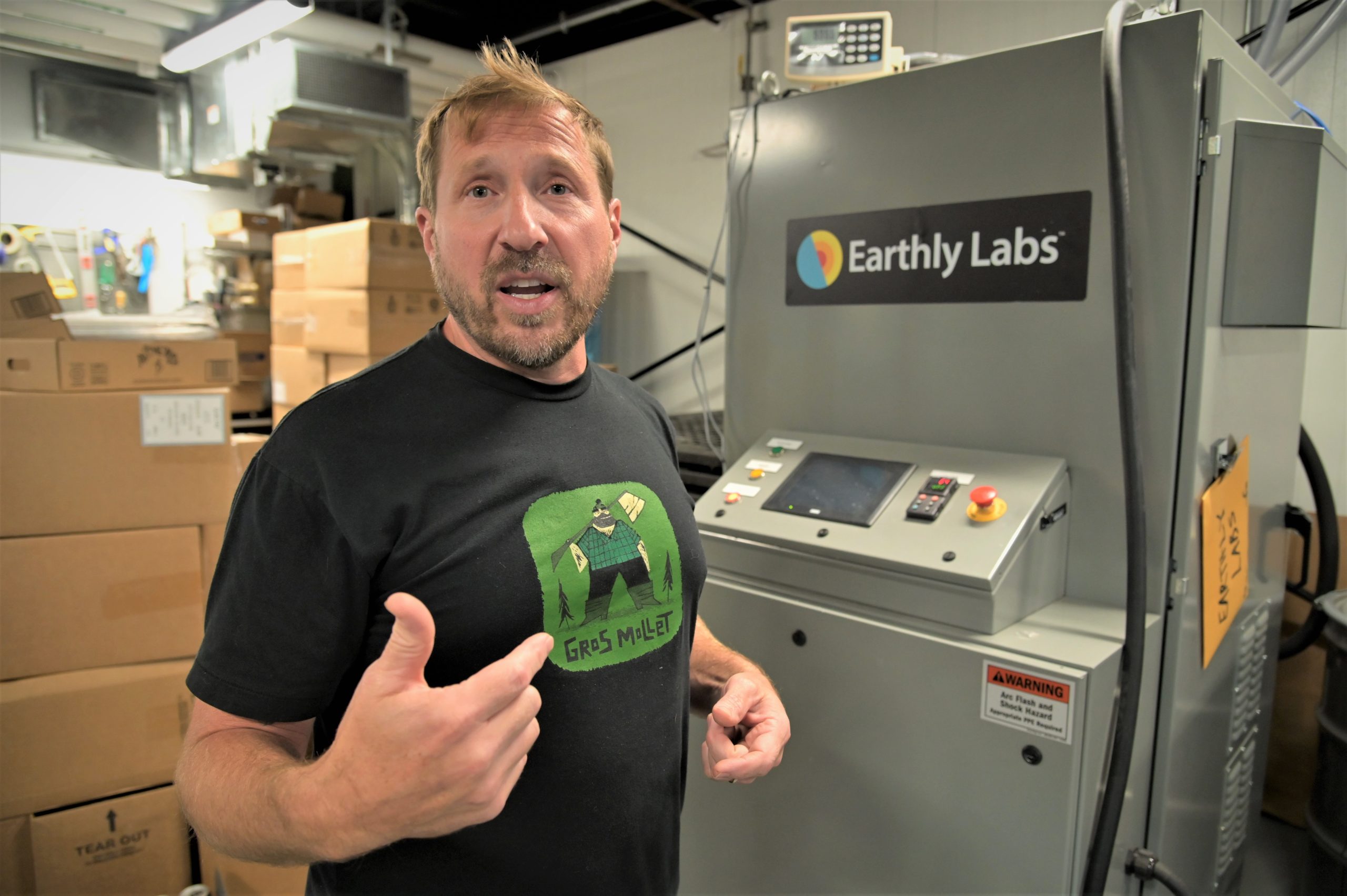
Joel Hartman, chief operations officer at the Alchemist, said the brewery recently installed a carbon capture system made by Earthly Labs, the only company currently producing the technology for small breweries, at its Stowe location.
Alchemist owners Jen and John Kimmich first looked into carbon capture options around five years ago, when they constructed the Stowe brewery. They tried to determine whether a capture system designed for a larger operation could be scaled down, and when that didn’t work, they thought about feeding greenhouses with captured carbon.
“They couldn’t really, feasibly make it work,” Hartman said. “So we just kind of dropped it.”
Then, at the end of last year, they heard about Earthly Labs, a company based in Austin, Texas, that makes a carbon capture system for breweries of their size. CEO Amy George is set to have about 50 operations around the country using the system by early next year, she said, and so far her product has been well-received.
Generally, as a class, brewers with small operations are sustainably minded and “very efficient, so if they can reclaim an ingredient they need, they would happily do it,” George said.
Hartman said the Alchemist uses carbon dioxide both to carbonate the beer and to purge cans of oxygen before filling them.
The system is currently capturing enough to carbonate and package 1.8 million cans of beer a year, he said, which accounts for about half of their production. Early next year, they’ll install the same system in their Waterbury location, at which point they’ll capture the majority of their carbon emissions — enough to carbonate all of their beer. The system typically runs $120,000.
“We spend thousands of dollars a year on CO2,” Hartman said. “I’d guess it’s, maybe, a five-year buyback. It’s a no-brainer in my mind.”
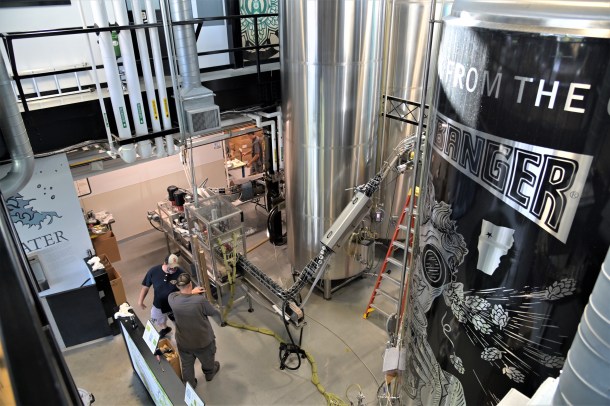
The system, which Earthly Labs calls “CiCi,” uses a flex tube to pipe carbon from fermentation tanks into a refrigerator-sized unit that removes water and scrubs other gases that brewers don’t want in their beer. Finally, the system liquefies the carbon dioxide, which brewers store in tanks.
“In that second stage, we’re also keeping those same emissions, like volatile organic compounds, out of the air,” George said.
George said, so far, she hasn’t worked with any other breweries in the state. This year, her technology will enter wineries and distilleries, and eventually, George hopes to produce a similar system for individual homes.
Generally, climate policy is focused on large-scale emitters, George said, but she wanted to address the thousands of small sources with a solution.
“They would be more affordable, easier to implement, and there’ll be a lot more people that could or would say ‘yes’ than just a handful of people that we were reliant on to save the planet,” she said.
Hartman said he hopes the practice becomes a trend among brewers in Vermont.
“I think it’s important for every brewery, and the whole industry, to be looking at climate change,” he said.
