


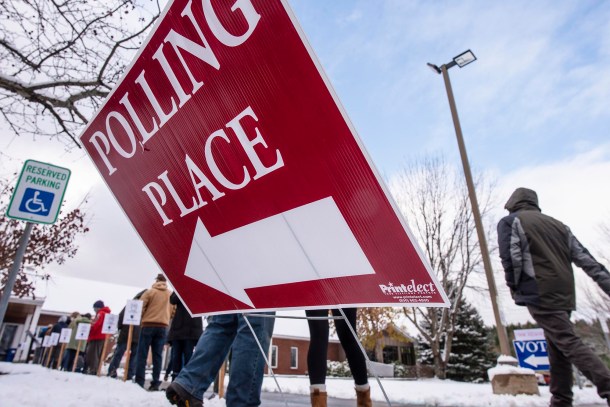
U.S. Sen. Patrick Leahy, D-Vt., introduced new voting rights legislation Tuesday in a push by Democrats to protect voting access by overruling voting restrictions adopted recently in Republican-led states.
The bill, called the John Lewis Voting Rights Advancement Act, specifically aims to restore voting protections that were lost in two U.S. Supreme Court decisions since 2013: Shelby County v. Holder and Brnovich v. Democratic National Committee.
The Supreme Court’s 2013 Shelby County decision invalidated a decades-old formula that made it difficult to pass discriminatory voting laws, opening the floodgates for efforts to constrict voting rights, especially older adults, young people, and those who are Black, Indigenous or people of color.
On Wednesday, Leahy urged approval of the new legislation, speaking at a hearing held by the Senate Committee on the Judiciary.
Leahy has been a major proponent of voting rights and was friends with John Lewis — the late U.S. representative and civil rights leader for whom the bill is named — when they served together in Congress. Leahy’s push to increase voter protection has drawn support from his home state of Vermont.
“Vermont is one of, if not the most, voter-friendly states in the country,” Vermont Secretary of State Jim Condos said. “I really do consider us … very lucky to have the [congressional] delegation promoting the same policies at the federal level that we enjoy here in Vermont.”
Vermont has some of the least restrictive voting laws in the country, allowing no-excuse absentee voting, mail-in voting, same-day voting registration and protecting the right to vote for those who have been convicted of a felony.
Condos praised Leahy’s push to combat Republican efforts to restrict voting.
“This will have an important impact on reducing voter suppression, gerrymandering, making sure we have equal representation around the country,” Condos said.
Gov. Phil Scott, a Republican, declined to comment on the specifics of the legislation, saying he had not yet read the bill. However, in an email to VTDigger, his spokesperson said Scott “has supported efforts to expand access to voting and finding ways to increase voter participation.”
The John Lewis Voting Rights Advancement Act is one in a series of bills Leahy has supported in the past decade to enshrine protections for a diverse coalition of voters nationwide.
“Congressman Lewis would want us to come together and find a path forward to addressing the many threats facing Americans’ foundational right to vote,” Leahy said Tuesday.
While there is strong support for voting rights legislation in the House of Representatives, Democrats have struggled to push it through the Senate, where Republicans and Democrats each control 50 seats, though Vice President Kamala Harris can break tie votes.
Some Republican senators, including Ted Cruz of Texas, argued that the Leahy-backed legislation is a power grab by Democratic lawmakers.
Leahy replied that voting rights have historically received bipartisan support, citing a 2006 vote to reauthorize the Voting Rights Act that was supported by Republicans and Democrats.
“What has changed?” Leahy asked. “The belief that protecting our right to vote is bigger than party or politics is not novel or new.”
