

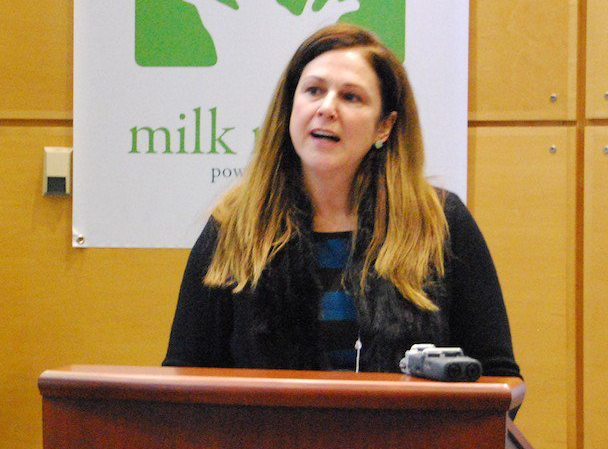
In the latest round, only $1.9 million in economic recovery gap grants have been made to Vermont businesses, state Economic Development Commissioner Joan Goldstein told a Senate committee Tuesday.
The grants have been made in three rounds since the start of the pandemic.
Goldstein told the Senate Committee on Economic Development, Housing and General Affairs her department has awarded a total of 79 grants to businesses, with at least one in every county except Essex.
The commissioner cited several reasons for the low numbers of grants. She called the application a difficult one. She said 1,000 applications were started and not submitted. She said some businesses have not yet filed their 2020 taxes, a requirement for applying for the grants. She said other businesses may not have had a loss in 2020. One hundred twenty applications were deemed ineligible or they were eligible but the calculated award amounted to zero.
“If you made a profit of a dollar, you’re still ineligible,” Goldstein said. “The end result is that people are not getting the help that they need.”
The commissioner said lodging businesses, in particular, are finding it hard to apply because they are short-staffed and owners are too busy doing the jobs of missing employees to find time to apply for grants.
Goldstein said businesses are telling her department that they would prefer that grants be based on loss of revenue. That was the measure by which grants were awarded in the first phase. A recent report from State Auditor Doug Hoffer found using loss of revenue resulted in overpaying businesses.
Goldstein defended her department’s handling of that first phase of grants. Hoffer’s report found that 401 of 718 businesses receiving grants were more profitable in 2020 than in 2019 after taking the grants into account. Even so, the “Covid disaster” is not over for those businesses, Goldstein said.
Those 401 businesses received $4.4 million more than the need they identified, Hoffer told the committee.
“There are people still feeling Covid impact,” Goldstein said, and she took exception to Hoffer’s report.
“The feds are not requiring us to reclaim funds from people who made out better than they had expected,” Goldstein said. “There is nothing untoward about the way we transacted.”

Committee Chair Michael Sirotkin said he wants to find a more efficient method of getting money to businesses that need it.
“I have difficulty giving money out to people who suffer a revenue loss but don’t suffer any loss in profits,” Sirotkin said.
In this latest round of awards, $49 million in potential grants have yet to be awarded to Vermont businesses.
In his report on the first two rounds of grants, Hoffer argued that the Agency of Commerce and Community Development, of which the Department of Economic Development is a part, should have awarded grants to businesses based on net operating income and not, as it did, on loss of revenue. Under the latter method, businesses that showed a profit ended up getting grants.
“I would encourage you to make every effort to target it as best as possible,” Hoffer told the committee. “Net income is much more narrowly focused.”
Hoffer told the committee that he is required to report his findings to the U.S. Treasury’s Office of the Inspector General. He said the federal government would be within its rights to reclaim grant money made to businesses that showed a profit, though he admitted political pressure from members of Congress would make it unlikely that the Treasury would do so.
“A lot of businesses that were profitable got money that should have gone to others that have more need,” Hoffer said. “I’m disappointed that the agency effectively ignored the substance of our findings. We didn’t audit the decision to create the program. The only question was how it was designed and how it was implemented.”
