


Norma Hardy recently made headlines when she was hired as Vermont’s first Black female police chief. But Hardy, who is originally from New York, knows her most personally historic moment came when she responded to the horror of two hijacked jets crashing into the World Trade Center on Sept. 11, 2001.
“It was just complete chaos — people running, people bleeding, people trying to wash their eyes out, people hurt and looking for help,” the former officer for the Port Authority of New York and New Jersey recalls of the aftermath of a terrorist attack that killed nearly 3,000 people. “We didn’t know if other planes were coming, if someone was going to start shooting at us, if things would start to explode.”
Hardy, who began working at the 110-story twin towers just weeks before an earlier bombing in 1993, was home preparing for her afternoon shift when the planes hit 20 years ago. Traveling from Brooklyn through a highway tunnel to Manhattan, she emerged to find an instantly changed world.
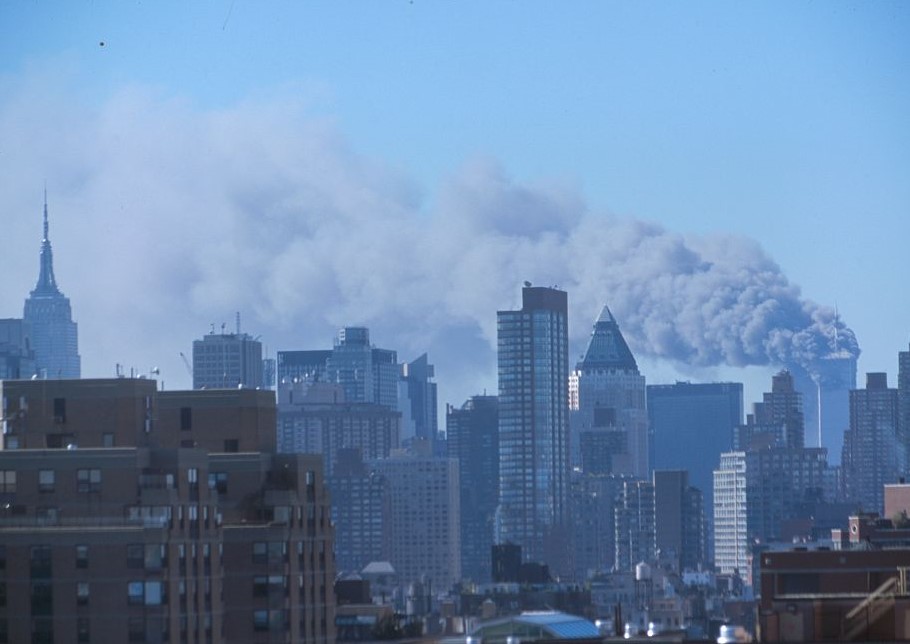
“I remember this dark fog of smoke and soot — it was ashy and looked like confetti — and it was really hard to breathe,” she says. “It was like a scene from ‘The Twilight Zone,’ I usually tell people, because I can’t think of what else would describe it.”
As the nation listened to newscasters report what was happening — a third plane had hit the Pentagon and a fourth had crashed in Pennsylvania — Hardy and fellow emergency responders only knew they had no idea what was going on.
Hardy has since relocated to Brattleboro, where she’s leading a town police department that’s pursuing reforms after disproportionately targeting people in marginalized populations. Her challenge is both intense and immense. Then again, it’s nothing compared with what she faced one fateful day two decades ago.
‘You’re going to get bored — nothing ever happens there’
Hardy, 61, remembers growing up in Brooklyn in the 1960s, although she was too young to understand why her family reeled upon the biggest news of the era: the assassinations of President John F. Kennedy and civil rights leader Martin Luther King Jr.
Interested in performing arts, Hardy attended the same high school as Barbra Streisand, only to move on to the John Jay College of Criminal Justice, then leave to join the military before becoming an emergency medical technician and finally a police officer.
“In my neighborhood, there was a lot of distrust with police,” she says, “and I felt I’d be able to keep the peace because people would see someone who looks like them.”
Hardy joined the Port Authority department in 1992 as an officer at the World Trade Center, the tallest set of skyscrapers on Earth upon their opening two decades earlier. King Kong had carried Jessica Lange up the towers in a 1976 movie. But Hardy remembers her police academy classmates telling her, “You’re going to get bored — nothing ever happens there.”
That changed a few weeks later. Hardy, finding truant teenagers fighting on a train platform Feb. 26, 1993, brought them to her underground office so she could call their parents.
“All of a sudden, I heard what sounded like a pop.”
Her chair shaking, Hardy wondered aloud what that was.
“That,” another officer said, “was a bomb.”
Police led the truant teens to the front door, only to discover it was blocked by debris. Everyone moved to the back entrance and the darkness of an uncharted basement.
“We’re trying to see with our flashlights, but we couldn’t really because the smoke was so thick, so we’re trying to feel our way,” she recalls. “My first thought was that I was terrified, but when you have on that uniform, people expect you know what to do.”
Hardy led the teens and a growing gaggle of lost commuters forward.
“I didn’t know where I was going yet, but I knew we had to get out of there.”
Leading her charges to safety, Hardy would receive a medal of valor.
“The biggest lesson I learned,” she says of that day in 1993, “was that if you just take a moment and calm down, you can have control and think yourself out of a situation.”
‘Hey, do you see where you’re going?’
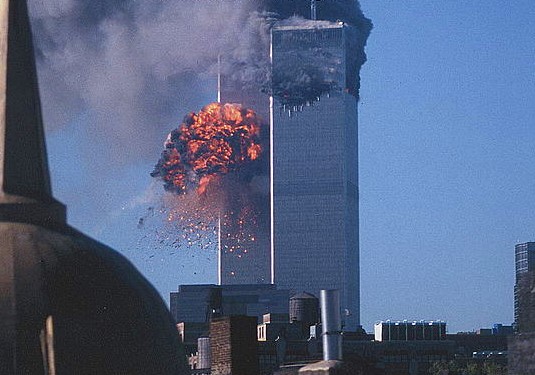
Hardy remembered that lesson when another terrorist attack destroyed the twin towers the morning of Sept. 11, 2001.
She was home awaiting the start of her afternoon shift when her mother called to report a crash had been broadcast on television.
“I’m thinking it’s a little plane, a little accident.”
Then a second jet hit.
“We realized this wasn’t an accident.”
Hardy’s mother told her not to go. But the officer didn’t think twice. She called a colleague to offer to carpool. When he didn’t answer, she traveled to Manhattan through the Brooklyn-Battery Tunnel under the East River.
“It didn’t dawn on me that I was the only one driving through this tunnel. It was dark, and then it started to fill up with smoke. I was scared, but I thought, ‘I can’t turn back around and leave; I have to keep going forward.’”
Unplugged from the news, Hardy didn’t understand why she arrived to what looked like a snowstorm in a nuclear winter.
“I kept thinking, ‘What is this stuff that’s falling in my hair?’”
Hardy walked toward what everyone else was fleeing.
“I remember this man yelling at me, ‘Hey, do you see where you’re going?’”
What struck Hardy was what she didn’t see: the towers, both of which had collapsed. She then remembered and asked about her carpool colleague, who she learned had reported to work early.
“I kept calling him and leaving him messages he wasn’t answering. And so we started to go out to rescue people — or what we thought was to rescue people.”
The site had yet to be named “ground zero” when she and fellow emergency responders began searching for survivors, all the while wondering if they might face another attack.
“Some of us dug with our hands with just gloves on, thinking we could hear people.”
But calls for “quiet” didn’t bring any discoveries, just a haunting silence.

‘The eeriness of the whole thing plays with your mind’
Hardy also remembers the firefighter “man down” alarms, signaling a firefighter was in distress, ringing deep under the rubble.
“That’s a sound I never, ever will get out of my head because we heard it so much. The eeriness of the whole thing plays with your mind. You’re thinking, ‘We’re going to save everybody.’ By that night, though, we started to realize that wasn’t going to happen.”
Hardy understood that all too well upon learning of the death of her carpool colleague.
Soon the rescue effort morphed into a recovery exercise as responders formed bucket brigades to sift through the gray pit of ash and twisted steel.
“They would make us take downtime, because everybody wanted to just keep working.”
During one break, Hardy scribbled words on a napkin as if she was poet Maya Angelou, one of her role models.
… I wish my shoulders now
were even more widely spread
so I could hold the grief we bear
and not waver from the dread …
Hardy eventually typed up the result, which a colleague went on to post in the office. Her poem “The Men” would be read at funerals and recorded in a song by a keyboardist for Ashford & Simpson.
… I know there’ll come a time
when we will all meet again
god’s light will shine around us
but we must wait till then …
After 9/11, Hardy was promoted to sergeant in 2002 and lieutenant in 2006. She kept working at ground zero as a new Freedom Tower rose and had the address under her jurisdiction when she retired as assistant chief in 2018.
“Everyone loved the police,” she recalls of that period. “We would come walking down the streets and people would have signs saying ‘thank you.’”

‘Even if it was only for a little bit of time’
Then came the murder of George Floyd last year and the rise of Black Lives Matter. In Brattleboro, the two events led to a community safety review that found the police department in one of Vermont’s most politically progressive towns was among “the worst” for disproportionately stopping and searching people of color.
Brattleboro, hiring Hardy in July, wants to change that.
This week, however, its new police chief is taking time to remember her past, be it through the “Personal Stories of Transformation” school program of the 9/11 Tribute Museum or joining other responders for a photo in the current issue of Smithsonian magazine.
Hardy found herself in a hospital after breathing too much dust during one bucket brigade. But she has so far avoided most of the lingering health effects that have hit others hard.
“The first few weeks I’d have nightmares that our guys were still waiting for us to come get them. Over time, that started to lessen, but I still remember almost every moment. It doesn’t matter how many years ago it was. If you experienced that, you’re coping every day.”
Hardy credits her family, female police mentors and faith for getting her through.
“I tell everyone, ‘Whatever your faith is, if it’s enough to sustain you during trying times, I’m all about it.’ I’m fortunate I can talk about this. I have friends who still can’t. Some people say, ‘It’s time to move on.’ You can move on, but you can’t forget. It’s a part of our history. You do try to go on and carry on and build on, but at the same time, I want people to remember.”
Because after the clouds of smoke blew away, Hardy was left with one silver lining.
“The biggest thing for me was how much America came together and showed resilience,” she says of 9/11. “That stays in my mind, especially now when everybody seemingly hates everybody. Then, there wasn’t the nonsense that’s in the news now. Everyone remembered they were all Americans, even if it was only for a little bit of time.”

