

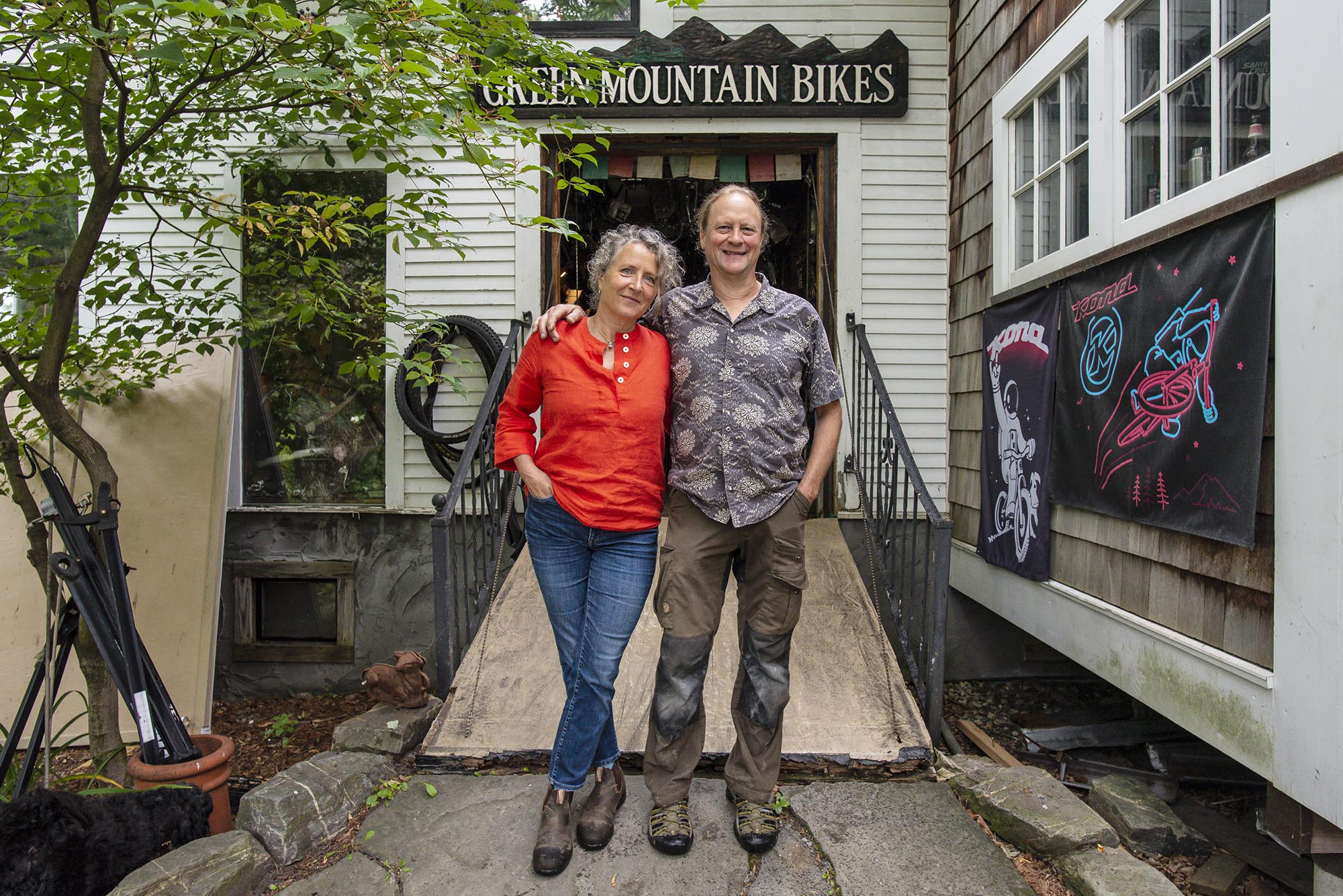
ROCHESTER — In remembering Tropical Storm Irene, Doon Hinderyckx is struck by how quickly things went wrong. “It never felt like it was raining hard,” he said.
“We were alerted that it was going to be a bad situation, so we were waiting for drama, like strong wind and all those kinds of things,” said his partner, Anni Mackay.
“But it just kept raining,” Hinderyckyx added.

Not until the following day, when the rain cleared, did they realize just how dire the situation was. “It was actually a beautiful day, the rain had stopped, we started walking around and then all of a sudden we realized, ‘Well, that road’s out, the bridge is down, Bethel Mountain Road is too dangerous to go up,” recounted Mackay.
“We were completely cut off,” said Hinderyckx.
Rochester was not alone. The day after Irene struck, 531 miles of state roads, countless local roads and 34 bridges were closed.
Rochester was one of about a dozen communities that were completely cut off, all roads in and out impassable. One section of town was accessible for seven weeks only by a footbridge. Townspeople called it the island. Rushing water tore caskets out of a town cemetery and shoved them downstream.
But the recovery in Rochester, in particular, shed light on another crisis that had been brewing before the storm: the state’s opioid epidemic.


Going door to door
Hinderyckx organized a meeting of townspeople at the church, and Mackay and a friend planned to go door to door to alert neighbors not to drink the water or flush their toilets. But, when they reached the first house, the two women noticed medications lined up along an old wooden piano in the living room as they chatted with its owner about the drinking water.
“That’s going to be your problem right there,” she recounts her friend — a psychopharmacologist — telling her. Mackay quickly amended her message to neighbors: “On top of, ‘don’t flush the toilet, don’t drink the water, the town meeting is at the church at 1,’ we added: ‘Let us know if you have any prescription medication needs in the next couple of weeks.’”
By the end of the day, Mackay had a list of medications and a small team of neighbors ready to help. Hinderyckx and Mackay drove as high up Bethel Mountain Road as they could to get good cellphone reception, and called Gifford Hospital, one town over. When they finally connected with a doctor, they were told to call back the next morning with a comprehensive list of medications, while the doctor worked out a way to get hold of the medications.
“By 9 o’ clock the next morning we had even more people telling us ‘we need this, we need that,’” said Mackay. “A massive list of unpronounceable things,” Hinderyckx remembered.
Gifford Hospital promptly connected with nearby pharmacies to get medication into Rochester.
“By some kind of miracle, the pharmacies actually coordinated with the hospital and released these prescription medications,” said Mackay. The hospital worked with the Bethel Fire Department, whose firefighters traveled over the mountains on ATVs to deliver prescription drugs for Rochester.
The situation painted a picture of prescription drug use in Rochester. And it was alarming.
‘What is going on?’
“There are prescriptions that are usually filled day by day, little by little, but they were all condensed and the doctors listening to us listing all this stuff, it put it right in their face that there was an issue with overprescription of pain medications,” Hinderyckx said.
“So, the doctor in the background as he’s listening to all these prescriptions coming in is like, ‘Omigod, what is going on?’” Mackay said.
After the Irene emergency eased up, the doctor they worked with alerted state officials that he thought there was an issue with over-prescribing opioids in the region. Not long after Irene, Vermont declared a state of emergency, recognizing it was part of the nationwide opioid epidemic.
“It was pretty disturbing that there were so many people who were really that vulnerable,” Mackay said.
Mackay believes that Irene — as devastating as it was — actually brought to light some of the biggest problems in rural Vermont. And she believes her community is better for it.

Since Irene, Rochester has developed a network of biking and hiking trails in the national forest land nearby to help revitalize the economy with outdoor recreation. A mobile home park that flooded during Irene has been taken out and replaced with a community park. The Rebuild Rochester Fund — established by the town in Irene’s aftermath to collect money to help the town recover — is still around a decade later. Mackay continues to help raise and distribute funds to families in need in the community.
“Every little town needs a fund like this, where they can go and say, ‘I have an urgent need of $500,’” Mackay said.
“A lot of people fall through the cracks — you know, they didn’t fill out the right paperwork, or whatever. A lot of it is picking up the slack for people who can’t manage the red tape of day-to-day life,” Hinderyckx said.
As for the opioid crisis in Rochester, Mackay and Hinderyckx believe the situation has improved, although there’s no reliable data available on opioid use in the town of about 1,100 residents.
“It definitely hasn’t completely solved the problem, but it’s brought it to attention,” Hinderyckx said.
“We have a lot more sensitivity to how fragile people are, and how fragile their environments are, because of the use of opioids. I think there is more transparency around that now, and it’s become clear just how fragile these little rural communities are,” Mackay said.
From Thursday: To the rescue in Pittsfield, ‘Because we are Vermonters. That’s why!’
Coming Sunday: Is Vermont ready for its climate future?
