

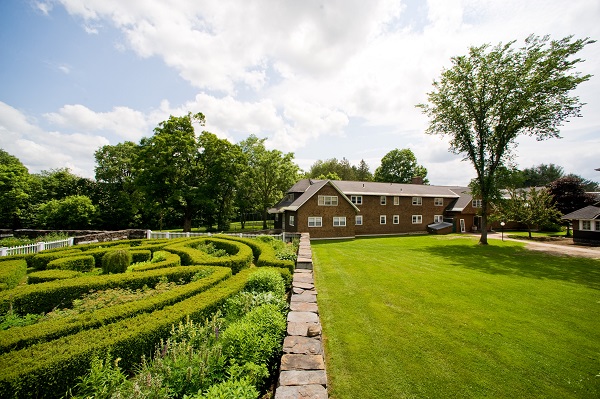
Goddard College revealed Friday that they would be willing to house Afghan refugees at their Plainfield campus for at least two months this upcoming fall. However, there are no clear plans to bring refugees to the state yet.
When the Scott administration announced that Vermont would welcome Afghan refugees shortly after Afghanistan’s capital city of Kabul fell to the Taliban earlier this month, Priscilla Fox knew it was time to take action.
“We figured we would need housing for potentially a large number of people,” said Fox, who is co-vice president of Central Vermont Refugee Action Network. “We thought about colleges first which have dorms that aren’t necessarily fully being used.”
The group reached out to Goddard College, which just last year announced plans to offer up the campus as a quarantine site for Covid-19 patients, but called off the plan after facing significant backlash from local residents.
This is the first time the Refugee Action Network has worked with a college or university to house refugees. Typically, it works directly with families who can house only a small number of refugees per household. However, because the organization anticipates a large number of refugees in the coming months, officials wanted to be prepared.
Shortly after hearing from the refugee action network, Goddard announced its intention to house refugees on campus.
“Goddard came out with a statement all of a sudden that kind of caught us by surprise,” Fox said. “We’re very happy to know that Goddard is willing, but there’s a lot more work to be done before that reality happens of refugees actually coming to campus.”
Goddard College President Dan Hocoy said the decision was a “no-brainer.”
Hocoy said once he got off the phone with the Central Vermont Refugee Action Network, he spoke with other leaders on campus and within 10 minutes they had unanimously agreed to host refugees on campus.
“I was so pleased because I really believe that it’s part of our mission to address the current needs of our global community,” Hocoy said.
While Hocoy is not yet sure what refugee housing would look like, he anticipates housing them in the school’s dormitories, likely when students are not there. Goddard College operates on a “low-occupancy model,” meaning students come to campus only 10 days per semester and then learn remotely from their home states or countries after that, leaving many of the dorms empty for long stretches of time.
“We haven’t figured out the details of what is actually required,” Hocoy said, “but we’re thrilled to host them here.”
The Refugee Action Network hasn’t quite figured out the details yet either, mostly because it has no idea how many refugees could be coming to central Vermont, or when.
Andrea Delabruere, executive director of the Vermont Agency of Human Services, said no Afghan refugees are scheduled to arrive in the state at this time. She noted the situation is “rapidly developing, but right now that’s the status.”
Delabruere was not aware of Goddard College’s plan to host refugees but said any community support helps. “We’re appreciative of every offer,” she said.
At this stage, many refugees are traveling from Afghanistan to a third country where they are vetted, then to military bases in the United States. Only then are they sent to particular states and connected with community refugee networks like the Central Vermont Refugee Action Network. The organization’s primary role is helping refugees once they have arrived in the community. It provides short-term housing, food, clothes, language partners to help refugees learn English and other community support.
Hocoy said Goddard College may be willing to host refugees longer than two to three months, but planning the partnership is still in its early stages.
