

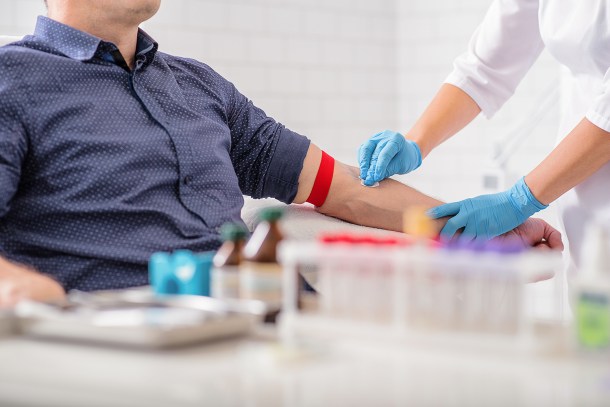
Some hospitals in New England have had to postpone elective surgeries because they don’t have enough blood on hand, says Neal Goswami, spokesperson at UVM Medical Center.
Hospital association leaders in all six New England states have issued appeals for people to donate blood to help overcome critical shortages.
“We have not had to [postpone procedures] here,” Goswami said, “nor do we believe we will have to do that here,” he said.
Still, patients in Vermont hospitals “are always in need of blood,” said Dr. Sarah Harm, a pathologist at UVM Medical Center whose specialties include blood banking and transfusion.
In Massachusetts, “the blood shortage that we are currently facing is unlike any that we have seen in years,” said Steve Walsh, president and CEO of the Massachusetts Health & Hospital Association.
When people arrive at hospitals with life-threatening injuries, immediate blood transfusions are often necessary, Walsh explained, making blood donations essential for recovery.
The recent uptick in Covid-19 cases makes the need for blood donations especially critical, Walsh said in a press release.
The American Red Cross reports that the average red blood cell transfusion is three units, but a person injured in a single-car accident can need upward of 100 units.
An adequate blood supply is also essential for surgeries, chronic illnesses and cancer, according to the American Red Cross, which provides about 40% of the nation’s blood supply.
The American Cancer Society expected more than 1.8 million people to be diagnosed with cancer in 2020, and many of those people would need blood during chemotherapy treatment. Some even need it daily.
There’s certainly room to expand the blood-donor system that helps keep hospitals have an ample supply on hand. The Red Cross says only 3% of eligible donors actually give blood in a given year. There’s no way to manufacture blood and platelets, making volunteer donations critical.
Drug overdoses, organ transplants and a rising number of major injuries and emergency room visits have also cut into blood supplies, the Red Cross says. For instance, trauma centers needed 10% more blood in 2021 than they had in 2019, and patients with major hemorrhaging may need hundreds of units of blood as doctors try to save their lives.
“Vermont hospitals are seeing more patients who are sicker or have more serious injuries than in previous years, so it comes as no surprise that there is a greater need for blood donation,” said Devon Green, vice president of government relations for the Vermont Hospital and Healthcare Association.
Green pointed to the way Vermonters have united against the pandemic, and hopes they will respond similarly to the need for more blood donations.
“Throughout Covid-19, Vermonters have shown just how much they can achieve when they pull together for their communities. Blood donation is a simple way to help those in medical need and we hope that all Vermonters who can donate take the time and give this gift of life,” he said.For blood donation opportunities, visit the Red Cross blood donor website.

