


Caitlin Wong’s father opened Silver Palace “a long time ago,” she told VTDigger.
Wong said in a telephone interview that the restaurant she manages on Williston Road in South Burlington has been open for more than two decades, serving what Wong described as Chinese Asian fusion food.
When the pandemic hit, Wong’s family decided to shut down the restaurant and serve takeout and catering only.
Business remained so brisk that the Wongs decided not to apply for a grant from the federal Restaurant Relief Fund.
“We weren’t in a position where we were looking into that,” Wong said. “Luckily, our takeout was pretty steady and we had catering.”
The restaurant reopened for dinner on June 11, with 31 tables in the open dining room with windows in front.
“We can seat large parties,” Wong said.
A look at Silver Palace and five other restaurants along Williston Road highlight the differences in who got federal help and who did not.
However, because most restaurant operators contacted for this story either declined to speak to a reporter or did not respond, details are not available on how much the federal grants helped these businesses.
Tygate Motel Corp. — the legal name for Windjammer Hospitality Group, which owns the Windjammer Restaurant and Upper Deck Pub — received $4.1 million, more than any other restaurant business in Vermont. Windjammer also runs the Windjammer Inn and Conference Center.
Laura O’Connell, one of the owners, did not return calls asking how the restaurant used the money.
Chicken Charlie’s Rotisserie Grill & BBQ did not get any grant money. Neither did Al’s French Frys, Rotisserie Restaurant, or Barnyard Wood Crafted Pizza. None of their owners returned calls and emails asking to talk about whether they even applied for grants.
Fits and starts
Disbursement of the grants turned into a process that left many disappointed, either because the money ran out long before all those seeking help were able to get it — or, for nearly 3,000 restaurant owners across the country, because the money was awarded, then taken away.
When the Small Business Administration first asked for applications, it promised women, veterans and socially and economically disadvantaged restaurant owners they would get priority. However, a lawsuit in Texas by white business owners backed by former Trump administration immigration adviser Stephen Miller, and another lawsuit in Tennessee, led the SBA to rescind grants to 2,965 owners across the country.
The SBA did not respond to a request for a list of Vermont owners who had been promised grants, but then were denied the funds.
The grants could be small, and were not issued solely to keep existing restaurants afloat.
For instance, Kraig Mackett was awarded $18,853 to open Hammondsville Tavern in Reading. The fine-dining restaurant that previously occupied the 19th-century building had closed in March 2020 because of the pandemic.
Mackett decided to open a tavern, but he needed money to cover rent and utilities until he could actually open the restaurant in June.
On Church Street
Along bustling Church Street in downtown Burlington, where diners wait for outdoor tables, some restaurants asked for help while others did not.
At the corner of Church and Main streets, Honey Road received $518,069. Owner Cara Tobin did not respond to an email asking how she spent the money.
Along the same block between Main and College streets, Ri Ra Irish Pub did not receive a grant, nor did Gaku Ramen. The restaurants did not return phone calls asking whether they had applied.
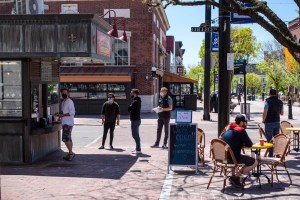
Panache of Paris, the parent company of Leunig’s Bistro, at the corner of Church and College streets, was approved in May for the second-biggest grant in Vermont, $1.3 million, but declined to say whether it actually received the funds or how it would spend the money.
“We’re not going to talk about that,” said General Manager Melissa Baldwin when reached on the phone.
For David Melincoff, who owns Sweetwater’s, across the street, the grants posed a moral quandary.
He did not need the money to survive and so did not apply.
“I felt like summer was coming,” Melincoff said in a phone interview with VTDigger. “We were doing OK during the winter months. I didn’t feel comfortable saying we needed this money to survive. We were paying our bills. We would have a busy summer. How could I say we needed the money to survive?”
Melincoff said he kept everyone on the payroll until the crowds could come back to his 25 outside tables on Church Street.
“I could not in good conscience” accept the money, he said.
