


A new investigation into the climate of Vermont’s National Guard has found that a “good old boy” network persists among its ranks, and that the organization failed to adequately track instances of sexual abuse.
The findings confirm what many have been saying for years about the Guard’s internal culture. A 2018 investigation by VTDigger documented a range of unruly behavior permitted in the organization and a culture that perpetuated the harassment and abuse of women members.
Not only did the report identify cultural problems, but it also found that some offices in the Guard were not following particular federal regulations. It found that a culture of fear keeps some members from sharing concerns with leadership because of the potential for reprisal. It also found that the Guard lacked required support structures for people who have experienced sexual assault.
The report was requested by Adjutant General Gregory Knight in November 2019, and was carried out by the National Guard Bureau Office of Complex Investigations, to assess the organization’s “command climate and systems.”
Knight promised Vermonters — and his boss, Gov. Phil Scott — that he would improve the Guard’s culture and retention issues when he came into his position to quell statewide concerns about the Guard’s reputation.
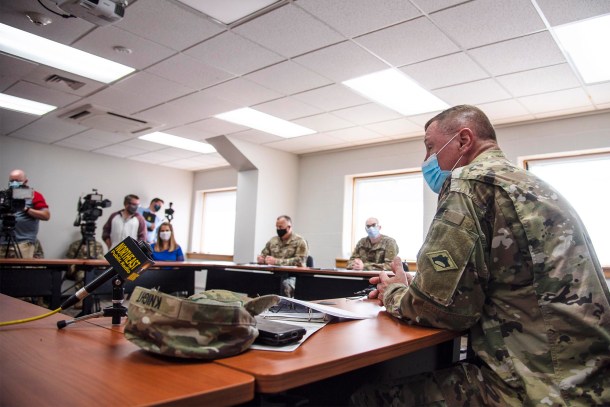
He told reporters at a press conference Thursday — the report was embargoed until Sunday to allow the Guard time to share it with its members — that some elements of the report surprised him while others did not.

He said he was surprised that the report identified “an undercurrent of toxic leaders, folks that are perhaps not treating people as the way they should.” The report’s investigators identified examples of bullying and harassment among the ranks.
“That was a little disheartening for me, because we’ve been working very diligently to ensure that doesn’t happen in the past two years,” Knight said. “So that’s something we’re gonna revisit.”
What Guard members said
The report includes many survey responses from Guard members lamenting the perceived “good old boys” network in the organization, which leads to favoritism and a culture where members don’t feel comfortable speaking out against problems.
“I feel some leaders still participate in the ‘Good Old Boy’ school of thought and protect those they like,” one member wrote.
Another said, “I have witnessed favoritism with assignments and promotions based on the ‘good ole boy’ network and not based on qualifications, education and experience. This needs to stop.”
The report found that this culture particularly inhibits professional growth for women service members.

“Multiple service members in the VTARNG reported examples females [sic] being bypassed for positions despite having more qualifications for the job than the individuals who were hired,” the report states.
After reading the report, Knight said he doesn’t know yet if the “good old boys” culture is a perception in the Guard or a reality. He said he wants to continue meeting with members to address these issues.
“Some of those assertions, they’re serious. You’re making a serious allegation that there are flaws in selection processes,” Knight said. “I know we have significant controls in place to mitigate that. Do they work all the time? Are they always implemented properly? We’ll find out.”
Sexual assault data flawed
The report found that, from 2010 to 2020, the Vermont Guard failed to properly report and track data on sexual assaults. When requesting information on sexual assault statistics, investigators received conflicting information with every request. At times, basic information such as dates of alleged assaults were missing from case files.
Investigators also found there was often a shortage of mandated victim advocates available for Guard members.
The report also documented sexual assault training deficiencies in leadership.
Investigators documented that one victim was required to attend the same annual training as their perpetrator, despite making it known to superiors that they felt unsafe.
“In one case, a victim of a sexual assault recalled having to interact with her perpetrator on numerous occasions after she filed her unrestricted report of a sexual assault,” the report stated. “But the victim was informed essentially as long as the perpetrator was in the Vermont National Guard, he would attend ‘[Annual Training] if he was in good standing.’”
And while some survey results found that Guard members think favorably of their leadership when it comes to their ability to stop toxicity — 92% thought their supervisors were respectful, 88% thought their supervisor would stop sexual discussions at work — there are also members who think that the Guard protects sexual predators.
“Even those found guilty after full investiga[tions] are given letters of recommendation by leadership. Some of these offenses are so bad they should be on the Sex Offender Registry, yet we try to retain them,” one survey respondent wrote. “Our constituents within Vermont are relying on us to provide a safe location for their sons and daughters to serve and we cannot promise that based on our current climate.”
Equal opportunity
The report was most blunt around the Guard’s equal opportunity employment programs. It stated that they are not in compliance with Department of Defense and National Guard Bureau policies and regulations. However, Knight told reporters that there are far more equal opportunity staff advisers than the report documents.
The report states that personnel use “ad hoc procedures” to resolve illegal instances of discrimination in the Guard, “which does not allow for transparency, consistency, and oversight of the program,” the report states.
“This results in distrust of the process and impedes the command’s ability to resolve issues involving unlawful discrimination and sexual harassment in an efficient and prompt manner,” the report added.
To ensure that Guard members felt comfortable filing complaints through the organization’s processes, every state National Guard was required to implement a Retaliation Protection Plan in 2017. The Vermont National Guard did not do so. Complaints had to be reported to the chain of command and not anonymously, the report found, which inhibits members from being forthcoming.
As for the overall culture in the Guard, investigators found that, while the climate is generally “sound and well-focused,” they also found that “many VTNG personnel across the organization have a deeply rooted fear that senior leadership will not treat them fairly if they highlight or voice problems in their units.”

“This pervasive fear appears to stem from past senior leadership, as well as a perception that an unofficial ‘good old boy’ network of favoritism is operating within the VTNG,” the report states. “This has an undeniable chilling effect on the current senior leadership’s efforts to make changes for the better.”
Knight said the Guard is not required to implement the 35 recommendations from the investigators to address the problems they identified, but he’s not going to ignore them.
Brigadier Gen. David Manfredi told reporters that these recommendations have been assigned to a group of staff members in the Guard who are determining how they can be addressed through both long-term and short-term solutions. He said the public will be updated as they’re implemented.
Knight said some policy changes can be implemented right away while other issues will take time, money and personnel to solve. He also pointed to data in the report that showed some members do approve of the Guard’s current makeup.
“My responsibility is to make it an organization that’s fair, equitable and just, and that provides opportunity for everybody,” Knight said. “It’s OK to have a hard conversation. I’m OK being uncomfortable. We got to get the rest of the organization OK.”

