


Editor’s note: Because of faulty information from Vermont Emergency Management, an earlier version of this article reported that the estimate of statewide road damage was far higher than it actually was. The numbers have been corrected.
Damage from last week’s floods will cost more than $5 million to repair, Vermont officials say.
Local roads have been hit hardest, with damage expected to run “well over $4 million” in Bennington and Windham counties, said Ben Rose, the recovery and mitigation section chief for Vermont Emergency Management.
“It certainly appears to be some of the worst flood damage in southern Vermont since 2005 in some communities,” he said.
Damage to state roads alone is about $1.6 million.
After the floodwaters receded, the Vermont Emergency Management agency swiftly requested a damage assessment from the Federal Emergency Management Agency to determine if Bennington and Windham counties qualify for federal disaster aid to help cover the cost of responding to the floods and rebuilding.
Without federal help, taxpayers in Bennington and Windham counties can expect “serious hardship,” agency Director Erica Bornemann said in a press release.
Bornemann toured flood damages with Gov. Phil Scott on Monday and was unavailable to comment.
To qualify for assistance, state officials must identify at least $1 million in public infrastructure damage. “We’re well over the threshold,” Rose said.
The $1 million statewide threshold is “a statutory minimum for consideration but not a guarantee that the declaration request will be approved,” Rose said.
Counties must prove that public infrastructure recovery and damage costs are $3.89 per capita, according to the press release, and those estimates are subject to FEMA verification.
In Bellows Falls, the fire department dealt with waist-deep water on some roads, churning with heavy debris. The department’s Facebook page reported that “firefighters pumped water from the basements of half a dozen houses,” and some roads absorbed heavy damage.
Hyde Hill Brook “became plugged because of the heavy rain,” Bellows Falls Fire Chief Shaun McGinnis said in an interview. “[Flooding] found the lowest point and the water was about 3 feet deep at that point in the road.”
Firefighters and highway workers pitched in to scoop up debris and silt that ended up in the roads, he said.



Vermont Emergency Management provided a preliminary snapshot of damage — compiled by the Agency of Transportation — to FEMA during the weekend, Rose said.
“Eligible reimbursement costs include repair work on public roads and buildings, tree and debris removal from public rights of way, municipal employee time spent working on recovery, contractor help, equipment rentals, and other costs associated with the storm,” according to the Vermont Emergency Management press release.
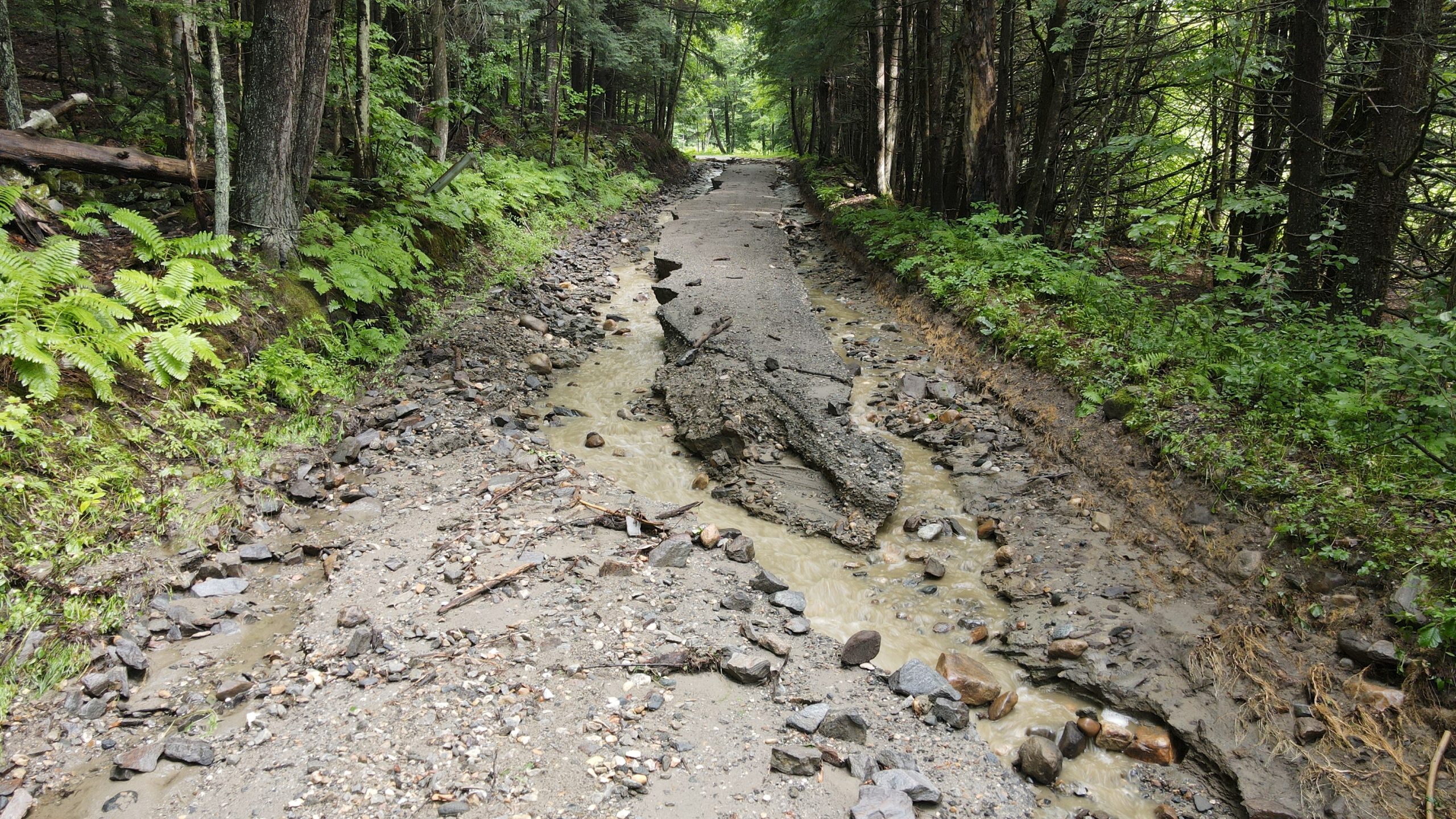
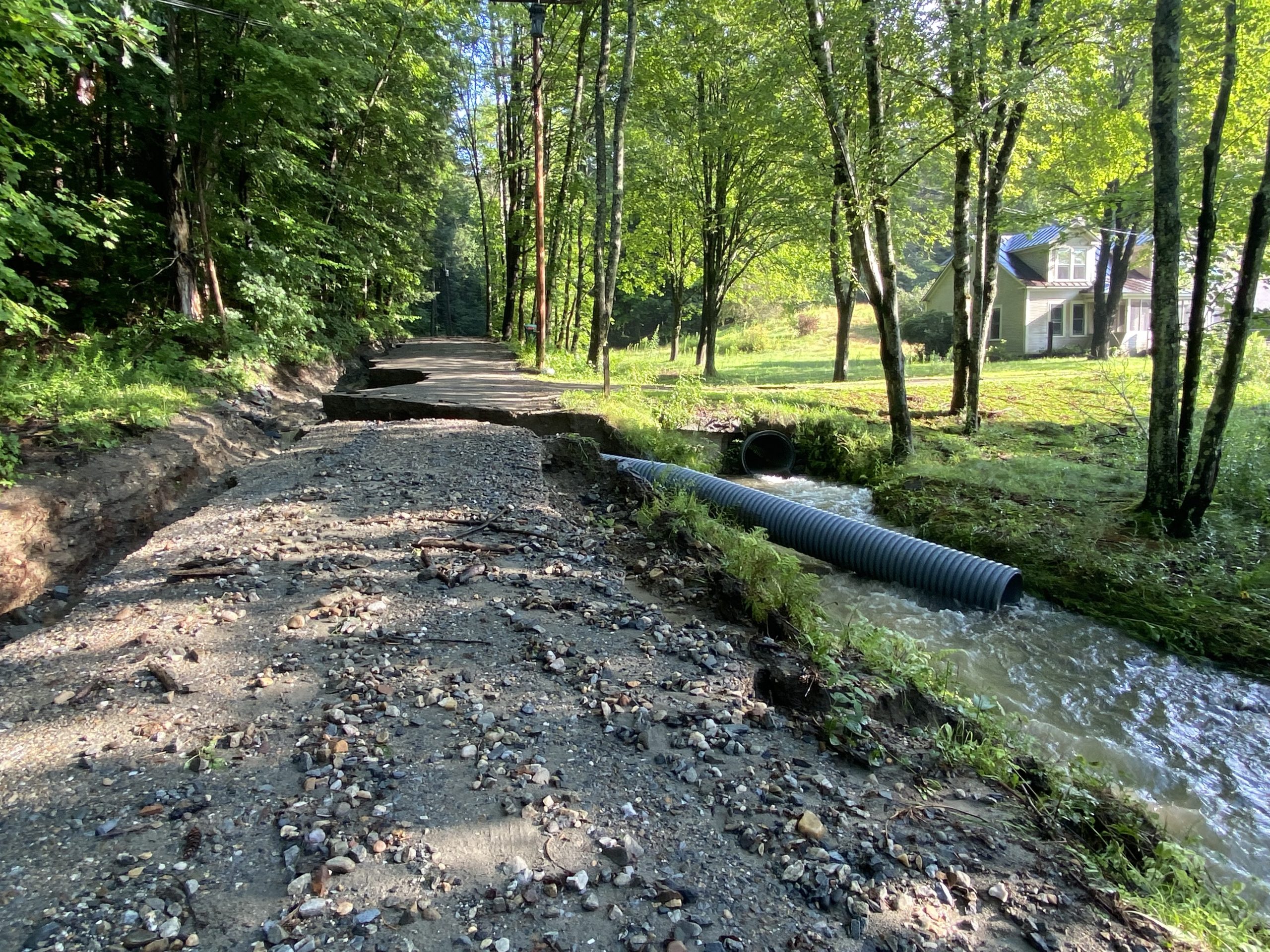
Many state and town drainage systems were overwhelmed by intense rainfall, resulting in flooded roadways and “significant erosion of dirt roads in towns,” Joe Ruzzo, southeast region district transportation administrator, said in an email.
“Many culverts were also damaged and either washed away or became clogged with debris to the point that they need to be replaced. So far, it doesn’t appear that bridges received too much damage, but we are just completing the preliminary damage assessment process,” he said.
Ruzzo described the damage as “major.”
“VTrans is assisting towns with equipment and personnel to assess the damage quickly so repairs can be completed as soon as possible,” he said.
Given the weather in Vermont, the state is familiar with seeking federal aid, Rose said. Approval can take some time, “however, that shouldn’t hold up the communities from going forward with the repairs as long as they consult with the Agency of Natural Resources river engineers in their regions and follow their municipal procurement policies,” Ruzzo said. Once a disaster declaration is in hand, some nonprofits, local governments and the state can apply for federal reimbursements.
