


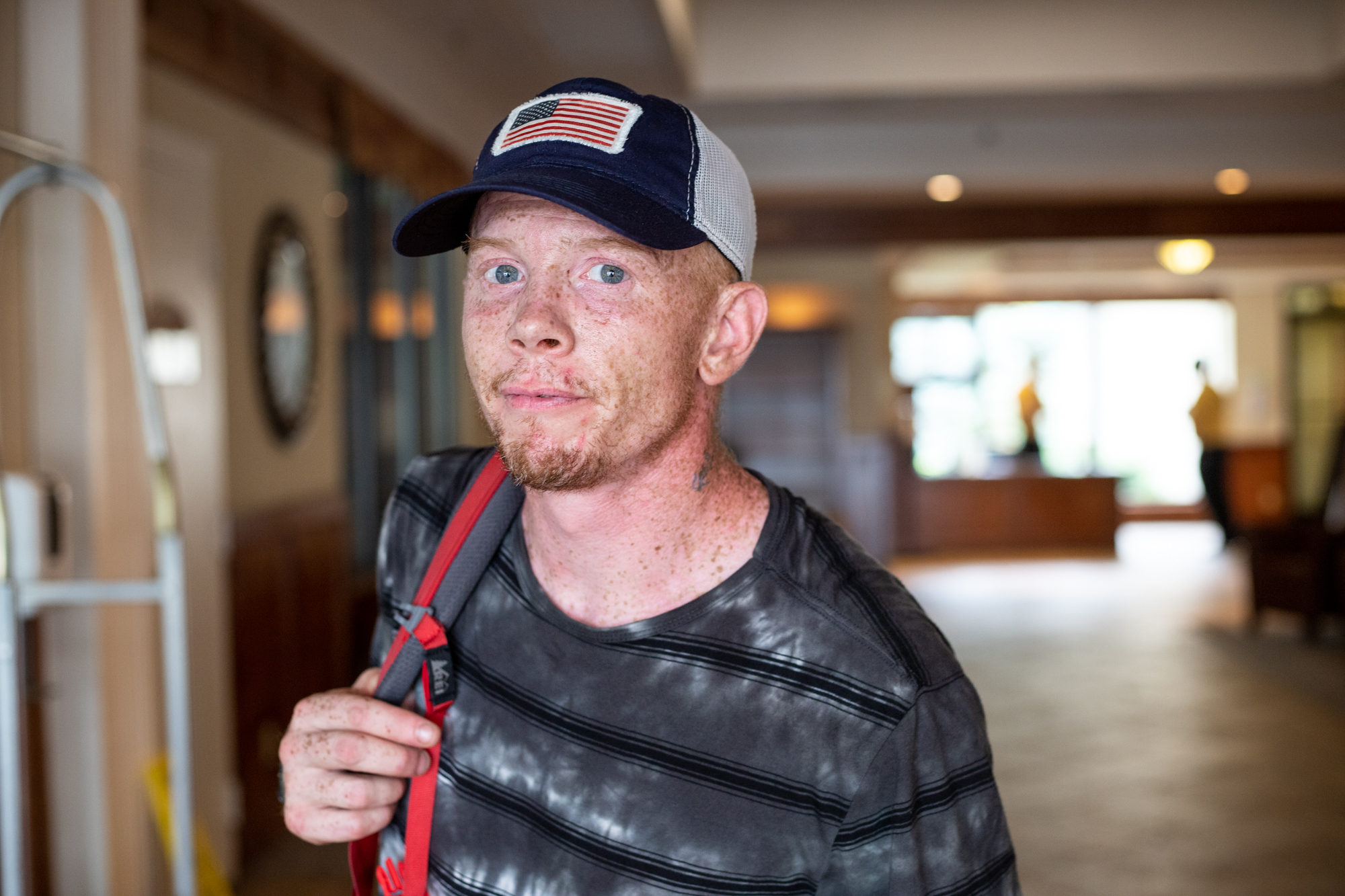
It’s moveout time for about 700 people who have been staying in hotels and motels because they had no home during the pandemic.
The state’s emergency housing program, which provided shelter to about 2,700 adults and children, is being scaled back effective July 1. About two-thirds of people will get an extra 84 days — people with children, with disabilities, or who are fleeing dangerous or life-threatening conditions. And on Wednesday, homeless Vermonters with disabilities got an additional two weeks to show officials that they qualify to stay in the state’s emergency housing program.
The rest must move out Wednesday and Thursday.
VTDigger sent reporters and photographers to hotels and motels Wednesday to report what’s happening to the people there. Some have found housing. Some are using the $2,500 grant they received from the state to extend their hotel stays. Others have no idea where they’re going. Some plan to join the outdoor encampments that are going up around Vermont.
Here are snapshots from Rutland, Barre, South Burlington, Middlebury and Colchester.
In Rutland, ‘I’ve tried everywhere’
By Emma Cotton
Heat radiated from the parking lot pavement Wednesday morning at Rutland’s Travel Inn, where manager Raki Nick said about 20 participants in the motel voucher program are living.
While many will need to leave Thursday, a deadline set by the state, participants hadn’t started moving yet, he said. He gestured to a stack of pamphlets from the Agency of Human Services that gives instructions for connecting with housing programs, rental assistance and payments of $2,500, which the state is distributing to some participants of the program to help with new housing expenses.
Christopher Labell, who is staying at the motel with his partner, said the state money will help him extend his stay there and avoid homelessness. He’s been able to find work, which starts this weekend.
Labell said he could pay for an apartment but hasn’t been able to find a place to rent. He’s never been evicted, but he said his lack of rental history has made landlords wary of renting to him.
“I’ve tried everywhere,” he said.
Another tenant, who ventured into the heat to smoke a cigarette, wasn’t sure whether she would need to leave the motel Thursday. She said several disabilities may qualify her for a longer stay. No one has told her that she needs to leave the Travel Inn, but no one has told her she can continue living there, either — she’s had trouble communicating with her two case managers.
Last year, around Memorial Day, she was evicted from an apartment where she had been living for 10 years and found housing at Rutland’s Quality Inn as part of the state’s emergency housing program.
Until recently, the inn was hosting participants in the emergency housing program, but Rutland Mayor Dave Allaire shut it down after an inspection found a number of health and safety violations. Two homicides had also occurred at the Quality Inn in the past year.
The woman, who requested anonymity, said the voucher program sent her to the Rodeway Inn, next to the Travel Inn, and she lived there until she was recently asked to relocate again.
If she’s forced to leave, she’ll “be homeless on the streets,” which she said would be particularly problematic because of her health problems. Her daughter is already living in a “tent city” near the Holiday Inn, she said, a several-minute drive down Route 7.
She’s been working with Rutland’s Homelessness Prevention Center but said case workers there have had difficulty finding housing for her because of her “situation,” which she said she’d “rather not get into.”
“It just sucks,” she said. “It sucks. It’s really hard.”
Tricia Tyo, deputy commissioner of economic services with the Department for Children and Families, runs the state’s emergency housing program. She said participants in the program should have clarity from their case managers about whether they’re expected to leave the motels July 1.
“This is all a lot of information coming out at once, so some people are struggling with understanding next steps,” she said. She encouraged anyone who needs clarity to call 800-479-6151, where agency staff can connect them with their case managers for information and planning.
In South Burlington, eyes on the prize
By Riley Robinson
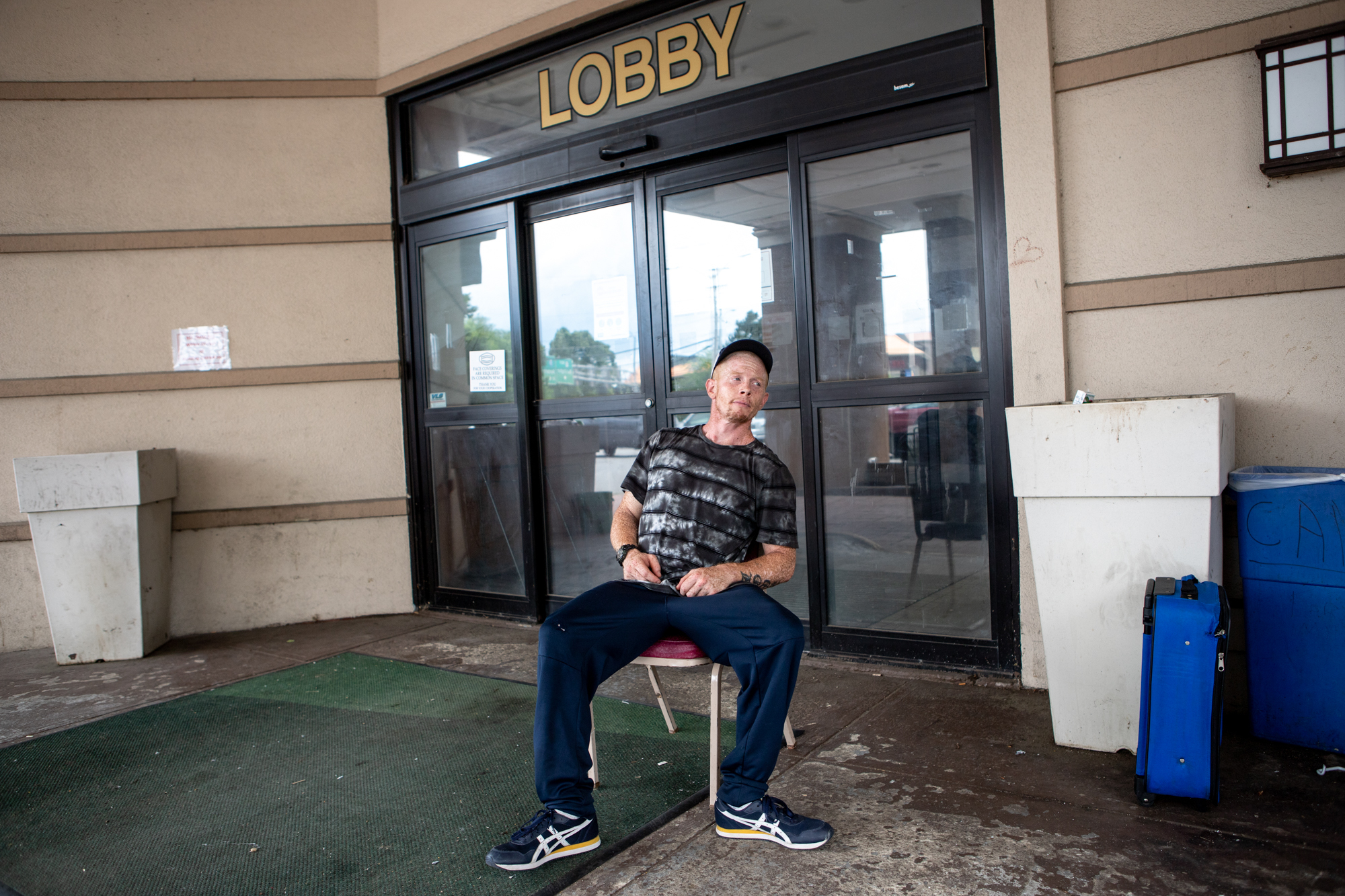
By Wednesday afternoon, the Holiday Inn in South Burlington was nearly empty.
At its peak, the hotel housed more than 150 homeless Vermonters. But by Wednesday, only one woman remained, packing up her things.
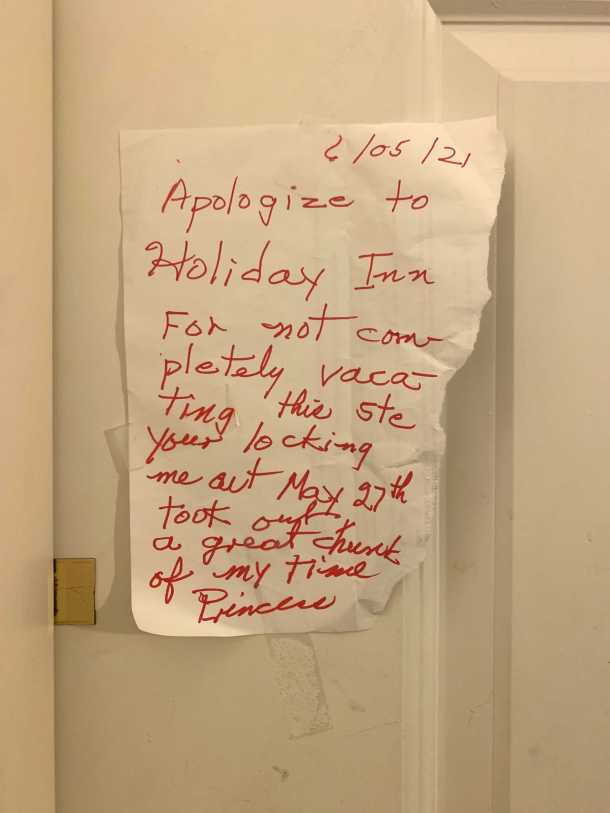
The hallways were quiet and dotted with things people left behind: a box of shoes, bike wheels, a colorful handwritten sign reading “Please don’t let cat out. Have a good day.”
Thomas Muske, 38, walked through the dimly lit lobby, greeting the staff by name. Muske lived in this hotel for nearly a year. He arrived in July 2020 after losing his job in roofing.
Muske says this year — and the support he received from the hotel’s staff — was transformational.
“I was actually struggling with addiction when I first got here,” he said. “This afforded me the opportunity to stabilize.”
The hotel is within walking distance of a methadone clinic, where Muske has received treatment since February. Recovery wasn’t easy. Several of Muske’s friends died of drug overdoses during the pandemic, which he said was related to the isolation of the past year. Getting sober in the hotel was often lonely.
“It was me going to the gym and trying to just keep my eyes on the prize and just believing that if I just keep saving money, and keep doing the right thing, eventually something’s gonna break,” he said.
He’s now working 40 to 45 hours a week as a dishwasher at a nearby Applebees and is saving up to get his own place.
When he moved out of the Holiday Inn last week, he moved into another hotel nearby. He has qualified for extended assistance — for now. Muske worries he’ll become homeless again in the next few weeks. He expects he will be disqualified from the housing assistance program while he saves up for his own place.
Muske said he cannot find an apartment in Burlington for much less than $1,300 a month. He wants to move to Milton, where rent is cheaper, but that would mean using his savings on a car, so he could still get to work. A past felony conviction has also caused landlords to turn him away, even when he has the money to pay rent, he said.
“They talk about how there’s all this like work and funding and whatever that goes towards housing, but I don’t see anything for a single person,” he said.
Muske is considering camping if he loses housing assistance before he can find a new home near his job.
“I’m trying to figure out what the right things look like and making those kinds of actions. So working and not mooching or sponging off the system is one of those things,” he said. “So I’m working for my benefit.”
In Berlin, ‘they can’t house us forever’
By Mike Dougherty
At the Hilltop Inn in Berlin, 22 people will be forced to leave by 11 a.m. Thursday, according to Barbara Jenne, a housing manager for Good Samaritan Haven. Jenne works from the hotel, helping residents plan to transition out of the program.
“Tensions are obviously running high,” Jenne said. “These people don’t know quite where they’re going.”
About half of the departing residents plan to camp, she said, while the rest are either undecided or plan to stay with family or friends.
Speaking outside the hotel’s front entrance Tuesday afternoon, Dondre Wellington, who goes by “Panda,” said he had a plan.
He would use the $2,500 assistance check he got from the state to pay for a room at the Hilltop for a few more days while he waited for a job to come through. He would put some toward his car insurance, ensuring he had a ride to work, then spend the rest on an apartment if he could land one.
“All I really want is just to get that money so I can be able to stay here, find a proper job, start my life,” Wellington said.
If that didn’t work out, a friend in Brattleboro had offered to let him stay with her.
Wellington said he had seen several other residents already spend their checks, mostly on drugs. Now, he said, “They’re panicked. They didn’t have a plan.”
Dylan Williams, another resident, said he noticed the same trend. “A lot of people, when they got the $2,500, just blew it, not thinking about housing,” he said.
Williams, who has a seizure disorder, collects disability benefits, making him eligible to stay at the hotel for another 84 days. Like others with disabilities, he may then be eligible to apply to stay in the program indefinitely. But Williams still hopes to find a permanent home.
“A lot of people are mad,” he said about the changes in eligibility. “But what can you do? They can’t house us forever.”

In Colchester, ‘sleeping in my car’
By Seamus McAvoy
At the Quality Inn in Colchester, Marquis Black carries a black bag filled with laundry over his shoulder. He’s going to wash his clothes before taking most of his belongings to a storage unit he found in Hinesburg.
Black, 33, said he doesn’t know where he’s going to go after he’s forced to move out Thursday morning. “I’m probably going to be sleeping in my car for a few days,” he said.
Black was staying with his nephew’s family in Enosburg before moving into the Quality Inn through the emergency shelter program about four and a half months ago. Now, that’s too far of a commute to get to his job as a truck driver for Reinhart Foodservice, a food products supplier in Essex Junction.
Black is still looking for an apartment. He’s toured four different apartments since learning that the emergency shelter program was ending soon — all four landlords told Black that they found a different tenant.
“Right now it’s about getting a landlord to trust me,” Black said.
Elsewhere, the parking lot is quiet. When asked how many people staying through the emergency shelter program would be moving out Wednesday and Thursday, Julie LaCroix, general manager and sales director, declined to comment.
In Middlebury, most people can stay
By Abigail Chang
In Addison County, none of the Vermonters in state-funded hotel and motel rooms are moving out Wednesday, according to the front desks of the three participating facilities. A fourth hotel, the Middlebury Inn, was once part of the program but ended that connection in May, the general manager said.
At the Middlebury Sweets Motel, all guests in the program are eligible to remain there beyond the July 5 deadline, a front desk employee said. And at the Courtyard by Marriott in Middlebury, another participating hotel, visitors are now the primary people who walk through the sliding glass doors.
Two participants in the motel program will move out of the Sugarhouse Motel in New Haven on Thursday, the owner said.
Charter House Coalition, a nonprofit that provides food and housing to Vermonters, had two open spots as of Wednesday morning, but Executive Director Heidi Lacey expected them to fill up by the end of the day. Charter House is one of five organizations in the Addison County Housing Coalition, which will meet Thursday to discuss solutions as many Vermonters are forced to leave motels and hotels.
Updated Thursday at 10 a.m.


