

Frustrated by how school administrators are handling reports of sexual harassment and assault, some Vermont high school students are going public.
“I left U32 confused, and in denial of the harassment I and many of my friends endured,” one former student wrote June 3 in a public Instagram post that garnered more than 800 likes. “Sexual harassment and assault is so normalized throughout society, especially at U32.”
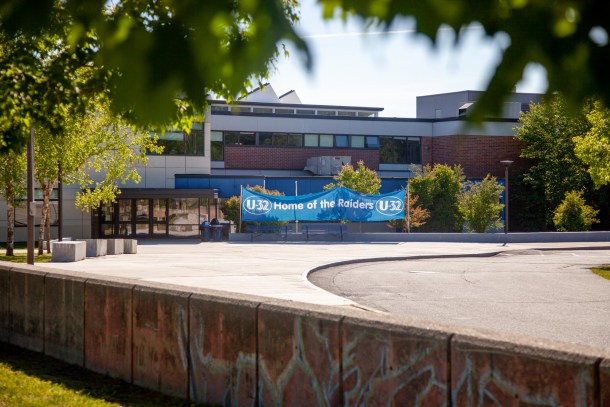
U-32 Middle and High School, in East Montpelier, also serves Calais, Middlesex, Berlin and Worcester.
“After years of telling myself ‘It wasn’t a big deal,’ ‘I’m fine,’ ‘No one cares,’ I finally admitted to myself, and my family, and the U32 administration that what had happened to me was not okay,” another former U-32 student wrote on the social media platform the same week.
The posts were reposted and shared widely. At least two additional students added their own stories.
The U-32 Instagram posts follow a massive walkout by University of Vermont students in early May, when thousands of students marched to protest the school’s handling of sexual misconduct accusations. A much smaller but similar demonstration took place outside Rice Memorial High School in South Burlington in early June, during which about a dozen current and former students at the private Catholic school protested how officials there had handled such cases.
“I didn’t feel safe at school,” recent Rice grad Hannah Sheppard told Seven Days. “I feel I want to stand up for other girls that don’t feel safe at school, and something needs to change for them.”
Rice thoroughly investigates each complaint in compliance with “strict protocols,” principal Lisa Lorenz said in a statement to the Burlington newspaper, adding that the process “can often leave one party dissatisfied with outcomes.”
The former U-32 students did not agree to interviews. VTDigger could not independently corroborate their allegations. The news organization generally does not identify alleged victims of sexual misconduct without their permission.
“My parents as well as legal advice have advised me not to talk to press at this time, due to legal reasons,” one wrote in a text message. Another cited “the complexity of the situation” in a direct message to a VTDigger reporter over Instagram. She also deleted her original post.

Adam Silverman, a spokesman for the Vermont State Police, said on Thursday that the agency did “investigate a complaint involving one of the individuals” named in VTDigger’s query. “That case is currently under review by the state’s attorney to determine whether charges will be filed,” Silverman wrote.
Asked about the matter, Washington County State’s Attorney Rory Thibault said his office’s policy is “not to comment on juvenile matters under investigation absent there being urgent public safety considerations.”
Sexual harassment and assault in high schools is not rare. In Vermont’s 2019 Youth Risk Behavior Survey, 18% of high school students reported experiencing unwanted sexual contact.
Most of the Obama-era debate and activism around Title IX — the law that prohibits sex-based discrimination in federally funded schools, which most colleges and public K-12 institutions use to investigate sexual violence — centered on colleges.
But Laura Palumbo, a spokesperson for the National Sexual Violence Resource Center, said high school students, often from the school’s newspaper, are increasingly calling the resource center.
The #MeToo movement has helped normalize disclosing incidents of sexual harm, including in America’s classrooms, she said. There’s an increased awareness about what healthy relationships should look like. With social media, students have found a powerful new tool for holding institutions they believe have failed them accountable.
“The use of social media is students taking that power back,” Palumbo said. “And it’s also students really showing their savvy for organizing.”
The June 3 post remains publicly accessible. The writer’s bio includes a link to an online submission form asking current and former U-32 students to share their experiences with sexual harassment and assault at the school.
The 10-question survey includes such queries as, “Did you feel comfortable coming forward to report harassment or assault to U32 administration? (Why?)”
Both U-32 Principal Steven Dellinger-Pate and school board Chair Flor Diaz Smith referred questions to Washington Central Unified Union School District Superintendent Bryan Olkowski.
“I can’t disclose information about particular investigations, but I can let you know that the administrative team, our staff and — and our school board — we treat all these allegations with the utmost and greatest seriousness,” Olkowski said in an interview.
He added that an investigation under Title IX was “happening currently.”
“I do believe that, yes,” he said. “Where we are exactly in the process, I’m not going to be able to comment on that.”
In the June 3 post, the former U-32 student described being taken advantage of by a friend while emotionally vulnerable and said this person secretly photographed her while they were “hooking up.”
She also suggested this person later groped her without her consent. Multiple posts expressed disgust at the public athletic accolades the alleged perpetrator received, even during the misconduct investigation.
Students also complained that an investigation by school authorities had been closed because the alleged misconduct did not take place this school year.
“There should be no time stamp on justice,” one teen wrote.
The school’s Title IX policy warns that “delays in reporting may significantly impair the ability of school officials to investigate and respond to the allegations,” but does not put a time limit when students can come forward.
Asked if the school would close an investigation if a report was made outside a certain timeframe, Olkowski referenced the policy.
“The expectation is that we would not dismiss anything of that matter, and I can tell you right now that I do believe that there are certain things that are being investigated currently,” he said.
Alan Keays contributed reporting.
