

Some of Vermont’s Senate and House districts may look a little different when people head to the polls in 2022.
Next January, lawmakers will consider redistricting proposals that take into account new population trends. Population swings could require changes in several districts across Vermont to comply with the U.S. Supreme Court’s one person-one vote standard.
In addition, the six-senator Chittenden County district will be redrawn, as required by a 2019 law.
Chittenden County has one Senate district with six senators. That has long been an anomaly across the country — no other state Senate district in the nation is served by so many lawmakers, raising concerns that the delegation has carried too much clout in Montpelier.
Under normal circumstances, the Legislative Apportionment Board — the group responsible for redrawing the district maps every 10 years based on federal census findings — would now be deep into crafting plans for new Senate and House districts. Existing law says the apportionment board must deliver proposals to both chambers by July.
However, this year, the U.S. Census Bureau has delayed the release of the 2020 census data, holding up the board from completing its work. To accommodate that issue, the Legislature and governor signed off on legislation, H.338, that allows the board to submit reapportionment proposals no later than 90 days after the data is released.
Tom Little, chair of the apportionment board, expects initial numbers to come out Aug. 15, with more detailed data released in late September.
“I’m very frustrated because I had hoped that we would have had a lot of mapping proposals in the works by now,” Little said in a recent interview.
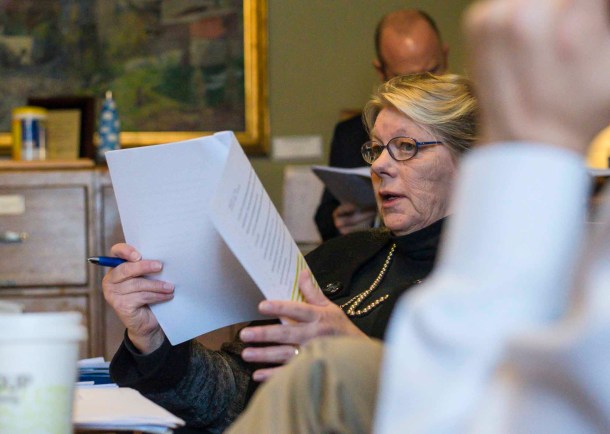
While the apportionment board doesn’t have the numbers it needs to do its work, it has been meeting on a monthly basis since late 2020 — looking at 2019 population estimates in an effort to identify districts that likely need changing.
The process by which the board makes its recommendations is different for each chamber.
To find the perfect size for a single-member House district, the board takes the state’s population and divides it by 150 — the total number of seats in the Vermont House of Representatives.
For a one-seat Senate district, the ideal size is the state’s population divided by 30.
The board then compares those numbers to the actual population of each existing district before coming up with maps designed to ensure equal representation in the Statehouse.
Based on those estimates, there are relative population increases in Chittenden, Franklin and Lamoille counties, and population decreases in Bennington, Rutland and Windham counties, according to Little.
Based on the board’s initial work, using the 2019 numbers as a rough guide, Little said he believes the board should have no trouble delivering map proposals to the Legislature by next January.
Sen. Jeanette White, D-Windham, who chairs the Senate Committee on Government Operations, said the census data delay should not affect lawmakers’ approval of redistricting plans.
In the Senate, White said the first order of business will be to name its reapportionment committee — which will be considerably bigger than the five senators on the Government Operations Committee.
“We need to have more representation — more balance between Republicans, Democrats and Progressives and urban and rural and north and south,” White said.
“It’ll be done by the time we finish the session in May” of 2022, she said.
The Senate has a slightly more straightforward job than the House, which has many more districts to look at and could hear objections from more towns affected by redistricting. The work can combine two or more towns in a House district, and often there are questions about whether all those towns are alike or have differing interests.
“At the end of the day, there are always people and towns that will be unhappy,” Little said. “If you want to get a discussion going quickly in Vermont, all you have to do is pull out a map.”

