

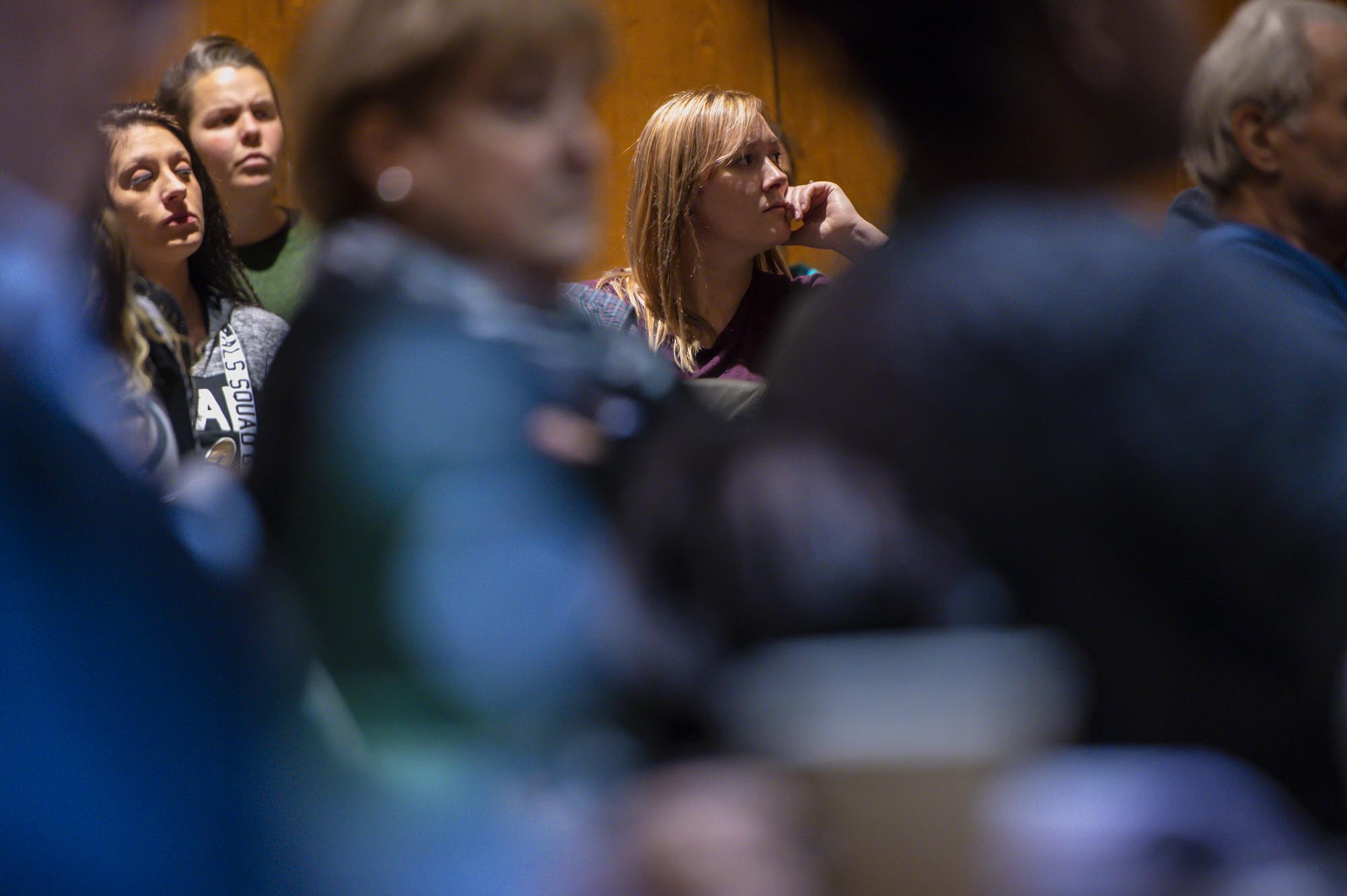
A group of faith leaders from around Vermont says reforms at the state’s only women’s prison are not moving fast enough in the wake of a report in late 2020 that found a “disturbing degree” of abuse there.
That report by an independent law firm hired by the state followed articles published in Seven Days that detailed allegations of sexual misconduct and harassment at the Chittenden Regional Correctional Facility in South Burlington and drug use by staff.
The faith leaders, collectively called Vermont Interfaith Action, met Wednesday night via video with James Baker, interim corrections commissioner, and several state lawmakers. They outlined changes they would like implemented swiftly to change the prison’s culture to one focused on wellness.
“It is our hope that you will carefully consider our proposals, and you will commit to working with us in the future and use them to advance the values we all share,” Fran Carlson, a Vermont Interfaith Action member, said at the start of the meeting.
Carlson said many women in prison are not a public safety threat to the community, with most having experienced neglect, abuse and poverty.
“Programmatic interventions coordinated by a dedicated staff person,” she said, and tailored to “women’s needs would serve the state better than simply doing time.”
Linda Wentworth detailed proposals she said were based on the group’s research on ways to improve conditions for women at the prison and to help them succeed once they get out.
Among the proposed changes:
- Reinstating the job of director of women and family services at the prison that was eliminated several years ago. The director would help improve programs for the women.
- Changing the culture at the women’s prison by training, mentoring and holding corrections officers accountable for using trauma-based and other more restorative and better-informed methods of interaction with women who are incarcerated.
- Connecting women at the prison with educational and therapeutic opportunities.
- Providing more preparation for release and support for women after release.
Wentworth said the group had communicated with officials at the Maine Department of Corrections about programs and training there.
“It is trauma-informed and gender-responsive,” she said, “aiming to shift how staff approaches communication, so it is not a power and control dynamic but a grounded conversation dynamic.”
Wentworth said Maine has helped women make the transition from prison to the community, including a “step down” facility for housing months before release.
“Maine has a facility for women, which is a state-of-the-art pre-release center with a lower security level,” Wentworth said. “It resembles a college dormitory more than a prison. The culture is much more relaxed — there’s more conversation between staff and residents. The focus is on communication and deescalation, rather than punitive measures.”
The faith group’s recommendations follow an investigation of the prison by the law firm Downs Rachlin and Martin. The state hired the firm to perform the investigation after a series of articles published by Seven Days alleged sexual harassment and misconduct, retaliation and employee drug use at the prison.
In December 2020, the firm reported that the allegations of chronic sexual abuse at the facility were largely accurate. “While even a single instance is intolerable, this misconduct occurred to a disturbing degree,” the report stated.
A woman who had been imprisoned at the Chittenden Regional Correctional Facility spoke at Wednesday’s meeting about her experiences there, and a woman who’s still there now read a statement.
They talked of the difficulty and delays in getting into programs at the prison. One of the women recounted how she had been at the prison for three years awaiting trial, largely because the court system had been shut down for more than a year because of the Covid-19 pandemic.
One of the women who has since been released said that, while incarcerated, she felt staff members looked down on women there who were dealing with substance use disorder or who needed mental health care.
“Which most of us have both,” she said.
During the meeting Baker, the interim corrections commissioner, and state lawmakers on the Joint Legislative Justice Oversight Committee were asked if they would respond with a yes or no on whether they would support the initiatives presented.
Baker repeatedly said he did and spoke of efforts already taking place.
“The Vermont statute talks about when someone is incarcerated that they’re in the custody of the commissioner of corrections, and that’s me,” he said. “I take it very serious that I have people in my custody that are someone’s children, wives, parents.”
He said the department is working now to hire a director of women and family services, a job eliminated in a 2015 budget cut.
Baker also said the department does do “trauma-informed, gender-informed” training.
“We’ve been doing it for a number of years,” he said. “The problem is that the curriculum has not been looked at in a number of years.”
Now, he said, an outside consultant is working with the department on that curriculum.
Many of the lawmakers said they support the group’s proposed initiatives but with “qualification” or the need for “explanation.”
Sen. Phil Baruth, D/P-Chittenden, said many of the questions were too complicated for one-word answers.
However, “I’m in line with all of your ideas. All of the programmatic changes that you talked about, I will work to see come about,” Baruth said.
However, he said, he cannot commit now to support spending money on any one particular initiative because there are so many competing interests in the state budget.
“It’s a certain kind of fool who promises that in advance of doing the homework,” Baruth said. “I’m with you in terms of doing what I can in good conscience promise right now.”
