


SWANTON — Relations between Indigenous Vermonters and state government have been strained by decades of discrimination and the legacy of the eugenics movement. But in recent months, Abenaki leaders and the Vermont Department of Health have begun to work together to make Covid-19 vaccines available to members of the community.
That work has led to a vaccine clinic planned for Sunday, April 25, at the Missisquoi Abenaki Community Center in Swanton.
“It’s been a great experience and partnership,” according to Erin Creley, director of the health department’s St. Albans office.
“They’re flexible, and we’re flexible,” Missisquoi Chief Richard Menard said of the department.
Despite the positive signs, the long history of mistreatment of Abenaki people by the Vermont medical community and the state may make building trust a challenge.
Another challenge is getting accurate data on who is Abenaki. The history of discrimination makes some in the Abenaki community reluctant to publicly identify as members, according to Menard. He pointed to the case of one Missisquoi member who wasn’t willing to get a tribal membership card until she was 88.
“We’ve been pushed back and pushed back for years, and there’s still a lot of resistance,” Menard said.
“We were the targets of hate … and still run into hate groups today,” said Chief Don Stevens of the Nulhegan band. By openly identifying as Abenaki, “you’re putting yourself at risk,” he said.
Vermont’s treatment of its Abenaki citizens during the eugenics movement was particularly disturbing. The Vermont Legislature approved a law in March 1931 that allowed sterilization of people deemed “feeble-minded,” “imbeciles” or “idiots.” The Abenaki and French Canadians were among those targeted by eugenicists.
According to the University of Vermont — which employed Henry Perkins, leader of the state’s eugenics movement — 253 people were sterilized under the law, which also allowed children to be taken from their families.
“The hurt and pain from eugenics is pretty fresh in people’s minds,” Stevens said.
Last month, the Vermont House voted unanimously to apologize for Vermont’s eugenics laws. Creley said the health department staff has “really been in a place of humility and listening, knowing the history.”
The state has also sought to be flexible. “It’s not a need to bend,” Creley said. “It’s a need to meet people where they’re at.”
Missing the camaraderie
Vaccination rates among Black, Indigenous and people of color in Vermont have lagged behind their white counterparts, according to department data. Stevens cites fear, logistics, access and transportation as contributing causes.
Stevens has been working with health officials to get vaccine information to people in the Abenaki community. He was also the first Vermonter to get the vaccine, participating in a trial through the University of Vermont. That was by design.
“I signed up for it because we have a lot of people who are afraid of the medical community. … I wanted to ease their mind,” he said.
Misinformation is circulating about the Covid-19 vaccine in the Abenaki community, Stevens said, with “some people questioning the validity of the vaccine” and saying its development was rushed.
“Some people are getting it, and some people don’t want it, and that’s their choice,” Menard said.

Many Abenaki are feeling the impact of a year of physical distancing — not just isolation, but also losing the gatherings during which they celebrate their heritage. Chief Shirly Hook of the Koasek band said heritage events at the Lake Champlain Maritime Museum are especially missed.
Stevens agreed, adding that the loss of heritage events has had a financial impact on artists and artisans who sell their work there.
People are also missing “the camaraderie of dancing together and celebrating our heritage,” he said.
The pandemic has increased togetherness in the Abenaki community, especially in multigenerational households. In some cases, children have moved back in with their parents after losing jobs, and elderly people have chosen to move in with their children rather than to a nursing home, Stevens said.
“People wanted their parents closer,” he said. The pandemic “forced people to really look closely at their living situations.”
He sees the increased time with loved ones as something positive that has come out of the pandemic.
Connecting to the community
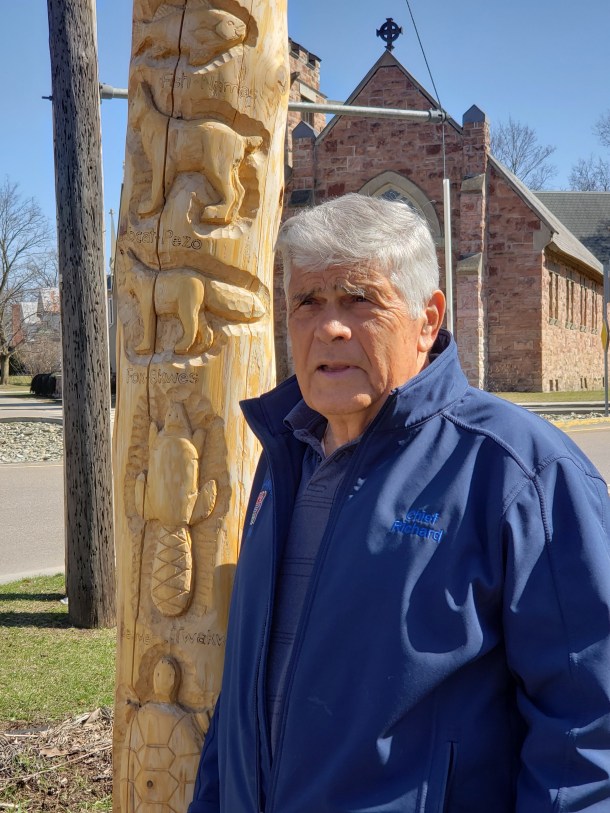
In Swanton, the Missisquoi band has reached out to the community — especially by operating a food shelf at its community center that is open to all members of the community. Demand increased rapidly with the onset of Covid-19 and has remained high, according to Menard, with 600 people typically served each month.
Creley expressed “deep gratitude for the work they’re doing.” She said, “It’s really remarkable what they’re offering to the community.”
Asked if there is potential for improved relations and connections between the health department and the Abenaki, many of whom are at high risk for chronic disease, Stevens said he continuously tells state officials that there is a need for staff to work with and for Abenaki people.
“There are no full-time Abenaki people working on behalf of our citizens,” he said. The Abenaki rely heavily on personal trust, and it takes personal relationships to build that trust.
But because the Abenaki have only state and not federal recognition, there is no dedicated staff working to reduce health disparities as there is for other Indigenous tribes, he said. Stevens suggested that the state use federal Covid-19 relief money to hire someone to work as a liaison between Abenaki people and the health department
“This is an opportunity to build a relationship, strengthen a relationship that was already there,” Creley said. Health department staff members are thinking about ways to address other health concerns alongside Covid-19, because, she said, those conditions haven’t gone away.
