


Life as we knew it changed on March 13, 2020, when Vermont’s governor declared a state of emergency that would extend to this day. It was the first in a series of mandates that within a few weeks led to the shutdown of the state’s economy. Schools and ski areas were closed, nonessential workers were told to telecommute and gatherings outside of immediate family were banned.
At one point, more than 70,000 Vermonters filed for unemployment.
People who traveled and returned to the state had to quarantine for 14 days. Airline travel was effectively grounded. Masks were mandated by many communities — and, eventually, by the state.

Trips to the grocery store became exotic interludes from sheltering in place. Toilet paper and sanitizer became hot commodities. Gardening supplies sold out. Sourdough baking became a thing. Hospitals began drive-thru testing operations. And thrice-weekly press conferences featuring the governor and the commissioner of health became a psychological lifeline for Vermonters as the state navigated the once-in-a-century public health event.
One year later, that reality hasn’t changed much. Vermonters are still holding their collective breath as the federal government makes more vaccine available just as new, more contagious and more virulent variants of the virus are spreading from the United Kingdom, South Africa and Brazil. Scientists have also identified variants of concern from New York City and California.
As spring arrives, Vermont continues to see the highest case-number levels of the pandemic, now with outbreaks in Franklin County, Stowe and the Northeast Kingdom. Deaths, which have topped 200 since the beginning of the pandemic, have slowed as the state has vaccinated nursing home residents and other older Vermonters. In briefings, Gov. Phil Scott and Dr. Mark Levine, the state health commissioner, have urged residents to stay vigilant — as they have for a year now. The mantra — wear masks, social distance and stay away from crowded places — remains the same.
So when will life return to normal? VTDigger asked experts what the near-term prospects are for lifting restrictions and what the lingering effects will be when the pandemic is over.
By April, about 200,000 Vermonters will likely be inoculated, those experts say. And if the Biden administration meets targets for vaccine production and distribution, every adult in the state could be vaccinated by the end of May.
While other experts were reluctant to say when normalcy could return, Dr. Stephen Leffler, president and chief operating officer of UVM Medical Center, said he could see the state lifting pandemic restrictions by June 15, if all goes according to plan.
According to Leffler, vaccination rates nationwide could reach 60% to 70% by the end of May, and if that’s the case, strong protections should be in place by mid-June.
“At that point, I personally feel quite comfortable that we can drop most restrictions in most circumstances,” he said.
In certain environments, such as health care settings, people may still need to wear masks, he said, but once most people are vaccinated it will be possible to eat together, socialize and attend concerts without fear of contagion.

Tracy Dolan, deputy commissioner of the Department of Health, said the new variants are a “wild card,” and there is still too much uncertainty to say when the governor will ease restrictions. While she didn’t rule out the possibility of a full reopening of the economy by mid-June, she said the governor wants to see more people vaccinated and test-positivity rates decline.
In the meantime, continued adherence to public health protocols will be necessary for another three months.
Dr. Jan Carney, an associate dean of public health at the University of Vermont’s Larner School of Medicine, also hesitated to give a specific end date. “I can’t predict the future,” she said.
But Carney said the high level of coordination between the governor’s office, the Department of Health, the university and the medical center has led to public confidence in the state’s approach to the pandemic. A survey her team conducted last fall showed that Vermonters have been remarkably compliant with mask mandates and other measures.
Vermont has done the best job of managing the crisis of any state in the nation, Carney said, but its residents need to keep at it for a while longer.
Carney believes that public trust will carry over to vaccinations. “I feel very fortunate that we live here in a state where people have taken it very seriously, and have worked together to try and keep the numbers of infections as low as practically possible to minimize the harmful effect on people here,” she said.
According to Carney, an evidence-based approach should prevail until vaccinations are more widely available. “As we continue on with vaccinating more and more in the population, I do think that we will see fewer restrictions,” Carney said. “Now, does normal mean we just flip the switch and go back to how life was right before the pandemic started? Not necessarily.”
A race to vaccinate ahead of the variants
Experts say the clock is ticking as states like Vermont race to get the population inoculated as quickly as possible. That’s because there are worries that the so-called “variants of concern,” a term that refers to three known Covid-19 mutations and several others that have been recently identified, could overtake public health efforts to vaccinate Americans.
The variants of concern include: the United Kingdom’s B.1.1.7, which is more contagious but no more deadly than the main strain of Covid; and B.1.351 from South Africa and P.1 from Manaus, Brazil, both of which are more contagious and more deadly. Scientists have also said there are new mutations from New York City and California.
It’s common for viruses to mutate. The Great Influenza of 1918 did so a half-dozen times and killed an estimated 50 million people globally before it dissipated in the early 1920s. Because of global public health efforts, the total number of deaths worldwide during the Covid crisis has so far been significantly lower, at 2.62 million so far.
Last week, the UK variant was found in a Chittenden County patient. Health commissioner Levine has been warning for weeks that the highly contagious B.1.1.7 was likely already spreading across the state.
Because identification of variants requires genomic sequencing, the federal government is only spot-checking a dozen or so Vermont samples for the variants every two weeks.
Public health experts said vaccines developed by Pfizer, Moderna and Johnson and Johnson will prevent hospitalizations associated with the more contagious variants.
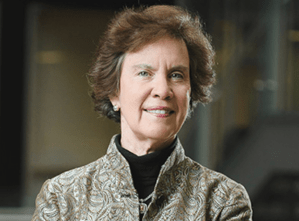
Carney, the UVM College of Medicine dean, says studies have shown the vaccines have been “100% effective” in preventing deaths.
“That is a reason to continue on to work as hard as possible as quickly as possible to vaccinate as many people as we can,” she said.
Nilanjan Chatterjee, a Bloomberg distinguished professor at Johns Hopkins University, said some vaccines might not be fully effective, “but it will be a lot better than where we were a year ago.”
Carney said the variants are a challenge, but the biggest hurdle was “creating the vaccine in the first place.” The development of effective Covid vaccines in less than a year (with 74 vaccines currently in the human trial phase) is an extraordinary scientific accomplishment, she said.
The vaccines authorized under the FDA’s emergency use program are safe and effective, Carney said. Vaccine “hesitancy,” parlance for skepticism about immunizations, shouldn’t be an issue, she said, because the pharmaceutical companies followed “a rigorous process.” Now the difficulty is a logistical one — ensuring that distribution happens quickly.
Leffler concurs. He has “tremendous confidence” that the vaccines will be “extremely effective against Covid.”
“There’s good evidence that they also are protective against the variants,” he said. “It’s possible you might still get mildly sick, but if you’ve been vaccinated, the chance of getting very ill — ending up in the ICU, ending up on a ventilator, or even dying — is markedly, markedly decreased.”
Vermonters who have been vaccinated will be well protected, he said, and they “shouldn’t really be very concerned about the variants.”
“Your immune system is smart and sophisticated, and it knows how to manage it, so once you’re vaccinated, I think you should feel pretty safe and protected against the variants,” Leffler said.
The state announced that vaccinations will be available to all adults with health conditions starting next week. It is the latest in a rapid succession of immunization deployments over the past month, which started with health care workers and the elderly and were followed by inoculations for teachers and other frontline workers.
Vaccinations for Vermont residents are by appointment only through Walgreens, Kinney Drugs and the Department of Health.
“I would personally encourage people when you’re offered a vaccine to take it,” Carney said.
Short-term and long-term prognosis
The Centers for Disease Control and Prevention and the Department of Health recently announced that fully vaccinated people can get together without masks or social distancing.
The benchmark for vaccination rates to fully reopen the economy, however, is several months away, experts say. In the meantime, public health officials urge caution, mask wearing, physical distancing and avoiding crowded places, particularly indoor spaces. New data from the CDC shows that double-masking can help prevent the spread of Covid.
The state has avoided the worst effects of the pandemic, but that means there is less herd immunity and more susceptibility among a broader population, according to Anne Sosin, a fellow at the Nelson A. Rockefeller Center for Public Policy and the Social Sciences at Dartmouth College. Sosin said a recent major outbreak at the Northern State Correctional Facility and at Lyndon Institute in the Northeast Kingdom signal ongoing vulnerability to the virus.
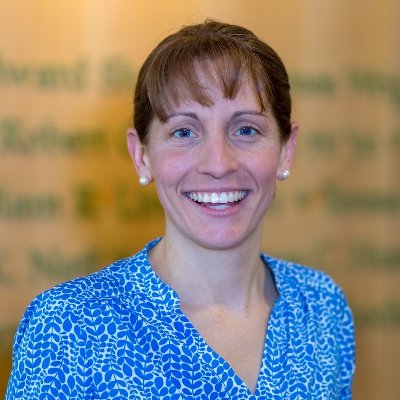
Sosin is critical of the health department’s rollout, which has focused on older Vermonters. The vaccination strategy has failed to target transmission among younger, more mobile people who are “most likely to get infected and to transmit to others.”
“It’s young people that drive the trajectory of the virus and most young people in the state of Vermont have not been vaccinated at this point in time, which is one of the reasons why I would expect to see transmission at a higher level,” Sosin said.
In a best-case scenario, the state would decrease transmission and rapidly accelerate vaccination over the next couple of months, Sosin said. “And I think that, you know, we’re on track to do that in terms of vaccinations, as supply is rapidly increasing,” she said. In a worst-case scenario, the virus would outrun the vaccine over the next several weeks.
Dolan, the deputy health commissioner, said the state’s goal was to lower the death rate, rather than curb transmission levels. By targeting age bands, the Scott administration has achieved that objective.
Carney says it’s imperative that Vermonters remain vigilant.
“In the short term, we need to continue to reinforce our public health measures that science has shown are very effective,” Carney said.
There is room for optimism, Leffler said. A month from now, people who are 14 days out from full vaccination will be able to do more things, “like meet with other people who are vaccinated in small gatherings, not have to quarantine after exposures.”
Six months from now, Leffler anticipates the state will return to a pre-pandemic way of life. Every Vermonter who wants to be vaccinated will have the opportunity, children will be back to school, hospital visits will be possible and most gatherings will be allowed, he said.
“There will still need to be some sort of situations where we need to mask or socially distance, but I think it’ll be markedly less than we’re seeing today,” Leffler said.
Johns Hopkins Professor Chatterjee said the biggest challenges going forward will be vaccine hesitancy, the potency of variants and access to robust vaccines. “Our expectations have to be moderated,” he said.
Large gatherings of hundreds or thousands of people would continue to be risky later this year.
“People will still be scared of crowded places,” Chatterjee said. While 2021 will begin to feel more normal as small groups of people begin to feel comfortable together, he said, it will likely be 2022 before large gatherings like conferences, sports events and concerts are commonplace again.
By the spring of 2022, the state will be post-pandemic, Leffler speculates. Vermont will likely have low levels of Covid, but it won’t “be filling our ICU. It won’t be stressing the amount of people on ventilators,” he said.
“Covid will become part of the new normal, like having the flu or something like that,” Leffler said.
CORRECTION: An earlier version of this story misidentified Anne Sosin’s current job and inaccurately described the residency of the Chittenden County patient found to be infected by the UK variant. Vermonters 65 and older are eligible for the vaccine.
