


The former Windsor High School principal and her employers are at odds about whether she was fired last June after a controversial Facebook post.
Attorneys representing former principal Tiffany Riley and the Mount Ascutney School District Board appeared in federal court in Rutland on Tuesday.
Bill Meub, an attorney for Riley, argued the board fired Riley in June without just cause and due process — a violation of state law and a breach of her contract. Meub argued Riley was entitled to damages.
Meub called the opposing arguments a “sham” and said Riley had been “figuratively assaulted.” He charged that the school board manipulated facts to justify dismissing Riley and created an alternative reality.
“They didn’t like the facts, they didn’t like the battleground, so they changed it to create a different reality,” Meub told the judge. “Any reasonable person has to see the reality that she was dismissed.”
Meub argued the board violated Riley’s First Amendment rights and fired her solely for a June 10 Facebook post, which was seen by many as critical of the Black Lives Matter movement.
“Reality needs to be declared now in the motion for summary judgment, so the big lie in this case does not get to continue,” Meub said in court documents.
The motion is part of a larger lawsuit Meub filed against the district last summer, claiming Riley was fired unjustly.
Riley’s June 10 Facebook post said, “While I want to get behind BLM, I do not think people should be made to feel they have to choose Black race over human race. … Just because I don’t walk around with a BLM sign should not mean I am a racist.”
The post was widely circulated in the school community, with some calling for the school board to take action.
While Meub argued Riley was terminated immediately after an executive session on June 12, attorneys for the school board have repeatedly said that Riley was merely placed on paid administrative leave.
Sean Toohey, an attorney for the board, argued in court there was no vote to terminate Riley in June. He said the board didn’t vote to dismiss Riley until July and followed proper procedure in holding a termination hearing in September. The board released its final decision to dismiss Riley in October.
“There’s no definitive statement anywhere in the record that she was terminated, fired, (or) dismissed (in June),” Toohey said.
Toohey pointed to a sworn statement from board chair Elizabeth Burrows on Feb. 1 in which she discussed the board’s June 12 executive session. Burrows said the board was not in full agreement to dismiss Riley in June and even discussed Riley’s possible return to work in a different role within the school.
Burrows’ sworn statement also highlights a June 15 email in which she told a concerned community member, “This matter has not yet reached an end, and that is why your comments are important.”

But statements released by the board immediately following the executive session differ, according to Meub.
Superintendent David Baker met with Riley in a recorded Zoom call just after the executive session. Baker told Riley the board wanted her to resign.
“They don’t want to fire you because they know what it will do to your career here in Vermont; they would rather work out an amicable severance to resign peacefully. … Use me or any of them as references,” Baker told Riley. “But if it gets ugly, they’re prepared to go to court.”
Baker also sent Riley an email on June 12, saying the board had “no confidence” in her continued leadership at the school.
“Effective immediately, the Mount Ascutney school board is placing you on paid administrative leave while we negotiate an exit strategy,” Baker wrote.
Meub argued the meeting and the email prove Riley was dismissed.
“Every reference to her placement on paid leave indicates that it is solely for the purpose of finalizing terms to end her employment at the Windsor school,” Meub said in court documents. “There is not a single mention of any pending investigation or intent to further investigate anything in the call from the superintendent.”
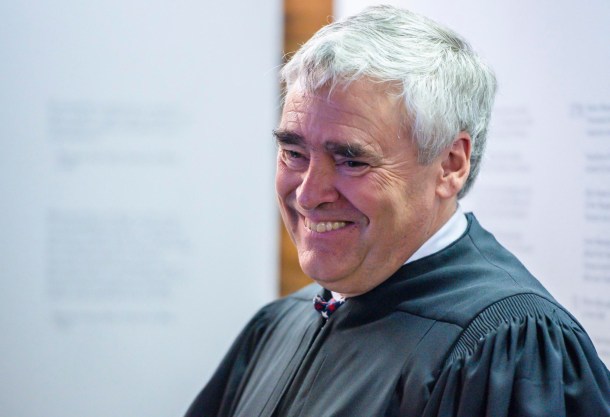
On Tuesday, Judge Geoffrey Crawford also questioned a statement released by the board immediately after the executive session, which said it was “resolved that (Riley) will no longer lead our school.”
“That’s a pretty clear statement of what they’re doing,” Crawford said.
Toohey, however, argued the resolution was never voted on.
“Boards make resolutions all the time,” Toohey told the judge. “As we know from many cases dealing with the school board, your honor — the people on the school board aren’t attorneys, they’re not judges. They’re members of the community who agree to represent the district. They’re not perfect.”
The judge also said statements Superintendent Baker and board chair Burrows made to VTDigger and the Valley News constituted an adverse employment action. Burrows told Digger last June, “We do not intend to hire her back,” while Baker called Riley’s comments racist.
Riley sued the board for wrongful termination on June 26.
After that, text messages and email exchanges among Riley, teachers and local residents were released as part of the evidence, revealing a former student had asked Riley to hoist a Black Lives Matter flag at Windsor High School’s graduation ceremony. Riley came under fire when a flag didn’t appear at graduation, and she posted her Facebook comment following ridicule. Riley also refused to take down the post and refused to work with Baker to draft a follow-up post.
Toohey argued Riley’s handling of the graduation ceremony factored into her termination in July, but Meub called the revelations following June 12 “things” that are part of a different reality the board created to justify terminating Riley after doing so improperly.
Meub argued the board dismissed Riley solely on her Facebook post and said in court documents that the board wasn’t aware of Riley’s actions surrounding the graduation ceremony before June 12.
“That was not what the school board based their decision on,” Meub told the judge. “That was not what the school board knew at the time. All the rest to me is irrelevant, (a) sham … characterized visceral — that is not part of what this case should be about.”
It’s unclear how much the board knew about the controversy at graduation before issuing the statement June 12.
The day before the June 12 meeting, Riley wrote a lengthy email to the board chair and vice-chair, stating her reasons for her Facebook post and briefly explaining her side of the controversy.
“I have been accused of being racist for not hoisting a BLM flag (and) ridiculed for not attending a BLM rally,” Riley wrote to the board.
In the 45-page decision to terminate Riley, board members said Riley’s initial Facebook post was seen by more than 250 people and created “serious disruption” to the school district. Many saw the post as “denigrating, derogatory, or contrary to the movement for social equity for African Americans, including the Black Lives Matter movement,” according to the decision.
The school board decision mentioned five reasons for terminating Riley — three of which were about the Facebook post. The board said that her post was inconsistent with the expectations as principal, that Riley failed to take down her Facebook post when asked, and that she failed to coordinate a subsequent Facebook post with the superintendent. The board also said Riley failed to tell the board about her interactions with families about equity issues and failed to exercise sound judgment with the board and her supervisor on the request for the BLM flag.
Toohey dismissed Meub’s claims that those facts are part of a different reality and said the school district continued to pay Riley until the board released a decision to dismiss her in October. Toohey said Riley’s willingness to participate in the termination hearing and other meetings with the board indicates she knew she had not been fired in June.
However, the judge said Tuesday that there was a simple explanation for Riley’s participation.
“She’s hoping to be rehired,” Crawford said. “Any employer can fire a person as many times as they like. There’s no limit on how many times you can take action to fire somebody. When did the first time happen?”
Crawford said he was already at work on his decision and expected to release it soon.

