


At one of the most recent mayoral debates, incumbent Miro Weinberger didn’t hold back on the “staffing crisis” he says councilors created for the Burlington Police Department.
“Are you ready to act to fix the crisis you created or not?” he forcefully asked Max Tracy, the Burlington City Council president and Progressive nominee for mayor.
Through debates and council meetings, Weinberger has made clear to voters that he blames the city councilors for the potential loss of police coverage between 3 a.m. and 7:30 a.m. because they voted to reduce police staffing levels by 30%.
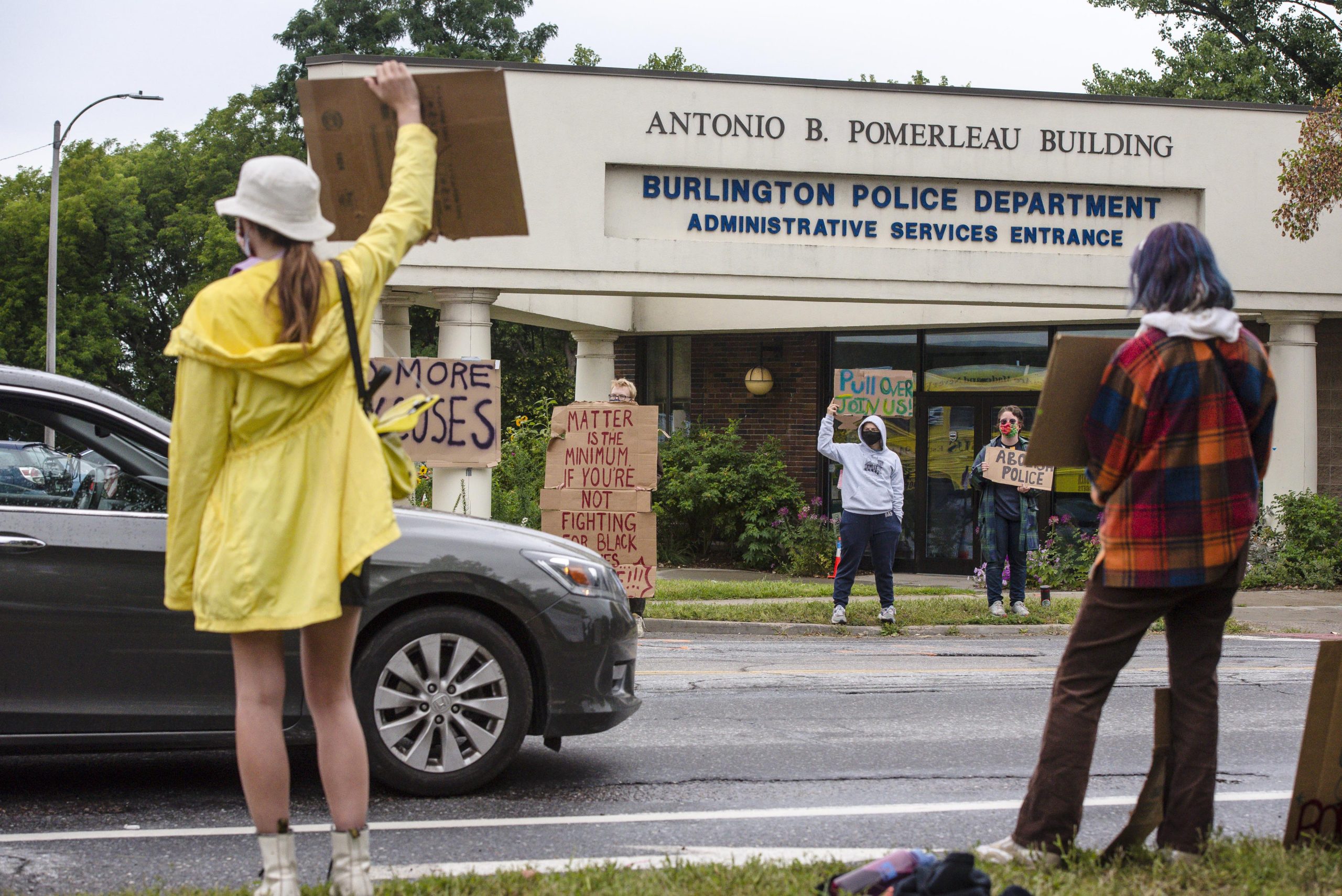
The council approved the reduction this summer after nationwide calls to “defund the police” took hold in Burlington, fueled by concerns that local police have not properly reformed patterns of violent behavior.
Councilors cut the size of the force to free up money for racial justice initiatives and other efforts to reduce the number of calls police are responding to. Councilors who supported the measure argued they were taking action to hold the police accountable when Weinberger wouldn’t.
As of December, Acting Police Chief Jon Murad says the call volume had not shrunk substantially — but Burlington’s police force has. Some officers retired or left for military deployments. Others left directly because of the council’s actions and perceived hostility toward police.
In the summer, the Burlington Police Department employed 91 officers. That number has since slipped to 78.
Murad says that if the force shrinks to 76 officers, police won’t be able to patrol safely on their own. Only serious and violent crimes would warrant a response during the overnight shift.
Weinberger says the council has created a potentially dangerous problem for Burlington residents. His critics say he’s “fear-mongering” and his police staffing concerns are a racist dog whistle to gain support among white voters.
The police questions have become a major issue in the race for mayor — the staffing concerns, past patterns of police misconduct and the view of some that Weinberger has not held cops accountable.
Weinberger: police response delays ‘unacceptable’
“A city of Burlington’s size and activity and complexity needs a 24-hour police department. There’s been tripartisan consensus about that for decades,” Weinberger told VTDigger in a recent interview.
“What are we going to say to a household that sees a break-in in their shed in the backyard at 4 in the morning?” Weinberger said. “What are we going to say to them when they see the break-in happening, and we don’t have a 24-hour police department?”
For Weinberger, any delayed police response for a Burlington resident who calls for emergency services is “unacceptable.”
In the past month, Weinberger has been pressing city councilors to raise the 74-officer cap instituted by way of the 30% staffing reduction made this summer. He has supported Murad’s plan to raise the officer cap to 84 and hire an additional community service officer and fill community support liaison positions — unarmed people able to take on some clerical duties and respond to substance use issues, mental health and homelessness. The council approved the new positions but wouldn’t reverse staffing cuts.
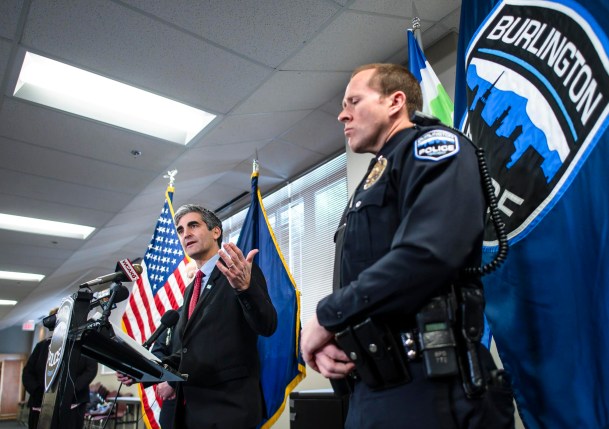
Murad told VTDigger he doesn’t know yet if the additional civilian positions would allow the Burlington police to adequately staff the overnight shift. He said it depends on how long it takes to hire people, which can take months. In the meantime, more of his officers could leave.
But he’s also not sure how or if the Burlington police will be able to notify the public if proactive coverage isn’t provided at certain times.
“I don’t know the answer to that yet,” Murad said. “There are implications of sort of hanging out a big neon sign that says, ‘Hey, burglars, come to Burlington.’ And yet there’s also a pronounced need to be transparent and clear with the public that you serve.”
Weinberger said he doesn’t think racial justice policing reforms need to come at the cost of diminishing Burlington’s police department.
“There are some people who make that straight line, that reducing policing equals racial justice because, in definition, police are oppressive to BIPOC [Black, Indigenous and people of color] individuals,” Weinberger said. “I certainly agree that the history of law enforcement in this country is fraught.”
“I think the way to address that is to transform policing, not to abandon it, not to abolish it. I think not even to defund it,” he said.
Weinberger said he wants to focus on culturally transforming the way officers respond to suspected crimes. He used an incident in January as an example; a 19-year-old Black resident was shocked with a stun gun by police after being suspected of an attempted car break-in.
“The way in which the officers engaged the individual who was suspected of attempting to break into cars on Jan. 7, that is the way our officers, Vermont’s officers, all the country’s officers have been trained for decades to respond to a situation like that,” he said. “We need to decide whether we want something different than that. We need a deep and extensive conversation about how we completely overhaul the interactions that officers are trained to react to.”
He said he doesn’t believe he’s driving fear among residents by referring to the police cutbacks as a “staffing crisis.” He said the accusations that he’s fear-mongering are “completely unfair and inaccurate.”
“We’ve already had material curtailments to public safety services that are impacting the quality of life and public safety in downtown Burlington,” Weinberger said.
He said he’s been receiving more complaints about an uptick in graffiti that officers no longer have the bandwidth to respond to. He said it’s “completely appropriate and necessary” for him to express concerns about how future curtailments of police service will affect public safety.
Weinberger supporter Mark Porter said the decrease in police coverage is partially driving his support for the mayor, whom he thinks has also been an effective financial manager for the city.
“It does scare me,” Porter said, referencing the possible decline of overnight coverage. “Now it creates an opening. It created an opportunity time for bad people. … If you were a criminal, when would you commit crimes? When nobody is on.”
However, Porter says that his vote for Weinberger isn’t being driven by fear.
“It’s not the message I’ve been getting,” he said. “I think it’s more, hey, these are things you should be concerned about.”
While Burlington resident Todd Spellman is still undecided about whom he’ll vote for this mayor’s race, he said he’s been most drawn to Weinberger. He said he agrees that the BPD needs to see reform, but he’s been troubled by the way some Progressive city councilors have approached solutions. He said he’s been turned off by what he thinks is their “my way or the highway” approach.
“We can’t be so divided right now. And I’m having a hard time figuring out where the middle ground is with our current city council,” Spellman said.
“I would prefer to vote for Miro because I think some of the Progressive policies are done in such a knee-jerk reaction,” he added.
He said he thinks the council should have pursued a study assessing how many cops Burlington needs — an idea proposed by Weinberger and supported by independent councilor and mayoral candidate Ali Dieng — before policing cuts were made.”
The loss of overnight coverage, while concerning, isn’t driving his vote for Weinberger, Spellman said. The way Progressives have gone about their decision-making is.
‘Racist fears’ drive police staffing concerns
The policing issues Burlington is toiling with have “tremendously” impacted how Burlington resident Jenn Moore is voting in this mayor’s race.
She’s throwing her support behind Progressive nominee Tracy, who she said swiftly dealt with community concerns that Burlington’s police force was too big for its community and too often policed residents of color disproportionately.
She said she doesn’t think Tracy and other councilors acted irresponsibly by passing the 30% staffing reduction for the BPD without formally studying how many cops Burlington needs.
“Justice delayed is justice denied,” Moore said.
She also said she thinks Weinberger is using racist “fear-mongering” by drumming up concerns that Burlington could see more crime if the proactive overnight patrol isn’t staffed.
“It’s a direct appeal to the racist fears of wealthy, white people,” Moore said. “And it’s really also clear that Burlington is not some special place where Black and brown people are treated equally.”
Moore isn’t alone in her critiques. Mark Hughes, executive director of the racial justice organization Justice for All, told city councilors at a recent council meeting to vote against Weinberger’s plan to raise the BPD officer cap. Hughes called Weinberger’s “staffing crisis” rhetoric a “dog whistle.”
“The fear-mongering going on and gaslighting efforts by the administration to seek to convince us that this work of addressing systemic racism somehow makes white folks less safe,” Hughes said, “I mean, the dog whistles, it’s crazy. Y’all know better.”
Michael Long is another Burlington voter who believes Weinberger is drumming up fear around the most recent policing issues to drive people to the polls in his support. He said he views it as a “scare tactic” that a “respectable” campaign wouldn’t employ. He said he’s not convinced Burlington needs more than the number of officers it currently has based upon its population size and crime trends.
Police accountability concerns
Long also has concerns about Weinberger’s track record on police accountability over the past few years, as does Moore. He said it “crossed the line” when Weinberger attempted to pressure the city’s medical examiner after they found Douglas Kilburn’s death was a homicide at the hands of BPD Officer Cory Campbell in 2019.
Moore said she was troubled by Weinberger’s delay in acting when it was brought to his attention in the summer of 2019 that former Police Chief Brandon del Pozo had an anonymous Twitter account he used to troll a critic.
“It just confirmed that he cannot be an independent voice for police accountability here,” Moore said.
Recently published court documents — almost exactly a year after the Twitter scandal first broke the news — showed that Weinberger knew about del Pozo’s Twitter account before he had tweeted from it.
Weinberger said he doesn’t think voters are focused on these past incidents. “Questions about my judgment on these incidents will be looked at in the context of nine years of judgment,” he said.
Weinberger said he wasn’t wrong to question the medical examiner’s findings. Some concerns had been raised that Kilburn was suffering from other life-threatening health issues at the time of his death and that Campbell’s punch, fracturing Kilburn’s skull, didn’t warrant a homicide finding.
Weinberger did say he would have handled some aspects of the del Pozo Twitter scandal differently. He said he didn’t fully understand at the time that del Pozo had lied to a Seven Days reporter about the fake account. He said if he had known about the extent of the lie, he would have acted more quickly about disclosing the situation, but he wouldn’t say whether he would have asked for del Pozo’s resignation. Del Pozo resigned on his own in December 2019.

Tracy said he’s hearing concerns from voters about these past incidents, unlike Weinberger.
“There’s absolutely continued concern around police accountability and Miro’s ability to hold the police accountable but also more broadly in wanting to see real community oversight,” Tracy said.
He referenced Weinberger’s recent veto of a charter change proposal for voters that would create a community oversight board with disciplinary and investigatory power over the police.
Tracy adamantly rejects the idea that the council has created a staffing crisis in the BPD. He pointed to the recent approval of up to 13 new community service officer and community support liaison positions, which he said should allow the department to continue overnight services.
He said the council laid out a clear plan from the beginning to find alternatives to policing. When residents of color, specifically Black people, are being consistently policed at disproportionate rates, Tracy says public safety isn’t working for all and that reform through swift action is required.
Tracy said he doesn’t think the council deserves blame for not putting forward alternative policing solutions sooner, but he did recognize that the process has taken longer than he had hoped. The council made a plan when staffing was cut to gather community feedback and conduct an assessment of the BPD to find these alternatives and then fund them through BPD attrition savings. But the process has taken months to materialize. Funding was approved to get the fact-finding rolling just weeks ago.
“I think we should have done more to get the assessment off the ground sooner,” Tracy said. “I think that the council is going to be thoughtful about this process of police transformation and making sure that we’re really thoughtfully building out these positions.”
A ‘pragmatic’ third perspective

Independent mayoral candidate Ali Dieng thinks the council deserves some blame for the city’s issues around policing. But he doesn’t think the BPD cuts have amounted to the “staffing crisis” Weinberger is trying to sell to voters either.
He said he believes Weinberger’s slowness in responding to past instances of alleged improper use of force by police led to the council’s decision to make the 30% staffing reduction — which Dieng voted against.
“You have all the resources, the staffing; everything is under your leadership,” Dieng said, referring to Weinberger. “Basically, if you don’t take action, the culture of policing will just continue. I felt he looked away. Now, this community is confused. Many people are experiencing a lot of fear.”
Dieng voted against the staffing cuts because he thought the council should have pursued a study of the department before reducing officers to understand what size police department Burlington truly needs.
This approach has gained him the support of Burlington resident Steve McIntyre, who said he thought Dieng’s approach was the most “pragmatic” thinking to reform the police department. He questioned why councilors would cut staffing levels without knowing what officer levels are right for Burlington.
“To do it before you do any studies, I think, is irresponsible,” McIntyre said.
Dieng also thinks it was a “big mistake” of the council to make these staffing cuts without having a plan in place for policing alternatives and resources to reduce call volume.
“You cannot cut and then want to make a study,” Dieng said.
“I mean, it just doesn’t make common sense,” he continued. “Common sense is you study and then make the cuts. The fact that the council cut first and then did a study is completely backward. Backward.”
Correction: An earlier version of this story referred incorrectly to the official who first suggested that an assessment be undertaken before policing cuts were made. The idea was proposed by Mayor Miro Weinberger and then supported by independent councilor and mayoral candidate Ali Dieng.
