


BURLINGTON — Back in December, the University of Vermont was celebrating a fall semester of low Covid numbers.
Despite worries that the return of UVM students for the fall would cause an outbreak in the community — a scenario that has played out in some college towns — case counts had remained relatively stable. The university reported only 91 cases among its 12,000 students from their August arrival through the end of November.
This semester, however, UVM has seen rising case numbers. In the two weeks since classes began Feb. 1, 78 students and two staff members have tested positive for the coronavirus.
And although the overall positivity rate remains low — about 0.3% — the numbers appear to be climbing. In the first week of February, 32 students tested positive; in the second week, that number grew to 46.
For now, UVM has not announced any changes to its strategy. In a campuswide email Wednesday, provost Patricia Prelock and vice president for operations Gary Derr acknowledged the high case numbers — but doubled down on their current protocols, which include mandatory weekly testing for students.
“We successfully met the challenge presented by the pandemic last fall and we are confident that we can do it again this semester,” they wrote.
Yet as the semester gets underway and cases climb, some students and staff say they are worried.
“It’s really disconcerting, really scary — because it’s the same protocols, but the numbers are much higher,” Duckie Pelenur, a current sophomore, told VTDigger.
When students returned to UVM in August 2020, Vermont was reporting, on average, fewer than 10 cases a day. This context has changed: although case growth statewide has slowed since early January, Covid numbers remain elevated in Vermont, and in Burlington.
The university says this environment made higher case numbers inevitable. “We have been clear from the start of the semester that we expected to see a higher number of positive cases than last fall,” Enrique Corredera, a spokesperson for UVM, said in a statement.
Corredera declined to give specifics, however, around what levels of case numbers might warrant further action. Some colleges in the Northeast, facing high case numbers, have instituted strict measures to prevent spread on campus — like lockdowns and takeout-only dining.
UVM’s safety protocols that were carried over from last semester also include bans on visitors to residence halls, limits to gatherings and out-of-state travel restrictions. The university, Corredera said, was working with health experts and would “monitor the situation closely to determine if any adjustments are needed.”
On-campus worries
Pelenur, a sociology major, lived in a dorm on UVM’s campus in the fall, taking a combination of in-person and remote classes.
Now, though, Pelenur is trying to get exempted from on-campus housing, which is typically required for all first- and second-year students. He is immunocompromised, he explained to VTDigger, and feels unsafe living in the dorms and eating in the dining halls. He is also not able to live at home, as some students have opted to do.
“Really any way you spin it, there is no risk-free way to live in the dorms,” he said. Bathrooms are often shared. Fellow students don’t always wear their masks on their way to do laundry, or when they’re lounging in common spaces.
Yet, the university has pushed back on Pelenur’s request to live in his off-campus apartment, which he has already begun renting, and be released from his expensive housing contract. Residential life denied his first request, according to emails reviewed by VTDigger, saying that providing him a single room in the dorm “should address those concerns.”
“It’s really stressful,” Pelenur said, particularly as cases continue to rise. His second appeal is pending, and he is still unsure what the university’s answer will be.
Annaliese Holden, another UVM sophomore, told VTDigger she has also felt unsafe at times living on campus — particularly when eating at the dining halls, where masks can’t be worn at all times.
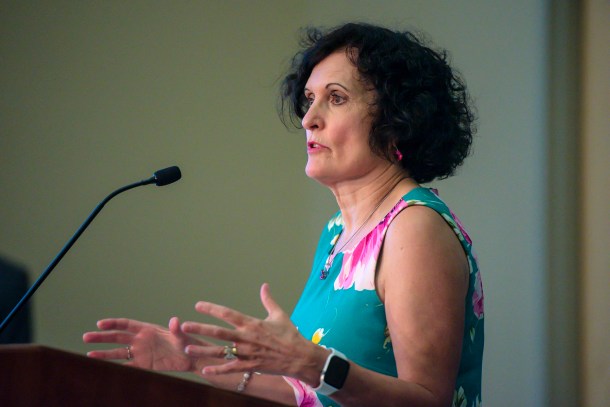
Holden, who is also high-risk for Covid complications, was released from her dining plan for the year, though she said it “took a little budging.” Otherwise, she said, she has generally felt accommodated, particularly by her professors.
Pelenur, too, said he feels safer in the classroom than in the dorms. “I feel fine” going to his one in-person class, he said. “However, if things were to get dramatically worse this semester, that would probably change.”
The majority of Covid cases at UVM this semester have been among on-campus students, although more than half of students live off-campus.
In their letter, Prelock and Derr emphasized that most of those on-campus students who test positive are already in quarantine. Over the previous seven days, they said, 60% of on-campus cases were among students who were quarantining. Only 30% of off-campus cases were among students in quarantine.
“By testing everyone every week, we have been able to significantly limit the spread of the virus,” they wrote.
Yet Holden and Pelenur both say that the low positivity rates, and promises of containment, don’t put them at ease.
“It’s a little scary to me, knowing that I could go into an in-person class and — even if the infection rate is super low — there could still be somebody who doesn’t know they have it,” Holden said. “And they could just pass it on to me, and I would get seriously sick.”
Demands for transparency
While UVM’s weekly testing regimen is stringent compared to many other institutions, some want to see greater transparency in the case data the university releases.
The university conducts more than a thousand tests each day, on average, and it must report the results of those tests to the state. But UVM puts out only weekly reports on the cases to the public — with a seven-day delay.
Although there have been calls for more timely reporting of Covid cases from UVM since the fall, they have grown louder in light of the rising cases. On Monday, the Burlington City Council passed a resolution that, in part, demanded that UVM put out more detailed reports.
UVM’s refusal to release daily test results publicly is “causing unnecessary stress and anxiety for UVM workers and the Burlington community,” the resolution reads.

Although staff cases have remained low so far, rising student cases could also have an impact on UVM workers. “The people that are keeping the dorms running — the food staff, the custodial staff — they don’t have the luxury of doing their job from home,” said Rep. Barbara Rachelson, D-Burlington, who had been a loud critic of UVM’s fall reopening plans.
Rachelson said she thought the university had been lucky not to see higher case numbers in the fall. “If I were the one making the call, I wouldn’t have opened,” she said.
One UVM professor, who asked not to be named because he was not authorized to discuss the matter, said he also saw a growing frustration with the policy among faculty. “These weekly updates are simply not enough anymore,” he told VTDigger. “We need transparency.”
Pelenur agreed. “I would like to have a report of all the cases, every single day,” he said.
So far, the university has not announced any change to its current reporting system. Because of that, it’s unclear whether cases have continued to rise since Feb. 14, the last time the weekly report was updated.
Another update is expected on Feb. 21.
Correction: The readout with this story was updated to make clear that 78 students tested positive for Covid in the first two weeks of February.
