

The Vermont Conversation with David Goodman is a VTDigger podcast that features in-depth interviews on local and national issues. Listen and subscribe for free on Apple Podcasts, Spotify, YouTube or wherever you get podcasts.
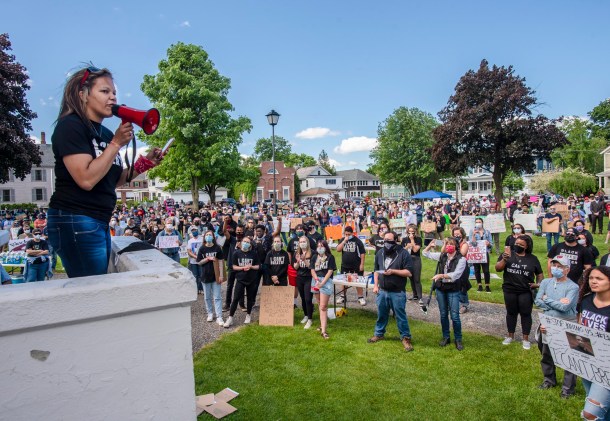
When Tabitha Moore founded the Rutland chapter of the NAACP in 2016, she didn’t imagine that advocating for racial justice in her community would lead to its opposite: a torrent of bigotry and hate. Following threats and harassment directed at her children and herself, Moore, a sixth-generation Vermonter, announced last year that she was stepping down as head of the NAACP chapter that she founded.
Moore is not alone. VTDigger’s Emma Cotton published an article this week detailing how three women of color, who are all community leaders in southern Vermont, are leaving their leadership positions following multiple incidents of racist harassment. Moore and one of the other women featured in the article have felt forced to move from their homes.
“Black women are leaving positions of power and it’s not because we are weak. None of us are weak. It is a matter of self-preservation,” says Moore.
Tabitha Moore talked on The Vermont Conversation about how her racial justice work in Vermont ended up making her a target of a relentless campaign of racism, and what needs to be done if Vermont is to be a safe and accepting place for people of color.
“Expecting Black people to fix racism is like asking the environment to fix global warming,” says Moore. “The solution is that white people need to hold other white people accountable.”

