Disparities in public health and economic opportunity top the legislative priority list for racial justice advocates this session.
The Vermont Racial Justice Alliance, a network of organizations dedicated to eliminating systemic racism, identified three key priorities this year under the acronym “ACT” — acknowledging and reconciling with historic systems of racism; creating new structures for Black economic and cultural empowerment; and transforming state systems.
Each priority comes with a short list of key bills to pass this year.
The group is urging lawmakers to pass a joint resolution calling for a moral budgeting process that centers on inequity and funding solutions for Black, Indigenous and people of color in Vermont. Those Vermonters account for 6% of the state’s population but 12% of its cases of Covid-19, so the alliance is asking lawmakers to declare racism a public health emergency in Vermont.
Statehouse leaders say racial justice legislation is a top priority, but an overwhelming number of bills from different groups pushing racial justice initiatives need to be sorted through and winnowed down. Sen. Kesha Ram, D-Chittenden, is organizing the sorting efforts.
Senate President Pro Tem Becca Balint said that, between the Legislature’s social equity caucus, its social equity workgroup, the governor’s racial equity task force, the state’s Racial Disparities in the Criminal and Juvenile Justice Advisory Panel, and independent groups such as the Racial Justice Alliance, an incredible amount of work is going toward these issues right now.
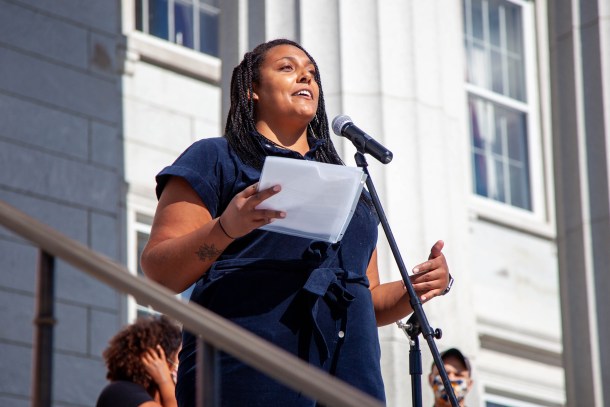
A Zoom call to discuss the Racial Justice Alliance priorities drew about 100 participants Wednesday, including a number of key lawmakers.
The group says its first priority is for the state to fully acknowledge Vermont’s history of racism, and that needs to happen before any other justice work can be done in good faith.
“We believe it’s imperative that we pause and acknowledge historical harms,” said Ashley LaPorte, a Racial Justice Alliance coordinator. “We cannot create new equitable solutions until we reconcile what we’ve done in the past and the things that we continue to perpetuate or we will make the same mistakes over and over again and continue to disenfranchise the same groups of people.”
The group supports an amendment to the Vermont Constitution prohibiting slavery and indentured servitude — a measure the Legislature passed in the last biennium, but needs another concurring vote from the Legislature again before heading to a statewide vote.
Additionally, the alliance wants to establish a task force for chattel slavery reparations that didn’t pass last session; it would have to be reintroduced.
The next set of priorities focus on creating programs and structures that help advance Black, Indigenous and people of color economically, through measures such as technical assistance, pathways to continuing education, and structures to ensure home and land ownership.
The final set of priorities involves transforming state systems, such as expanding the Office of the Racial Equity Director, Xusana Davis, and reimagining areas such as public safety and public health.
“If we are to change the lives of Black folks here, we must seek transformative, not incremental, solutions,” LaPorte said.
The Racial Justice Alliance is pushing for more inclusive data collection, so the state is able to fully understand the discrimination that Black, Indigenous and people of color are facing. Now, LaPorte said, most data isn’t collected through an inclusive lens, and even when it is, is largely decentralized, so it can be nearly impossible to find meaningful information about racial discrimination and disparities to use when crafting legislation.
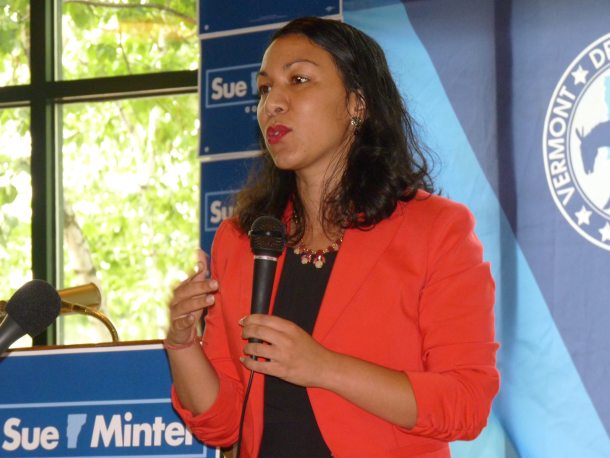
She hopes the state puts effort and funding toward changing that.
Balint said the governor’s team is focused on crafting racial justice legislation that might pass with tripartisan support. She said that for her and House Speaker Jill Krowinski, both Democrats, a lack of support from across the aisle isn’t a dealbreaker.
“For us, it’s what are initiatives that we might be able to move, even if we don’t have tripartisan support,” Balint said. “If it’s good policy that’s going to improve racial equity outcomes in the state, maybe it’s better to move those initiatives forward even if we’re not able to get both sides of the aisle.
“Depending on where you sit in the state, what groups you’re a part of, what people you’re talking to, different issues will feel more urgent,” Balint said. “Folks don’t want to be seen putting their thumb on the scale saying this is what’s going to move.”
But Ram said it’s good that there’s disagreement, and that wherever there’s not a monolithic perspective, that’s something to celebrate. She said that’s what it takes to make lasting, effective change.
“Vermonters need to start seeing people of color disagreeing with each other,” Ram said. “We don’t all agree on policy issues, but we do all share a core set of principal values on racial equity, in terms of who’s been the most marginalized and bringing them to the center, making sure they feel heard and supported.”