


Anika Turcotte of Montpelier High School and Eva Goodwin of U-32 High School produced the two interviews in this third installment of Red State Vermont, a series from the Underground Workshop, VTDigger’s platform for student journalism.
Editor’s Note: Vermonters cast 112,704 votes for Donald Trump and 248,412 votes for Phil Scott last November. The people behind these numbers often have little in common with each other or with traditional political labels. The interviews in this series explore just a few of the wide-ranging perspectives and attitudes among Vermonters who identify as conservative or Republican. They do not represent the views of Vermont’s Republican Party, the student journalists who conducted the interviews, or VTDigger — each of these Vermonters speaks only for themselves. Interviews have been edited for length and clarity.
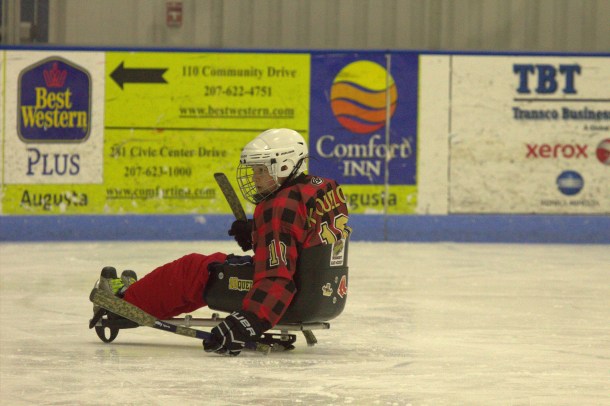
by Anika Turcotte, Montpelier High School
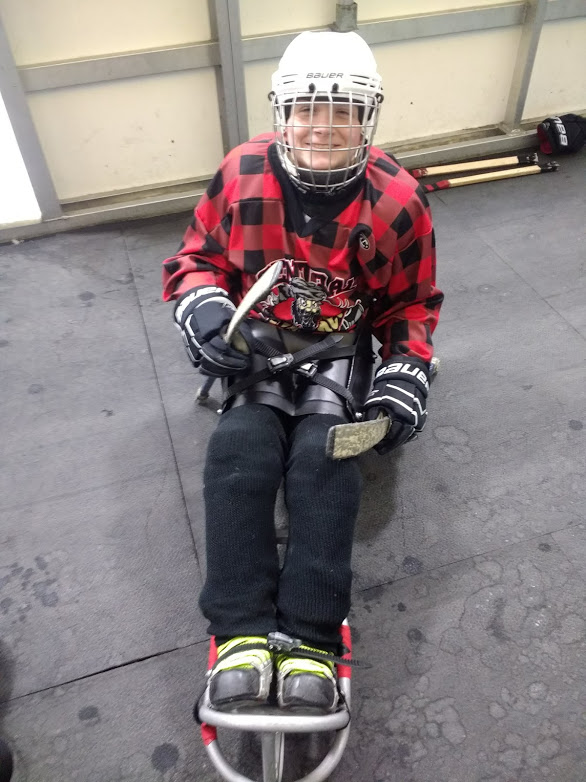
Kyler Quelch is a senior at U-32 High School in East Montpelier. He has cerebral palsy, a condition that makes him a high-risk individual, and this year he is learning completely remote.
During the 2020 election, Kyler was following the results closely. Throughout the week, as votes were being counted, he would check the map of the electoral college, constantly refreshing.
On the Saturday that Joe Biden’s win was announced, Kyler was sitting at home with his dad. As he was scrolling through his phone, he saw the election results.
“Oh, man,” he thought. “I feel like our country is going to be screwed here.”
Later that night, Kyler and his dad went over to a friend’s house for dinner. The host family was celebrating Biden’s win, while Kyler was trying his best to keep his mouth shut. He focused on the food and tried his best to put politics out of his mind.
He changed the conversation and moved past the issue. His fears for the future of the U.S. were not soothed, but he understood that Biden had won:
“If that is who the American people wanted, you do have to respect that.”
How do schools approach issues?
I really didn’t realize what my beliefs really were until about fifth or sixth grade. When they started preaching politics to us and kind of saying, ‘You have to believe things a certain way’ — for me it was kind of difficult because I didn’t believe that I should be restricted as an individual either way.
I believed that I could do whatever I wanted to do, but I was restricted because they said, ‘You can only do what we tell you to do.’ And it was interesting, too, because I think that’s kind of when I realized I had different opinions, when they started teaching things.
You know, my freshman year, sophomore year where Black Lives Matter started to come and instead of really talking about those things it was more of ‘let’s take action’ — you never think about what everybody’s opinion is.
What is one issue you are passionate about?
You know, I’ve grown up hunting. I took a hunter safety course; my dad took me out when I was a little kid. You know there are certainly a bunch of people who believe that, you know, that’s wrong and you shouldn’t kill animals and all that, but I’ve always grown up with that and that’s just what I do.

I got a 92 on my hunter safety course and so I’m very proud of that. I even just did a project on why we should keep the gun rights we do have.
Whenever it’s been brought up. it’s always been brought up, ‘why we should have gun control,’ or ‘why we should have Black Lives Matter flag,’ but not always ‘why would this be a bad idea,’ or ‘why would people be against it,’ or pros and cons, things from both perspectives. I think there’d be a lot less divide for sure.
Tell me more about the divide.
After school once, I hung out with a friend. That friend is very much on the other end of the spectrum. Do I necessarily agree with his views? No. Does he necessarily agree with my views? No.
But we got heated, in terms of talking about climate change and all that stuff. That is why I don’t like talking about politics a whole lot.
Have you protested?
Last year, someone who was friends with some of my friends — I wasn’t really friends with him — actually organized a protest in response to all of the gun control protests.
I participated in that. With protests generally, I believe it is all right as long as you are respectful about it. Respecting people’s opinions, being honest with people, those are my core beliefs.
With that one protest, it was actually very peaceful; we all just walked out in the middle of class. Some of us talked quietly but it was pretty respectful. I thought it was really well done.
What about Republicans on a state level?
Do I like the governor? Absolutely. I respect the governor. I’ve seen him personally many times. He actually went to a family member’s funeral; he went to a few parties that I have been at; he went to a hockey game of mine.
So on a personal level I have a lot of respect for him and he is very much an economy guy. I kind of agree with a lot of the economic things he does but in terms of restricting guns, we haven’t done too much yet but we are on our way to a lot more. And I think with the changing of our national leader, I am worried about our guns.
Covid?
I respect the governor. When he was addressing the people about Covid, he was asked the question about people with physical disabilities and Covid-19 and how those people were struggling and what their plans should be.
His response was let’s just get the kids back into schools. That’s not the answer. That’s why I think having people with disabilities in politics would be a good thing.
That started happening in North Carolina with Madison Cawthorn, who is great, and I hope the others follow in his shoes. He is a Republican, and in a wheelchair.
I think that’s very influential for our group of people. It’s great to have more perspectives like that regardless of political party, people who understand what it’s like to have a disability. I think that’s important.
Being a high-risk individual, this is where I say we kind of need restrictions. I think personally with the holidays coming up we should kind of lock down.
This is where my economic mind kind of goes away, because I have asthma, I have cerebral palsy, and having CP, it kind of wears you down, you know?
You don’t have much of an immune system and with having a breathing thing, it’s difficult. If I got it, I’d be put on a ventilator and I don’t know what would happen after that.
As far as staying alive and all that stuff, that’s why I think it’s important that everyone is following it. People are taking it as a joke and I don’t think they should be. People with disabilities are high-risk.
To hear it from the government, like ‘Now be careful!’ Who’s going to listen to that?
But you hear it from somebody whose life — I hate to be dramatic but, it’s kind of dependent on people being careful, you know it kind of gives you a whole different perspective.

by Eva Goodwin, U-32 High School
Last year Allie Guthrie sat in her social studies class as a sophomore, listening to her classmates debate about climate change. She did not agree with all the points being made.
A classmate mentioned President Trump. The students felt that climate change was not at the top of his agenda. Allie’s thoughts were that, while climate change is important, President Trump was thinking more of issues like jobs, immigrants and doing the best for our country.
Allie knew she disagreed with the students and considered leaping into the debate, but instead reconsidered and decided to just listen.
“I should have said something, but I didn’t want to because I knew the mass majority disagreed,” Allie said. “I didn’t really have the courage to speak up and disagree.”
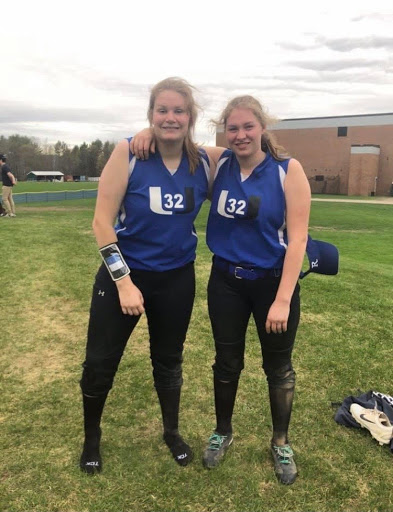
Allie Guthrie is a 16-year-old junior at U-32 High School. She describes herself as a Republican. In Vermont, people who identify as such are a minority, and Allie often decides to keep quiet because she does not want her personal feelings to affect her relationships with others.
Could you tell me about your earliest political memory or when you first started caring about politics?
When I first started caring about it was actually our freshman year, when they hung the Black Lives Matter flag. That was the first time politics had an influence on my life and since then I’ve definitely been more interested in it.
What was your reaction to the Black Lives Matter flag being raised?
I was sitting in the library one day and a girl came up to interview me about it and I didn’t even know until that week, when everyone started talking about it.
They were like, “Are you going to see the flag?” And I was like “What flag, what do you mean?” And they were like “Oh we’re hanging the Black Lives Matter flag,” and I was like, “Oh.”
I didn’t know about it at all. But of course I went to it because that’s a really big step for public schools. Montpelier was the first school in the country, so I thought that was very impactful. When I went outside, there were people out there with the Confederate flag as well — that just shocked me a little bit. I expected it but was surprised to see it.
So you would say that you thought it was a good thing that the Black Lives Matter flag was raised?
I think it was important, yeah.
Could you explain your feelings to me about the Confederate flag?
It’s symbolism. … Let me show you my wall [the wall in her bedroom]. I have a bunch of flags, but these are countries. … It’s a whole bunch of flags which are divided up by land, and the Confederate flag is a part of the strong South and once was a part of their land.
Some people connect it to racism and other people see it as family history. My opinion probably won’t offend anyone but I just don’t have enough courage to say my beliefs out loud.
So would you say you are worried about offending people or you don’t want people to think of you differently because of it?
Yeah, I don’t want people to think of me differently. I don’t like to talk about it with people, because when we are older we could vote for different people and still be friends.
I don’t want my political beliefs to get in the way of friendships or to define my relationships with anyone.
Would you say that in the school system you feel like you’re a minority there in your beliefs?
I really admire people who share their political opinions, like all the kids in class. I love hearing it, but I think I admire them because I can’t talk about it and really don’t want to in a classroom setting.
Last year my social studies teacher and I had a conference and in it he said, “Well, I’ve heard you in small groups and you shared your opinion, but you don’t bring it to the bigger group.” He said, “I’d really like for you to start doing that, just to create more conversation to hear both sides.”
But I just didn’t; I could never raise my hand because I knew what other people thought and I didn’t agree with that.
And there are some people that do, like for example the kids that wear Confederate flags on their shirt … making their political opinions pretty clear. I just think most people don’t agree with that, but kudos to them, but some people think of it as offensive, then I’d say it’s a step too far.
Would you say that your teachers presented you with history from a specific point of view? Can you tell their political beliefs from the way they teach or would you say it’s pretty neutral?
I feel they definitely do a good job about not being one side or the other but I can definitely tell, not because they present it in their work but just because I’m interested in that, ya know. It goes deeper than that.
Like the clothes they wear and the cars they drive. Like if they drove a Prius I would probably be like, oh, they’re environmentally friendly. It might be bad but I assume and make judgments on their political beliefs by this. However, I think, based on the lessons, teachers do a good job with telling it from the middle.
My history teacher currently, he grew up in Texas and he’s pretty young, around 25 to 30. We’re getting into that Civil War unit and my history teacher was saying that when he was in high school it was strictly a lesson that was almost a semester long, all about the Civil War.
In my class we’ve spent maybe two or three weeks on it, and we’re taking our time, but still, compared to a whole semester, it’s not much. I think it’s really cool because I hadn’t really learned about the Civil War in depth before.
Could you tell me about your family’s history or any stories from your family that help define your values or beliefs?
My dad’s family is Irish and French. That’s where my last name comes from [Guthrie]. He grew up really strictly Catholic from my grandmother and grandfather and then when he moved out he chose to stop going to church and being as religious.
I would call myself an atheist and my family does not usually go to church, even on Christmas or Easter. On my mom’s side, we did an ancestry test, and around 14 Grandpas back was a slave in the South. I just thought that was interesting, because in Vermont it’s not very diverse, so knowing that a part of my family came from Black slaves in the South was a surprise to me.
Do you and your sister and parents share the same political beliefs?
My dad doesn’t really share political beliefs with me but I would say my views are similar to my mom’s, definitely Republican but not extremely. My sister is the black sheep; she is very hardcore about it. She is all in for Trump and being a Republican, and while I do support Trump and would call myself a Republican, I don’t go that deep into it. I don’t know what my brother thinks politically; he doesn’t really share.
Are you close with people that you disagree with politically?
Yeah, definitely.
If they were to say something that you didn’t agree with politically what would you do?
I would not say anything. … This happens in my TA [teacher advisory] or with my friends often. For example, two people sitting by me were talking about the president and I’m just kinda like “oh.”
I listen to what they have to say, and I want to hear their opinion on it but I won’t say anything for the most part. I don’t want it to define my relationship with them.
I have a friend who goes to UVM and she’s super liberal, and I asked her about something like, “Why is this happening, or why was this posted, surrounding politics,” and she explained it and I was like, “Oh, OK, thanks.”
I wouldn’t go into depth with it because I didn’t want to hurt our relationship over contrasting beliefs, or make her think of me any differently.
Would you define yourself more as conservative or Republican?
I would definitely define myself as a Republican.
What made you choose to say that?
I just agree with most of the viewpoints, at least more of them than with liberals.
Would you rather live somewhere like that where you wouldn’t be a minority?
I like it here. I’m perfectly content. I think that if i was raised somewhere largely conservative/Republican, I wouldn’t know anything different. I think that living somewhere where many people don’t have the same viewpoints as me makes me not 100% Republican.
I feel that a person’s political views don’t define them.
Could you describe specific ways you’ve been impacted by politics or policies that impact you?
I wouldn’t say I’m really impacted. My parents are because they’re older and they pay taxes and all that. I have a gun, but I don’t know what Biden’s plans surrounding that are.
If someone was to ask you if you supported Trump you would say yes, no or in the middle?
I would say yes I do like Trump but almost three-quarters of the way. I believe that he is good for caring for the country but I don’t think he’s good with caring for anything else, if that makes sense. I don’t agree with the way he treats females.
I hear a lot of things about him from social media and I am not fond of the language he uses. I think someone should take away his Twitter account.
Have you ever attended a rally or protest?
I went to the Black Lives Matter flag raising.
I think I said this earlier but I didn’t really know what was going on so I just went outside and was like “oh cool.”
But there was a protest that I attended in 2018 or 2019. I was on a field trip one day and there was a school walkout for the Parkland shooting in Florida.
Everyone walked outside and stood there listening but then a week later there was like a pro-gun walkout. I did not go to that; I was in class. … I looked out the window and there were a ton of bright orange hats and camo, definitely the “gun” people, but I chose not to go to that. This was maybe two or three years ago, so even though I own a gun I didn’t participate.
Where do you get a lot of your information from, for example, social media, news sites, family members, etc?
I think a lot of it is social media. Starting in the spring, once the George Floyd thing happened, a lot of people were sharing a lot of different things and for me it was really eye-opening.
I thought, “Wow, people are so passionate about this stuff.” It opened up a lot of new views to me. The atmosphere in school is also very influencing, especially in class when all these people talk about it. I like hearing different sides of it, especially from people my age. I think it’s super cool.
Do you like that Instagram is much more political than it used to be?
I kind of wish it could go back to what it was before because it was more normal to me, more free-flowing. It’s cool to know their political beliefs, so that I don’t overstep and offend them, but overall it doesn’t define a relationship to me. That’s why I wish it would go back to people sharing funny memes or something instead.
Politics have stepped into our lives so much more, but the only thing I shared was a sneaker, with the bottom of it saying “world peace.” Because everyone’s always arguing more now.
How do you feel on certain controversial topics like abortion?
I know this was a huge topic in Alabama because I saw a video on Instagram of a ton of people shaming a woman by an abortion clinic.
I am pro-choice. We have all these men making decisions. My thoughts are that it’s not your body. Do you know what it’s like to have a period or be pregnant? So whatever you want to do with your body, your child and your situation, it should be your choice on what happens.
Who would you say has influenced this belief? Do your mom and sister share the same viewpoint?
My sister and mom have never influenced me on this subject but it’s more brought up by myself. I think it was when I heard about what happens in the South and Alabama, and I thought to myself, “nope.”
