


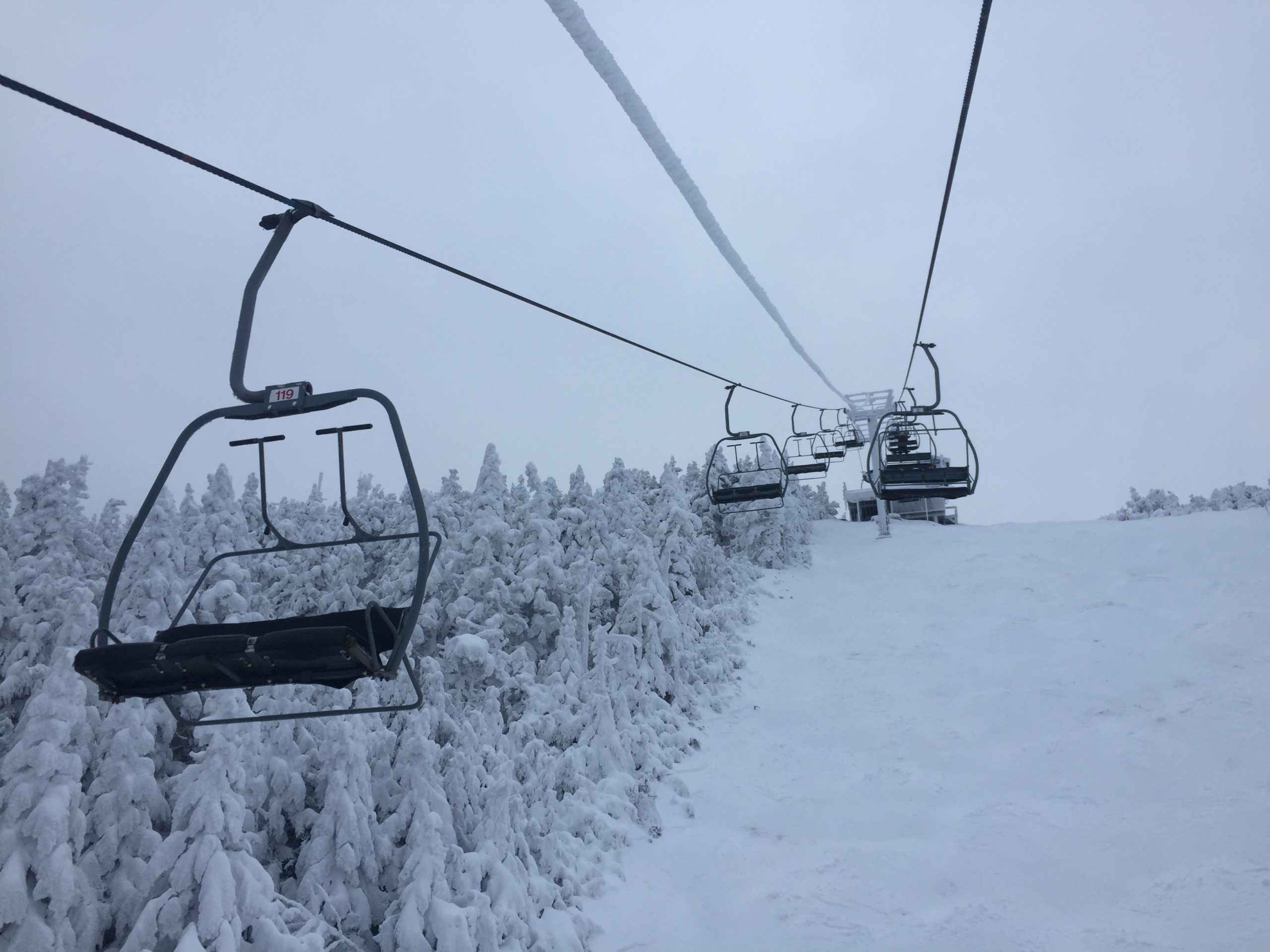
Ski patrollers count as health care workers. That’s the message from state officials after residents have voiced outrage that members of ski patrol have been vaccinated in the first phase of the state’s distribution.
The state is currently distributing the Covid-19 vaccine to “health care workers likely to be exposed/treat Covid-19 patients” and “long-term care facility residents and staff who have patient contact,” according to state guidelines.
But who qualifies under that definition has evolved, sparking questions and controversy.
A policy change this week has allowed police and firefighters to be considered part of this high-priority group, and law enforcement officers have started to receive messages from the state about scheduling vaccinations for sworn officers.
Since Dec. 15, the state has been vaccinating health care workers and Vermonters living and working in elder care facilities. So far, about 21,000 people have received the first dose; the remaining 40,000 health care workers are expected to receive the shot by the end of January.
Though officials say outbreaks haven’t been traced back to ski areas, cases of Covid-19 have recently increased in towns with ski areas, and residents of those towns have reported that out-of-state travelers aren’t always adhering to the state’s quarantine guidelines.
Some residents have accused the state of using a limited vaccine supply to keep ski resorts open and economically viable rather than prioritizing public safety. Some have also suggested that other frontline workers, like law enforcement officers or teachers who are at school in person, should have been vaccinated ahead of ski patrollers.
The Vermont-National Education Association issued a statement Friday morning detailing frustration about ski patrol’s prioritization over teachers.
“The state’s largest union is seeking clarity about the state’s vaccination priorities now that members of ski patrols are being vaccinated ahead of in-school educators and other front-line workers,” the statement says.
Don Tinney, a high school English teacher and president of Vermont-NEA, said he’s hoping for clear answers about when teachers, who are required to work in-person, will be vaccinated.
“As the governor seeks to return to full in-school learning, the vaccination of school employees will be essential for the health and safety of students, educators, and the community,” Tinney said. “And at a time when the state hasn’t even finished vaccinating the most vulnerable, as apparently was a top priority just the other day, we and all Vermonters need clarity around when school employees will begin to receive the vaccine.”
Several hospitals near Vermont ski areas confirmed they have vaccinated members of ski patrol, and say they’re often health care workers or members of other local emergency response groups. State officials say ski patrollers can receive the vaccine regardless of whether they’re a health care worker with another organization.
“They still fit the category of being a first responder who’s directly in contact with a human being who is often in a vulnerable situation, and for a long time, because of the nature of the work they do,” said Mark Levine, commissioner of the Vermont Department of Health.
Many in charge of distributing vaccines agree that, given the fact that mountains are open, it’s important for patrollers who have extended contact with patients to be protected. Hospital representatives also say many ski patrollers also serve with Emergency Medical Services, and that their top priority rests mainly with vaccinating as many qualified people as possible with the available supply.
Trey Dobson, chief medical officer at Southern Vermont Medical Center in Bennington, said the hospital has vaccinated members of ski patrol from nearby mountains like Stratton, Bromley and Mount Snow. They’ve also begun vaccinating members of local law enforcement.
Dobson said the hospital is now vaccinating more than 200 people a day, and his goal is to work quickly to vaccinate as many members of the community as possible.
“We’ve been lucky,” he said. “We’ve gotten enough vaccine that we are open to all health care workers, law enforcement and first responders. And we want to continue to support that.”
Ry Young, public relations manager for Mad River Glen, a co-op style ski resort in Fayston known for attracting locals, said ski patrollers have been vaccinated according to the needs of patrollers, some of whom are elderly or have underlying conditions. Many, he said, also work on local rescue squads.
“In the event that something happens on the hill and they need to tend to a patient, not knowing whether they’re infected or not — it’s just another line of defense,” he said.
Gerianne Smart, spokesperson with Rutland Regional Medical Center, said the hospital began vaccinating ski patrollers from Killington last week.
“We have vaccinated them because they deal with patients and people who are injured,” she said. “These are people, a lot of times, from out of state, and then they would end up coming to the hospital. So there’s a lot involved.”
Killington Fire and Rescue Chief Gary Roth confirmed that EMS workers in Killington have already been vaccinated, and Rutland City Police Chief Brian Kilcullen said the department is now working with the state to organize vaccinations for officers.
“Just yesterday, we received notice that first responders who have some responsibility in caring for or transporting those who require medical attention are in the mix for the vaccination,” Kilcullen said. “We’re in the process of compiling our roster to send it to the state.”
Kilcullen, a member of the National Ski Patrol, said he understands why patrollers fit under the definition of health care workers, and also understands why police officers should get the vaccine because of their contact with the community, including patients.
“Ski patrol are called to respond to assist with the care or transport of injured persons, as are police officers,” he said. “I see the merits for both groups.”
Updated guidance
On Tuesday, the Vaccine Implementation Advisory Committee released its updated guidance on who will be prioritized for a vaccine, adding details to the plan previously outlined by the Department of Health. The updates placed new emphasis on providing the vaccine to frontline workers and to Vermonters of color.
Under the plan, the state will prioritize Vermonters age 75 or older, followed by people age 65-74, and residents age 40-64 with underlying health conditions.
Next in line will be frontline essential workers — the employees in regular contact with the public who are unable to work remotely or to social distance.
In the third group, the state will prioritize people of color, and people with limited English proficiency, as well as other frontline workers, high-risk Vermonters between age 16 and 39 and residents and staff in group homes.
The vaccine advisory group noted that the guidance is not binding and will require flexibility as the number of doses shift and scientific research advances. “This is the largest vaccine effort ever undertaken,” the group wrote, calling the challenges involved “enormous.”
“While the phases outlined in the criteria reflect the order of allocation, they are not exclusive,” they said.
For Dobson, with Southwestern Vermont Medical Center, the largest focus is distributing the vaccine as quickly as the hospital receives it. While prioritization of certain groups is important to keep high-risk workers safe, the process is challenging, and can even slow down vaccination. Dobson said he works closely with the state, speaking with officials several times a week, to determine how to handle supply.
He said the criteria for who is able to be vaccinated will vary from hospital to hospital, depending on supply and circumstances that affect the community.
“If we got low on vaccine again, we may have to be a little bit more careful about when and how we sign people up so that we make sure we get the right people vaccinated,” he said.
Dobson emphasized the benefits of the hospital’s ability to vaccinate a broad definition of health care workers under the state’s policy. Bennington has experienced a spike in the number of Covid-19 cases in recent weeks, and though this upswing was expected after the holidays, Dobson said it’s increasingly important to vaccinate as many people as possible.
“The cases are higher than we want them to be, and we have the new strain that’s apparently more contagious,” he said. “At the same time, we’ve got this vaccine, and that’s caused a lot of anxiety, not only in the public, it’s caused anxiety in us,” he said. “We’ve got to get this going. We’ve got to pull ourselves out of this pandemic.”
Dobson is optimistic — he said he’s confident that the vaccine supply will increase in the coming weeks, and thinks most Vermonters will be able to access the vaccine by early summer.
Anne Galloway contributed reporting.
This story has been updated to include the latest guidance on vaccine distribution and a statement from the Vermont-NEA about its concern that ski patrol members are receiving priority over teachers.
