


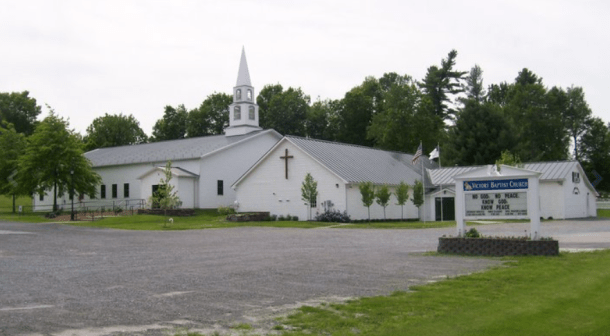
Christmas services at a Vergennes church led to 80 Covid cases in the area, a major outbreak that is only one part of a rising number of cases across the state, officials said at a press conference Friday.
The state reported 202 new cases of the virus Friday and 213 cases Thursday, almost double the daily average a week ago.
Department of Health Commissioner Mark Levine said the spike could be tied to holiday-related gatherings and travel across the state, but it’s too early to know the full impact of gatherings associated with the New Year holiday.
The new cases are scattered throughout the state, including 54 cases reported Friday in Chittenden County. However, Addison County is facing a particularly dramatic rise in cases, fueled in part by the Vergennes church outbreak. The county reported 41 cases Thursday, a one-day record for the pandemic.
Vergennes had reported 53 total cases as of Jan. 6, including 17 in the past week, an increase of roughly 50% in weekly cases, according to Department of Health data. Nearby New Haven and Bridport also reported a high per-capita rate of cases.
Levine said he was not aware of any violations of Covid restrictions at Victory Baptist Church, the church linked to the outbreak. He said the state is tracking at least 40 outbreaks and 200 or more situations in total, and he does not usually announce each one.
The rise in Vermont cases runs parallel to the region and the country. Many states in the Northeast have high test-positivity rates, a metric Vermont has cited in its own performance in the pandemic.
Vermont has a 2.9% positivity rate, higher than fall rates, but lower than the 5% benchmark it uses for reopening evaluations, according to Department of Health data. Some states in the region have a positivity rate as high as 10%. The overall regional increase in cases is 20%, according to the Vermont Department of Financial Regulation.
“I do want all Vermonters to know that in this post-holiday time we are seeing more cases, and they need to be really not letting their guard down as they proceed in their daily lives, and continue to follow all the guidance,” Levine said.
The state also added one new death, bringing the total to 156. Thirty-six people are currently hospitalized for the virus, including eight in the ICU. At Friday’s press conference, officials reported that only 10 out of the 156 cases occurred among individuals under the age of 65.
Levine said the state wants to wait for more information about the impact of the holiday period before deciding whether to tighten social distancing restrictions.
“Sometimes one needs to just let these events play out — wait a little bit before you intervene in a very strict way,” he said.
Low levels in schools
Secretary of Education Dan French said surveillance testing in the state’s K-12 schools continues to show low levels of the virus.
Only about 0.17% of tests turned up positive in the last round of testing, he said. Because of holiday scheduling changes, only about 31% of eligible staff members were tested.
Scott administration officials have been saying for weeks that additional in-person instruction is a priority, and French reiterated that on Friday. He expects most schools to be in person full time after the April break.
Federal help for recovery work has arrived, French said. The coronavirus relief package enacted by Congress last month will include $167 million for Vermont schools — $34 million for higher education, and the rest for K-12.
French said school districts will be expected to file a “recovery plan” with the Agency of Education outlining how they plan to tackle truancy, mental health and helping students catch up on academics. The pandemic has been troubling from an educational perspective, he said, and remediation “will require more in-person instruction and more in-person contact than we are currently providing our students.”
The April goal for full in-person instruction is “aspirational,” French said. But the proposal landed badly with many educators, especially as the push for further in-person instruction comes in the midst of an apparent surge in cases — and the news that most educators may not be vaccinated by that time.
“Someone tell me how the hell we get schools open full-time by April when the state refuses to prioritize vaccinating teachers AND our positivity rate keeps going up!” Christina Deeley, a librarian at Champlain Valley Union High School, tweeted during the press conference.
The Vermont-NEA issued its own statement during the press conference, bristling at the news that ski patrol members were ahead of educators in receiving the vaccine.
“It is beyond curious that frontline educators — and other frontline workers like grocery clerks, retail workers, restaurant employees, and others who interact with the public — aren’t a more important priority,” said Don Tinney, the union’s president.
Vaccine update
Mike Smith, head of the Agency of Human Services, said about 21,000 Vermonters had received their first dose of the vaccine as of Friday.
Vaccinations should be completed by the end of this month at long-term care facilities, and then the focus will move on to the next group: the 49,000 Vermonters over age 75.
The state has also changed its guidance about first responders receiving the vaccine, classifying about 4,500 first responders as health care workers and including them in the current round of vaccinations, Smith said.
“We discovered that often these Vermonters are responding to accident scenes and 911 medical calls,” he said. “They are ministering aid or helping to get individuals ready for transport, even before EMS arrives.”
He said not including them initially was not intentional, but “if anything, an oversight” by the state. The priority group does not include first responders who have no patient contact, such as desk workers.
