

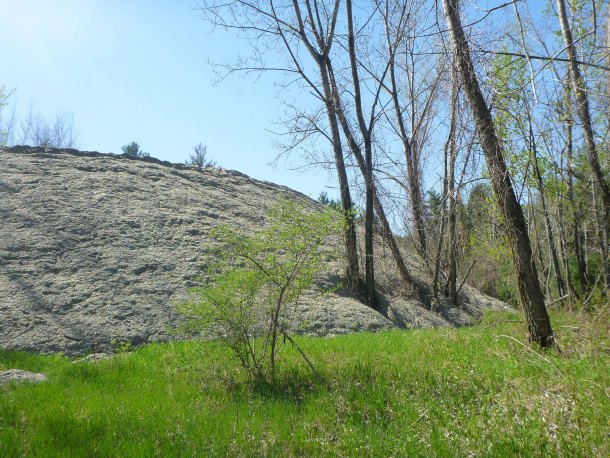
The Chittenden Solid Waste District will pay a $400,000 fine to settle allegations of improper glass dumping, according to an announcement Tuesday from Attorney General TJ Donovan.
The move closes an enforcement case that dates back to April 2018.
CSWD will pay a $78,000 penalty for improperly disposing of glass in three locations on its Williston property. In addition, it will pay nearly $180,000 directly to the state and put $220,000 toward environmental projects intended to benefit the public.
The settlement comes after the state Agency of Natural Resources decided to halt the processing of contentious back-permits to CSWD, while the enforcement case was pending.
“I think it’s a good resolution for the state,” Donovan said. “I think it holds Chittenden Solid Waste accountable. They’re going to pay a hefty fine, and they have to give back to consumers. They have to disclose to consumers what they’re doing with people’s glass that they bring to recycle because everybody thinks it’s being recycled.”
According to Department of Environmental Conservation Commissioner Peter Walke, the case shook “Vermonters’ trust in the recycling system” when it became clear that glass was being disposed of on CSWD’s Williston property.

According to the settlement, 2,186 tons of glass were disposed of “to repair a depression in the closed landfill” in 2013, while another 15,029 tons of glass were disposed of at the end of Redmond Road between 2016 and 2018. An additional 734 tons of glass were used as subbase for a compost field on the Williston property.
But CSWD reported that this glass had been “transferred off-site” and used appropriately for local projects.
While CSWD admits to the facts that are laid out in the agreement, the settlement doesn’t require it to admit that these actions were wrong or illegal. The waste district maintains it acted in good faith and disagrees with the alleged violation.
Paul Burns, executive director of the Vermont Public Interest Research Group, the state’s largest environmental advocacy organization, called for additional steps on the part of CSWD.
“The credibility of CSWD officials is hanging by a thread at this point,” Burns said in a statement. “They repeatedly failed to mention to their customers and to various state and local officials that they had essentially been dumping glass over the side of the road for years.”
“CSWD has violated environmental regulations and the public’s trust by collecting material meant for recycling and then secretly dumping thousands of tons of processed glass in unapproved locations for years,” according to Burns.
CSWD maintains that it did not secretly dispose of glass and properly reported all actions to the state.
According to Burns, “There can be no doubt that CSWD officials knew that dumping the glass was wrong, but the threat to the environment is just part of it.” VPIRG urged CSWD to apologize to customers and the public.
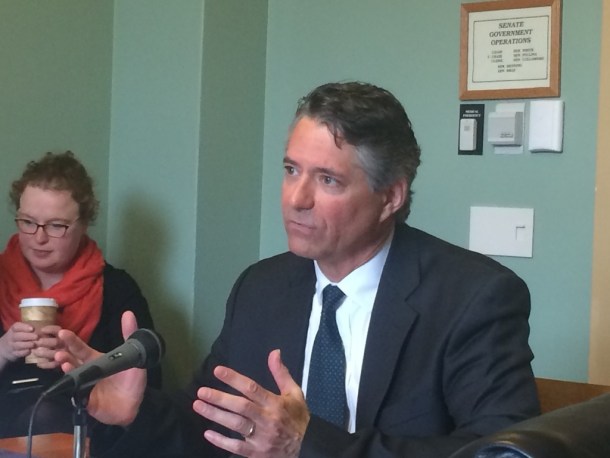
“It’s a shame that a legal agreement with the Attorney General is required for CSWD to tell the truth,” said Burns. The agreement requires CSWD to post information on its website about where recycled glass goes.
For some, the settlement didn’t go far enough because it didn’t include an admission of liability.
“They can say it was legal, and continue to say that,” said John Brabant, who worked as a regulator for the Agency of Natural Resources for 20 years. Now Brabant is the director of regulatory affairs for the nonprofit group, Vermonters for a Clean Environment. “This is unbelievable to me,” he said.
Donovan said the language in the agreement is customary. “But look at the outcome,” he said. “They were held accountable. We’re putting requirements in place that hold them accountable.”
Brabant said the lack of an admission on CSWD’s part was a travesty. “I would want them to acknowledge that they submitted fraudulent reports to the ANR. That is the most important thing of anything, for our government to function.”
Sarah Reeves, the executive director of CSWD, said the organization acted in good faith believing “that the use of recycled glass was consistent with the Vermont Agency of Natural Resources Acceptable Uses for Processed Glass Aggregate policy and also reflected industry-standard management practices for this material.”
CSWD disagrees with the state’s allegations, but Reeves said “these past decisions caused confusion, concern, and mistrust in how CSWD has managed glass processed at our Materials Recovery Facility.”
Donovan said he is confident that the fine is large enough to dissuade the waste district from committing any future violations.
“You know, I think 400,000 bucks is a pretty significant number,” he said.
CSWD is a chartered municipal entity with taxing authority. It has not yet determined how it will pay for the settlement. The decision will be made with input from the CSWD board.
