

The holiday season can be a boon for many artists. But not this year. In the pandemic, where can they perform? How can they get paid?
And, as winter moves in and Covid-19 cases rise, fears rise about the impact on organizations and individual artisans who’ve already been battered.
“We have some significant concerns about how individuals and organizations are going to see through this,” said Amy Cunningham, deputy director of the Vermont Arts Council. “There are just huge unknowns.”
Between April and July, Vermont’s creative sector lost nearly 8,100 jobs and $216 million in sales, according to a Brookings Institute report published in August. The sector includes both traditional artisans and industries such as specialty foods and furniture.
According to that report, Vermont was among the six states with the highest cumulative losses by percentage in the creative industries during that time.
The state arts council, looking at 213 organizations and 400 individual artists, showed cumulative losses of $37 million through the summer.
Relief funding has kept some artists and institutions afloat over the months. H.966 allocated $5 million for cultural nonprofits to distribute.
But that “critical lifeline” has been divvied among 115 groups, Cunningham said, and with other federal support programs ending on Dec. 31, the outlook is “pretty dire.”
Winter will worsen the problem, she said, particularly for performers and the organizations that host them, as outdoor events will be less feasible in the cold and snow.
“Going into the winter, it is just a huge unknown, and I think that it’s going to be kind of grim because I think the cases are going to be bad,” said Amanda Weisenfeld, a felter and founding member of the Northeast Kingdom Artisans Guild.

Weisenfeld said the guild received about $13,000 in grant money from the state months ago, which helped take the pressure off maintaining its St. Johnsbury gallery. “If things didn’t change, we didn’t know how we were going to get to September,” she said.
And in recent weeks, customer support has been heavy as people shop for the holidays, she said.
But overall sales were down between 20% and 30% from the beginning of the year to October, she said. And many of the artists the guild works with are worried because craft fairs — the bulk of which usually occur during the fall and holiday season — are all shut down.
“It’s a huge dent,” Weisenfeld said. “People really counted on them, and each one is just a chunk of change that you’re just not going to be able to make up in any way.”
Keisha Luce, executive director of the Highland Center for the Arts in Greensboro, said the recent surge in cases — and subsequent state restrictions — have really squeezed her organization, which books performers.
The center recently canceled a virtual showing of a concert on its stage because of the restrictions on multi-household gatherings, she said.
“The biggest challenge has sort of been, for us, we always work toward bringing people together,” Luce said. “All of a sudden, you have to think about bringing people together, but then keeping them apart.”
She fears the impact on artists who can no longer perform at places like the Highland center, or at restaurants and bars and clubs.
“Years from now … if we want artists to come back to us, we’ve got to figure out a way now to keep them healthy and happy and somehow employed,” she said. “If artists don’t have the opportunity to work, then I know a lot of them are rethinking what they’re doing for their careers.”
Still, the Greensboro arts center has been able to adapt for the winter.
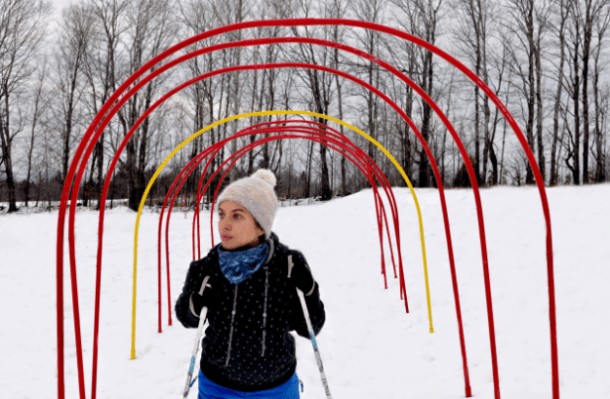
Luce said the center will open a 1.8-mile snowshoe and ski trail with visual work from 10 artists lining its path. And the nonprofit is looking to host other winter-themed outdoor events, such as a light show.
“But of course, it’s so dependent on what’s happening with Covid in Vermont,” she said.
The Vermont Creative Network, a program underneath the state arts council, is working on an action plan for 2021 that may help creatives.
Cunningham, the council’s deputy director, said the network for years has been trying to organize art and cultural groups around shared priorities. This fall, the organization started to chart out how to do so.
The resulting plan, which be released next month, calls for treating the creative sector as essential infrastructure — with the government funding that comes with it. It also suggests combining creative enterprises with community development, and it proposes boosting networking among creatives, with a focus on diversity.
The plan is to create “a shared voice for the creative sector,” Cunningham said, which “allows us to participate and be a part of all kinds of conversations about the future of Vermont.”
