


A new report offers a series of short-term solutions aimed at connecting Vermonters to internet service during the Covid-19 pandemic — when having a reliable connection has arguably never been more crucial.
The report, which is still being finalized, includes a variety of preliminary recommendations that, if adopted together, could help provide some form of a reliable connection to the nearly 61,000 Vermont households estimated to lack internet or have poor service. The report, commissioned by the Legislature, will be completed later this month.
It recommends establishing a state subsidy program for low-income Vermonters who can’t afford internet service. Covering those estimated 20,000 eligible households would cost $7 million.
It also projects that more than 40,000 households in the state could receive service in the short term via mobile hotspots. It recommends using $2.4 million to deploy hotspots around the state.
Deploying cellular hotspots is not a long-term solution for internet service, said Matt Dunne, the founder and executive director of Rural Innovation Strategies Inc. That organization and Maryland-based consulting firm CTC Technology & Energy wrote the report.
However, hotspots could be a temporary fix during the pandemic, particularly now, when the internet is an essential tool for working, connecting with health care services and going to school.
“The Legislature gets to make a decision on the use of scarce dollars — on whether they want to use some or all of those scarce dollars on addressing this immediate crisis, which is right here affecting Vermonters right now, or they want to hold on to those dollars to solve the long-term problem,” Dunne said.
The report also recommends spending $5.6 million to fund line extensions in “unserved pockets” of the state that lack internet, but are within or near areas already connected to broadband networks.
“These can be built quickly and will be difficult to serve by a new fiber provider such as a community utility district,” the report says, which are community-owned fiber optic networks, organizations that provide internet service within multiple towns.
The report identified about 2,000 homes that could benefit from line extensions.
Internet reliance shot up
The study also surveyed Vermonters about their internet use during the Covid-19 crisis.
“In every major use category we analyzed — including telehealth, telework, remote learning, and civic participation — we found that Covid-19 led to an increased demand for and reliance on telecommunications services in the state,” the report states.
The survey, which was conducted online, received 3,046 complete responses, showing that 62% of respondents were working remotely on a daily basis during the pandemic, compared to 21% before Covid-19.
The report also surveyed 422 Vermont businesses, and more than half said inadequate internet service is a “very significant or extremely significant issue” for some of their employees.

“Vermonters have responded to the remote work mandates as directed by the governor — and employers have been working hard to develop new mechanisms for continuing operations in a remote work environment,” the report said. “Clearly these efforts have been thwarted by inadequate residential broadband speeds in some areas, even from those who are considered served.”
The poll also found that, unsurprisingly, the demand for telehealth in Vermont has shot up dramatically — 75% of respondents said that they received telehealth services during the pandemic, versus 19% pre-pandemic.
UVM Health Network said remote appointments increased more than tenfold during the pandemic — from an average of 300 per week to 3,400 per week during the pandemic.
The report does not offer recommendations for financing expanded internet service.
Earlier this year, lawmakers and Gov. Phil Scott harnessed roughly $20 million of federal Coronavirus Relief Fund dollars to help fund broadband expansion around the state.
At this point, it’s unclear if and when Congress will approve another round of Covid-19 aid. And, state revenues for the 2021-22 fiscal year are projected to be severely strained by the pandemic.
Rep. Laura Sibilia, I-Dover, who chairs the Legislature’s Joint Information Technology Oversight Committee, said the draft report’s recommendations “seem reasonable in a very, very short term and with an emergency.”
But she stressed the importance of working with the state’s communications union districts to build out broadband.
She said federal law prevents the state from regulating telecoms companies, and the larger providers have already declined to build out broadband in rural parts of the state because there’s no profit to be made there.
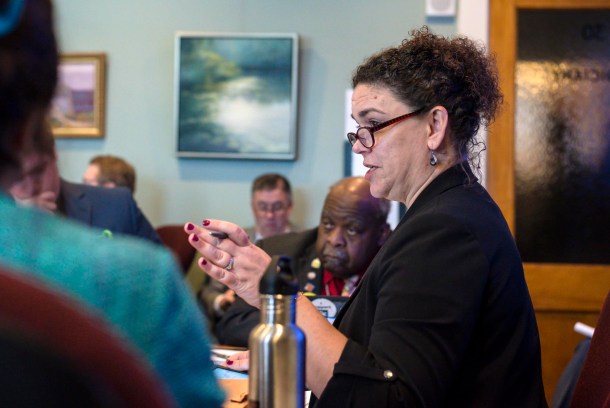
“Telecommunications companies, there’s no reason for them to go to the last mile or they would have already done it. And we can’t make them,” Sibilia said.
“So the (community utility districts) are our hope, so we don’t want to undercut them. So if we’re publicly funding Covid relief projects, they really need to be connected to the CUDs in some way,” Sibilia said.
Dunne said CUDs have a role in the draft study, which proposes that Vermont establish a “Broadband Corps” — a team focused on supporting CUDs, mobilizing people to test mobile hotspots, helping with household installations, and providing technical support.
The report is not a substitute for the state’s long-term plans to ensure all Vermont residences have high-speed internet connections by 2024, Dunne said.
Broadband investment will be a priority for the Senate in the upcoming legislative session, said Sen. Becca Balint, D-Windham, who is expected to lead the Senate for the next two years.
“It is not just an economic issue, but the Covid pandemic has shown us that it’s also an educational issue and a telehealth issue,” she said. “I think there’s a lot more understanding among legislators, regardless of where they come from in the state, that it’s much more critical to community function than perhaps many people realized.
But given the budget constraints legislators will face next year, “we are going to need federal funds to make the kind of headway that we want on broadband,” Balint said.

