


The rise of Covid-19 cases in Vermont is making it less likely that House and Senate members will meet in person at the Statehouse in January.
Legislative leaders had been hoping it would be possible to resume socially distanced work in the Statehouse, to some degree, when the new legislative biennium begins January. Since March, lawmakers have been conducting most of their business remotely via the teleconferencing service Zoom, and streaming it live on YouTube.
But as the Covid-19 infection rate increases in Vermont, legislators are concerned about the risks involved in meeting in Montpelier.
The House has 150 members, the Senate 30.
House Speaker Mitzi Johnson, D-South Hero, said legislative leaders were aiming for a hybrid in-person and remote system of meeting. The plan would have allowed half of the House committees to work in the Statehouse at a given time.
But as infection rates rise, she said, the plan “gets called into question, given that Vermont, where Covid maps are concerned, is now moving towards a red state.”
No formal decisions have been made, though, and Johnson said the House Rules Committee is still planning for both remote and hybrid meetings next year.
She said community spread of the virus could change quickly, and that the House should have the flexibility to meet remotely, or partially in-person.
“I’m suggesting that the rules committee should spend some time now working out what a hybrid system looks like because I think at some point it will be necessary,” Johnson said. “Whether that’s January or March or beyond, it’s going to take us a while to get through this virus with the numbers that have just blossomed in this country.”
By December, the House Rules Committee will make formal recommendations about how legislators will conduct business in January.
Rep. Anne Donahue, R-Northfield, a member of the committee, said Vermont had a record one-day number of newly reported Covid-19 cases on Wednesday: 72. Given the facts, she said, the rules committee is likely to recommend the House work remotely at the beginning of the session.
“I would say today, based on hearing 72, it significantly increases the likelihood that we will end up making a decision, even before mid-December, that we need to at least start in January with all-remote and then keep on top of it and see if we can make a shift,” Donahue said.
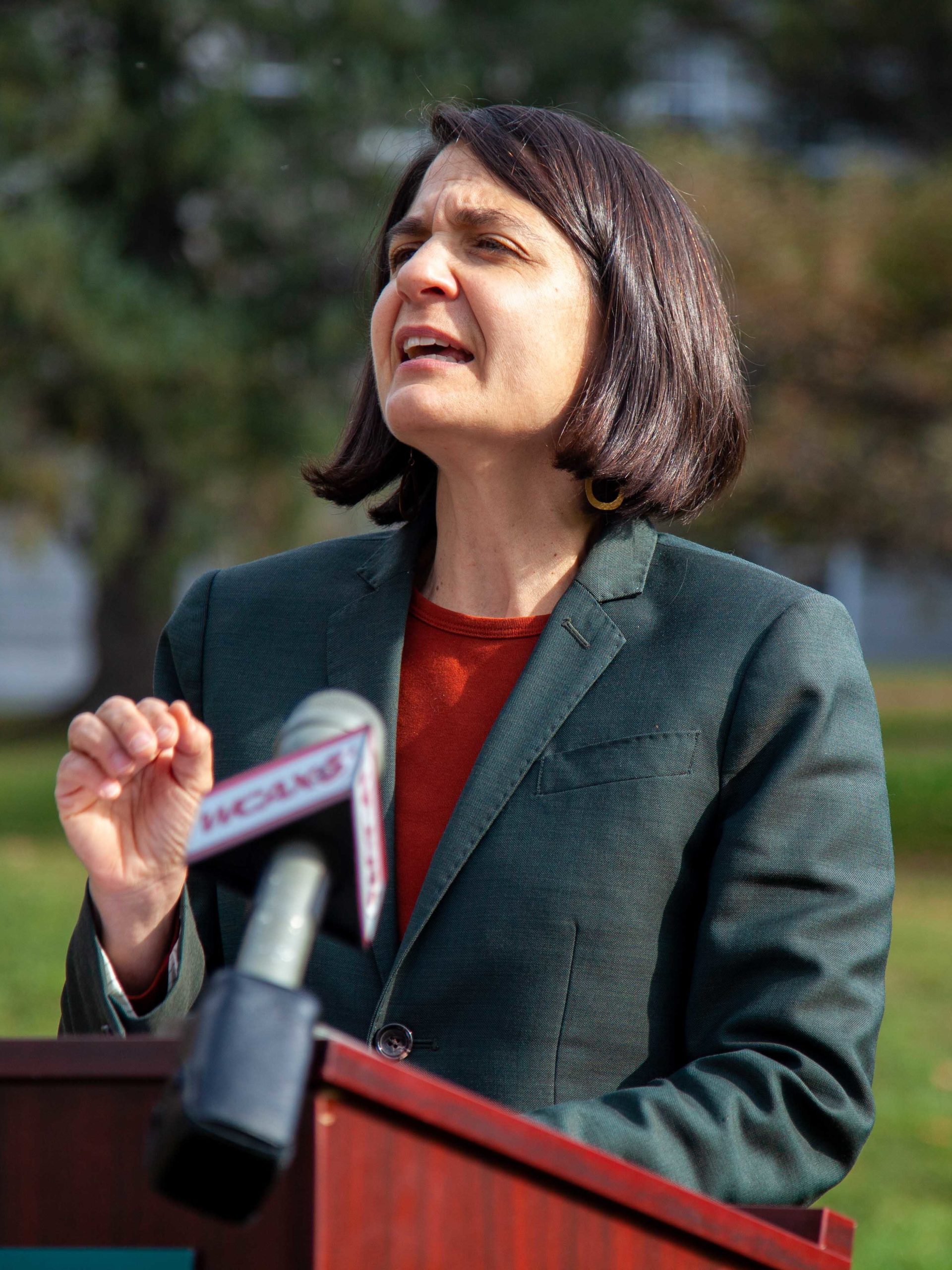
Sen. Becca Balint, D-Windham, who will likely be the Senate pro tem in January, said that, after a meeting of the chamber’s rules committee last week, the Senate is angling to put plans for in-person work on hold.
Balint said senators seem to favor working remotely at first, and reexamining whether a hybrid model could work toward the middle of the session, such as the week in March when lawmakers break for Town Meeting Day.
The Senate Rules Committee last met in October, Balint said, when Covid-19 infections had been “holding steady.” When they met at the end of last week, that had changed.
“And so people were feeling like as we head into the winter, this isn’t going to be the time to decide to all be in-person for that first part of the session,” Balint said.
A report from the architecture firm Freeman French Freeman found that it would be difficult to seat entire committees, plus staff, in existing committee rooms and still allow for proper distancing.
Sen. Joe Benning, R-Caledonia, the Republican minority leader, said meeting social-distancing requirements in the Statehouse would have a high cost: shutting out the public, press and lobbyists.
While he said Zoom is “a horrible way to try to conduct business,” it at least “keeps everybody safe and it keeps public access at a level where it should be.”

“I think it is universal consensus that, with the rise in positive testing results, it is not a time to go back in and do anything in a normal fashion, whether that’s a hybrid approach or elsewise,” Benning said.
Balint said the Senate will meet in-person at least once at the beginning of the session to swear in new members and authorize a rule to allow senators to work remotely next year.
The House will also have a similar in-person meeting to authorize remote voting. It will also likely need to hold an in-person election for a new House speaker, since Johnson, the current House speaker, lost her bid for reelection on Nov. 3 by 18 votes. A recount in that race will be conducted next week.
In either case, not all 150 members of the House will have to be present.
The Legislature has reserved the Barre Auditorium for the first three days of the legislative session in January. The auditorium, according to the Freeman French Freeman study, can accommodate 238 people with social distancing, plus 112 more in its basement.
Donahue said remote work has major drawbacks for policymaking. The biggest, she said, is that it makes it harder for lawmakers to develop trust and working relationships with one another.
“Nobody in the Legislature can become an expert on all things. People have to heavily rely on developing relationships with people they trust as a guide to many of the things they have to vote on, so that they’re making good judgments,” Donahue said.
“That’s really critical to the process, and you just can’t get that over Zoom,” she said.
