


Gov. Phil Scott cruised to a lopsided victory, easily winning a third term Tuesday over Lt. Gov. David Zuckerman.
Scott, a Republican, was declared the winner over Zuckerman, a Progressive Democrat, less than two hours after the polls closed. The Associated Press called the race with Scott holding a commanding lead of 68%-28% with 40% of the vote reported.
Political observers and polls had predicted an easy win for Scott, who has earned high marks for his handling of the state’s response to the coronavirus. Vermont has one of the lowest infection rates in the country.
If the size of the lead holds, it would represent a landslide. Scott’s last win was by 15% and his first race, he won by about 9%.
A poll released by Vermont Public Radio and Vermont PBS in September showed Scott with a 31% lead over Zuckerman and even enjoyed an edge among Democratic Party-leaning voters, 48%-41%. More than 80% of Vermonters approve of his handling of the coronavirus response.
Scott thanked his supporters, family and cabinet members, including those who have helped on the coronavirus team. He recorded remarks in a motorcycle garage with three other people, a nod to the unusual times.
“This global pandemic has impacted all of us in so many ways. Our way of life has been disrupted, there’s a lot of uncertainty and far too many lives and livelihoods have been lost,” Scott said.
“I’m proud of how Vermonters have stepped up and met the moment. It’s because of you — your hard work, your compassion for others and your commitment to community — that Vermont has led the nation,” he said. “But, as I’ve said many times, we cannot let our guard down. And as we enter the winter months, we must remain vigilant. If we do, I’m confident we’ll continue to lead the nation and more importantly, keep our loved ones safe, our kids in school and emerge from this pandemic faster and stronger than any other state.”
Scott, a critic of President Donald Trump who voted for Democrat Joe Biden, called for the nation to heal “because we simply cannot go on like this.”
“Right now, we’re seeing a political system that defines anyone you disagree with as the enemy. The truth is, disagreeing about taxes, fees, regulations and programs, or which candidate to support — these things don’t make us enemies. A healthy democracy requires passionate debate, but it needs to be civil,” he said.
“When they become nasty, personal and, even worse, violent, that’s when our real enemies — those who don’t believe in core American values — gain ground. Because they use the distraction to fan the embers of hate, fear and division,” he added.
A subdued Zuckerman congratulated Scott and said he was ready to stand by him in the days to come fighting the virus as well as any uncertainty about the election “for our democracy, for the decency we represent in Vermont and that we can be leaders across this country if need be.”
In a speech he delivered from the Champlain Club in Burlington, Zuckerman, flanked by his supporters and campaign staff, said he would continue to fight for the issues central to his campaign, like increasing wages for workers, expanding broadband access and building out Vermont’s renewable energy sector to fight climate change.
“We must remember that the work does not end tonight, the work starts tonight,” Zuckerman said.
“I know those of you that were out there supporting me, and even many of you that voted for Gov. Scott, believe in these common issues, and will continue to work for that better future for Vermont,” he said.

In an interview late Tuesday, Zuckerman said he believed that the Covid-19 pandemic was an “overwhelming” factor in his loss.
“We had heard from many people that Covid was going to be sort of the determining factor in their vote and the Vermont success was going to influence that decision. And the governor’s work and his team were certainly a part of that,” Zuckerman said.
Asked if another run for public office could be in the cards, the lieutenant governor said that “we’ve got time for that thought process, and family conversation, in the future.”
Both campaigns were severely limited by the coronavirus. When Scott announced in May he would seek reelection, he said he wouldn’t actively raise money, hire campaign staff, or attend political events. This changed after the primary, when he hired a campaign manager.
Zuckerman, who served two terms as lieutenant governor, outpaced Scott in fundraising — bringing in $686,000 compared to the governor’s $477,000 — and financed television and radio ad buys in the last weeks of the general election. He held events including an outdoor, socially distanced, drive-in rally.
Scott, 62, spoke little about his reelection efforts this year. He didn’t need to. Like many governors across the country who have been responding to the Covid-19 crisis, Scott has been in the spotlight even more than usual — he holds twice-weekly, two hour press conferences broadcast on television and the radio, and which many have noted, serve as de facto campaign opportunities.

A poll released by Vermont Public Radio and Vermont PBS in August found that 83% of Vermonters approved of Scott’s management of the pandemic.
When Scott did discuss his campaign, he focused on a simple message: that Vermont still needed his “steady hand” to recover from the pandemic. He also repeated themes from earlier campaigns about keeping Vermont “affordable.”
The moderate Republican governor was also outspoken in his opposition to President Donald Trump’s policies and reelection. In the end, Scott voted for Democrat Joe Biden.
Despite Scott’s popularity in a historically blue state, Democrats had hoped that a strong turnout in the presidential race, along with Zuckerman’s name recognition and progressive agenda, could carry him to victory. In the end, Zuckerman even lost his hometown of Hinesburg by a 2-1 margin.
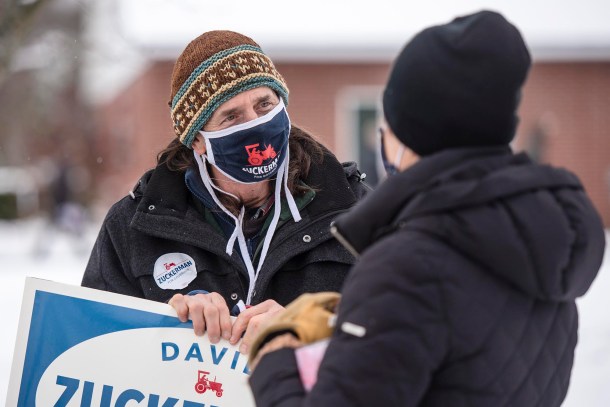
Before Zuckerman, 49, was elected to the lieutenant governor’s office in 2016, he served for 18 years in the Legislature including seven terms in the House and two in the Senate.
Standing outside the South End polling place late Tuesday afternoon, Zuckerman said that Covid-19 made his chances at unseating the Republican governor more difficult.
“I think we knew originally going into it we don’t upend the incumbent very often in this state. I felt like I had a good shot going in. Covid, I think made that harder,” Zuckerman said.
Zuckerman said that the governor benefitted from extra publicity and declined to take part in as much campaigning— and debating— as he might in a normal year. Zuckerman and Scott took part in four debates.
“The press conferences that were supposedly only about Covid often gave him a political platform and that made it much more difficult,” he said.
“He avoided a lot of the typical campaign events, which was frustrating, and I think beyond necessary, but it was a good tool for him,” Zuckerman said.
On the campaign trail, Zuckerman argued that he had a bolder “vision to rebuild Vermont” from the Covid-19 pandemic than Scott.
He proposed temporarily increasing taxes on the wealthiest 5% of Vermonters to fund a “Green Mountain New Deal,” a plan that would combat climate change and create jobs by expanding the state’s investments in weatherization, renewable heating systems, electric public transportation options, and use of electric vehicles.
Zuckerman said that the governor failed to invest in broadband expansion and Vermont’s struggling state college system, and blasted Scott for proposing budget cuts during the Covid-19 crisis.
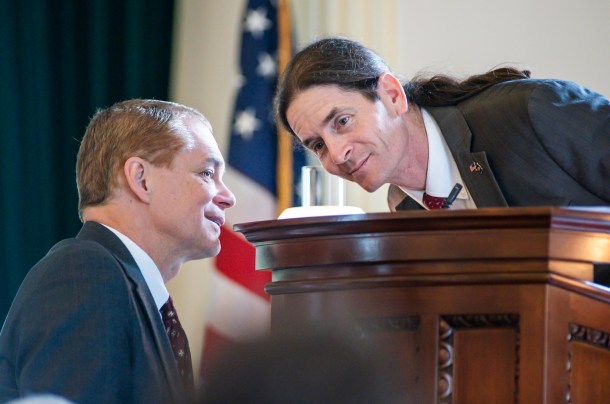
Zuckerman said that instead of reducing state spending, he would look to reserve funds and/or taxes on wealthy residents to maintain and expand government services during the pandemic.
He also criticized Scott for using his veto pen to strike down bills including a $15-an-hour minimum wage, paid family leave programs, and the Global Warming Solutions Act — legislation legally mandating the state to meet carbon emissions reduction targets, which Democrats ultimately revived.
Scott and Zuckerman differed on economic issues. Throughout Scott’s time in office, he has generally opposed any proposed tax increases, and has clashed with the Democratic-controlled Legislature.
In his first two terms, the Republican governor vetoed 20 bills, approaching Democratic Gov. Howard Dean’s record — Dean struck down 21 bills during his 11 years as governor.
Kristin Allosso, who cast her ballot in Burlington’s South End, typically identifies as a Democrat, but voted for Scott because of his management of the pandemic. She also noted the decision he made in 2018 to change his stance on gun control, and signed legislation tightening Vermont’s gun laws.
“I felt like he’s done a really good job with Covid. And I liked the stance he took on gun control, and overall I’ve been really impressed,” Allosso said.

Mark Taylor identifies as a Progressive and voted for Zuckerman. Taylor thinks that Scott has “done a good job, especially with coronavirus.” But Taylor said Scott’s Republican label was enough to prevent him from voting for the incumbent governor.
“If he was an independent, it would settle my mind more,” Taylor said.
“Just to see the mess of where this party is right now, it’s very hard to pull the lever for any Republican,” he said.
Even without Covid-19, Zuckerman’s bid to unseat Scott would have been challenging. In Vermont, voters have historically supported incumbent governors.
An incumbent hasn’t lost since 1962, when Democrat Phil Hoff unseated Republican Gov. F. Ray Keyser Jr.
In 2016, Scott defeated Democrat Sue Minter by 8.7%.
In 2018, he defeated Democrat Christine Hallquist 55%-40%.

