


This is the second in a four-part series exploring how Vermont has spent its $1.25 billion share of the federal Coronavirus Relief Fund. VTDigger is diving deeper into where the money went and the impact on Vermonters and on the crucial small business, agriculture and housing sectors.
The latest report from the Agency of Commerce and Community Development reveals the scale of the business grants that have gone out the door since Vermont started sending direct assistance to businesses in September.
From Above the Clouds — a Burlington adventure travel company — to Ziter Masonry of Barre, nearly 2,000 Vermont companies have taken in up to $150,000 apiece to stay solvent during the Covid-19 crisis.
In coming weeks, companies that lost money as a result of the pandemic will be able to apply for up to another $150,000, money intended to help businesses stay in business through what is expected to be a hard winter.
Individual grants to business make up about $240 million of Vermont’s share of the $1.25 billion CARES Act money that Congress approved in March. Along with health care and human services, business grants are the largest area of spending for the Coronavirus Relief Fund, or CRF.
The grants, initially based on year-over-year losses during the early months of the pandemic, range from several hundred dollars to the $150,000 cap. Now, the Agency of Commerce and Community Development is opening another short application period with a revamped process for allocating the money. Economic Development Commissioner Joan Goldstein expects that many of the next round of applicants will be in the hospitality sector, the hardest-hit business group in Vermont.
State grants fuel adaptation
To get through the winter, “we’re going to hibernate,” said Will Dodson, who co-owns the Barnard Inn Restaurant in Barnard.
The restaurant started providing takeout during the pandemic but never reopened its indoor dining room, serving meals outside during the summer. Dodson said the $77,000 he received from the state has helped the family survive during the pandemic and adapt by creating new outdoor dining space, purchasing takeout containers and outdoor games, and carrying out long-planned renovations.
Dodson said he expects the business to make it to next summer, even though it’s serving only a fraction of the customers it did previously.
“We can trickle along with a safe level of business, what we feel is safe for us,” said Dodson, who lives with his family above the restaurant. “We need financial support, definitely, but if we can get to the point where there is a vaccine and get to some semblance of normal business, we’ll be OK.”
That’s the goal of the business grants program: To keep businesses afloat somehow until the economic restrictions lift, instead of seeing them close altogether.
A list that shows the variety in Vermont
The list of grantees includes many companies that barely have a presence online, but Goldstein said the Agency of Commerce verifies applications by reviewing tax returns and financial statements. Many of the recipients are sole proprietors or very small businesses, “so no surprise that they may not be as visible as larger enterprises,” Goldstein said.
State Auditor Doug Hoffer said his office is already gearing up to audit the programs. He won permission to hire two staff members despite the state hiring freeze.
So far, the auditor’s office has tracked the allocation of the money, but it hasn’t yet audited the two largest programs, the business grants and the health care grants, Hoffer said in an email. The grants programs created by the Legislature haven’t been operating for long enough to be examined thoroughly, he said.
The alphabetized list also speaks to the breadth of the damage that Covid-19 has done to Vermont businesses, some of them in less publicized sectors of the economy.
Music Contact International, which organizes tours for choirs, bands and orchestras, was approved to receive $150,000 to make up for revenue lost this year. Nation Cab was approved for just over $2,500. The list includes dozens of health care businesses, salons and arts organizations; many of the grants are for less than $5,000.
Aiding evolutionary change
Walt Blasberg, who owns North Hero House, has received $150,000 to keep his inn and two restaurants going, and plans to apply for another $150,000. He used the money during the spring and summer to create a takeout business and expects to reopen his restaurants and his 26 guest rooms in the spring.
But after trying unsuccessfully to sell his property and retire, he’s also applying for a permit to demolish some of his buildings to create 12 lakeside condominiums.
“I don’t think the market for hospitality properties is going to be that strong, given that so many are forecast to go out of business,” he said. “But the market for residential properties, particularly on the lake, is tremendous — that’s sort of why we have gone in that direction.”
Business got off to a brisk start in 2018 at Vermont Cannabis Solutions, a law firm that specializes in helping cannabis growers and processors. But the red-hot market for cannabis and related products tumbled even before Covid-19 came along; founder Tim Fair said cultivator registrations with the Agency of Agriculture dropped from 900 last year to 400 this year.
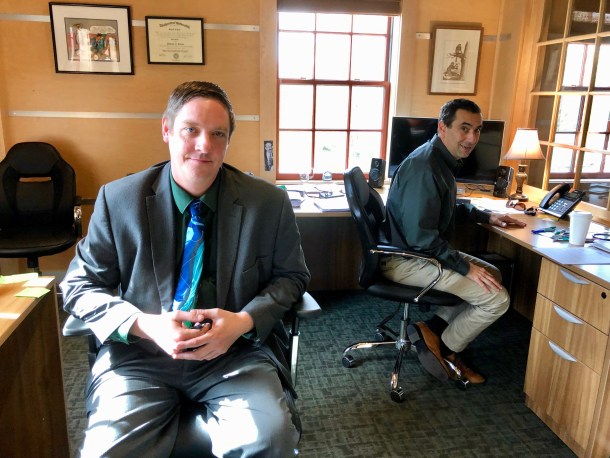
The virus cooled things down ever further, and Fair and his business partner, Andrew Subin, saw cash flow drop to zero when businesses were ordered to stop operating in person in March.
A federal PPP loan helped the company get through the first two months of no income, and then a state grant (the firm was approved for $22,000) helped the pair expand their services to include criminal law, family law and personal injury work as well.
“We lost everything we had; it was kind of like starting over from scratch,” Fair said. “If it hadn’t been for the state grant, we probably would have gone out of business.”
Now that the state has cleared the way for a legal marijuana market, Fair expects business to start picking up again. The firm is applying for another business grant.
“We think that will be enough, especially now that S.54 has passed,” Fair said of the cannabis legislation. “It’s the starting pistol for our tax-and-regulate system, which is still another two years off before we see doors opening, but it allows people now to have a timeline and know for a fact that this is happening, which is bringing people in to consult with us.”
Keeping companies afloat has been the primary goal of the business grants program, said Sen. Jane Kitchel, D-Caledonia and chair of the Senate Appropriations Committee, one of the panels that laid out the rules for the business grants program.
Kitchel said lawmakers learned a lot after the first grants program became available in September. One was that sole proprietors needed to be included; the other was that, for larger companies, the maximum grant amount needed to be increased.
“When you’re looking at some of our resorts that had been in the families for years, some of the ones at Stowe, Basin Harbor, Lake Morey Resort, $75,000 doesn’t go too far,” she said.
What’s next for the business grants program
Vermont has now allocated its share of the CARES Act money, and won’t be designing another business grants program until Congress passes another stimulus bill with money for the states. If and when that happens, Kitchel said, she hopes states will be allowed to direct more money to broadband. She sees that as a measure that would help businesses and private residents alike.
“A lot depends on how much flexibility we have,” said Kitchel of Congress’ rules for how states can spend the money.
“If we could get the flexibility, one area everybody would acknowledge is so important for long-term economic development and health is broadband. I put that right at the top of the list,” she said. “Broadband addresses every area from education to health care to remote work to business development. Everybody would benefit.”

