

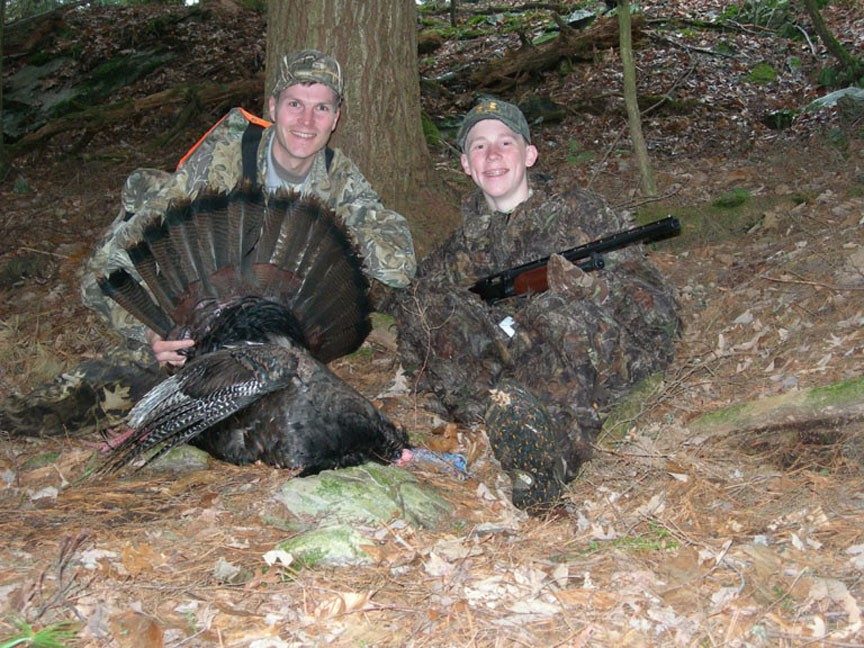
This fall, turkeys killed by hunters can be reported electronically, not in person, and more electronic game reporting may be in Vermont’s future.
After Monday’s 5-2 vote by the Legislative Committee on Administrative Rules, reporting of deer and turkey can now be done electronically at the commissioner’s discretion. Bear and moose can be electronically reported in the case of emergency, as declared by the commissioner.
Online reporting of turkey was established after the governor declared a state of emergency in the Covid-19 pandemic. That meant many check-in stations for hunters were closed, and electronic reporting kicked in. As that initial rule was set to expire, Fish and Wildlife sought solutions for upcoming seasons.
Now, electronic reporting will be allowed in the future, whether there’s an emergency or not. It’s left to the commissioner to decide how reporting of certain species can be done.
Fish and Wildlife Commissioner Louis Porter said the decision will allow electronic reporting of turkey this fall, and next fall it could expand to cover the bow season for deer.
Electronic reporting can be done by email, on a website, and through mobile messaging and telephone. The commissioner said in-person reporting will still be an option, barring future emergency closures.
“We made an emergency rule and scrambled to get a system into place,” Porter said. “The electronic check-in worked extremely well.”
In the rules committee on Tuesday, Sen. Christopher Bray and Rep. Marcia Gardner voted against the amendment, while Sen. Mark MacDonald, Sen. Virginia Lyons, Rep. Linda Myers, Rep. Trevor Squirrell and Rep. Robin Chesnut-Tangerman voted in favor.
Granting the commissioner the power to allow electronic reporting of bear and moose is intended to prepare for possible emergency situations in the future.
But the rule also extends electronic reporting beyond its original purpose as an emergency measure, raising questions about whether the change allows better responsiveness, or simply more leniency.
Comments were missing
Concerns were raised when some public comments on the rule change were not presented to the Fish and Wildlife Board before it voted on the issue.
Brenna Galdenzi of Stowe-based Protect Our Wildlife said that 25% of public comments, many opposing the change, were not sent to the Fish and Wildlife Board before it voted unanimously Sept. 3 to move ahead with the amendment.
At Tuesday’s hearing, Tom Biebel, chair of the Fish and Wildlife Board, called the omission of public comments a “clerical error,” and said the concerns raised in those comments “were addressed head on.”
All public comments were delivered to the board before Sept. 23, when it voted unanimously to reaffirm the change.
According to Galdenzi, Fish and Wildlife forwarded the missing comments to the board only after Protect Our Wildlife questioned the initial omission.
“It’s very concerning that, if we’re not watching over their behavior, this stuff is falling through the cracks,” she said. “This is not the first time they’ve mishandled public comments.”
Two concerns raised in the comments involved broadening the commissioner’s authority to declare an emergency independently of the governor, and the rule’s lack of a definition of an emergency.
Beibel agreed that an emergency should be defined, and that language has since been added.
“This is an example of how the process works,” Biebel said.
Less oversight of hunters?
The amendment defines an emergency as “a serious, unexpected and dangerous situation that poses a threat to public health or safety, or to wildlife or natural resources, and requires immediate action.”
But Galdenzi says the new rule is less about safety during an emergency and more about convenience for hunters.
“Fish and Wildlife has hijacked the Covid crisis to liberalize the reporting of big game for hunters,” she said. Galdenzi opposes online reporting because it could allow unethical hunters to submit false information.
“We have no concerns on the impact of our ability to collect data,” Porter said, and adding some electronic reporting absent any emergency has been a “longstanding goal for certain seasons,” including turkey and bow season for deer.
Porter said other states in the Northeast that have online reporting of at least some species include Connecticut, Maryland, Massachusetts, New York and Pennsylvania, and Virginia has it, too.
The Fish and Wildlife Board and Department, in a memo sent to the Legislative Committee on Administrative Rules, said this amendment is an effort to “modernize Vermont’s big-game reporting requirements.”
That doesn’t mean in-person reporting will go away entirely, but rather that hunters will have more reporting options, Fish and Wildlife officials say.
Mike Covey, executive director of the Vermont Traditions Coalitions, said that, for hunters, electronic reporting would be a welcome change.

