

Sarita Khan envisions turning the second floor of her Vermont Salt Cave spa into an alternative therapy center, one that would offer acupuncture, chiropractic and more to visitors and residents of Montgomery.
But like others in this town near Jay Peak, Khan has an aging septic system. That — and the lack of a municipal wastewater system — has stifled her plans.
“The whole project is on hold,” she said, citing the “horrendous” $50,000 estimate for replacing her system.
Almost every wastewater system in Montgomery sits on a small lot without feasible replacement options, town officials say, and about 20 of those systems are either troubled or failing. That’s squeezed ambitions in the ski resort–adjacent town: current businesses can’t expand because their systems are at capacity and replacements are too costly. Some worry a system failure would shutter their business. New developers can’t move in for the same reasons.
Yearslong efforts to address the problem have begun to take shape, though, giving officials and residents hope that the Northeast Kingdom town can turn things around.
Montgomery received about $500,000 from the federal Northern Border Regional Commission in August, the latest piece in an estimated $11.8 million project to build a wastewater system for the town.
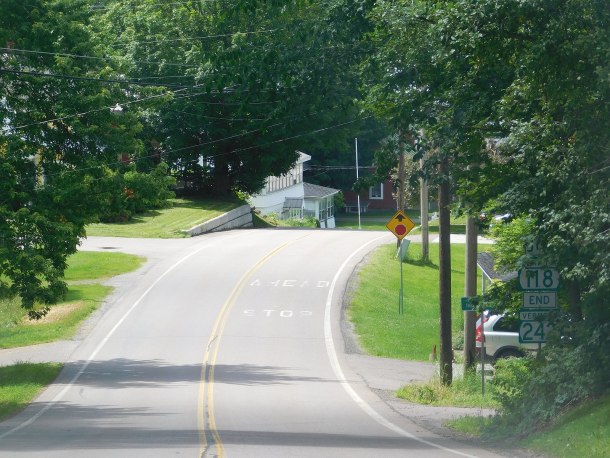
Officials have been working on a tandem project to improve the town’s streetscape and traffic safety, too, at an estimated cost of $7 million.
“It’s the bones that we can build on as we look into the next decade,” Selectboard Chair Charlie Hancock said.
The two projects make up a broader effort known as Montgomery Thrives, which grew out of community discussions in late 2018 organized by the Vermont Council on Rural Development.
In those talks, residents pegged developing a town wastewater system and improving traffic flow and safety as two of three priorities for Montgomery’s future.
Residents in this northern Franklin County town in July signalled their continued support of the priorities by passing bond votes.
The wastewater problems in town not only constrict business growth, Hancock said, but threaten the status quo.
“It’s not that we just really want a brewery in town,” the selectboard chair said. “It’s about sustaining what we’ve got.”
That includes minimizing effects on the town’s tax base; Hancock believes the ailing private systems, and the lack of connection to a public water system, decrease property values. And banks often won’t finance homes on the small lots in town, he said, pricing out potential homeowners without the means to pay cash.
Another concern is keeping local businesses afloat, especially during the Covid-19 crisis. Hancock said he knows one restaurant on Main Street has a troubled septic system that would require tens of thousands of dollars to replace.
“That’s something that could kill that business,” he said.
Plans for building a municipal system began as early as the late 1980s, according to town documents. But flooding about a decade later derailed the idea.
Historically, septic systems and wells were regulated on a town-by-town basis in Vermont. The rules changed in 2007, when Vermont became the last state in the country to set state standards for individual wastewater systems and wells. A landowner building a new home or replacing a failing septic system would now have to obtain a state wastewater permit.
Over the last year and a half, said Hancock, the town received small government funds for a feasibility study and planning.
The current plan is to replace the 165 on-site septic systems in Montgomery with a public sewer and treatment system, he said. Officials chose a low-pressure system that would use grinder pumps. The plan calls for three separate systems that would serve different parts of town: the village and the north and south sides of Montgomery Center.
Existing leach fields would be retired, too, Hancock said, part of an effort to also address concerns that failing private systems may contaminate the nearby Trout River.
Officials had asked the Northern Border Regional Commission for $1 million, but the $500,000 grant is “still awesome,” Hancock said.
Now, he said, the town is waiting to hear about a funding package from the U.S. Department of Agriculture Rural Development program. The loan and grant package will ultimately make up for whatever funds aren’t raised, he said.
”We are out of the starting gate, and we’re heading down the track,” he said of the town’s funding progress so far. “But it’s hard to say where we are on the course of the race.”
Officials will get a better idea of where finances stand after the USDA announcement, he said, which is expected within the next few weeks.
Any remaining funding will have to come from residents, Hancock said. That might be in the form of user fees on the wastewater system, or an annual fee for users and non-users alike.
Business owners like Khan, who runs the spa, are optimistic about the progress.
“We’re thrilled about the wastewater project because it does mean we have the chance now” to expand, she said.
Khan also owns the Coach House, a historic hotel that now contains apartments. She said she has five units in the building but isn’t able to put laundry machines inside because the property’s aging water system wouldn’t be able to handle the load.
The situation has forced her to operate the inn as a short-term rental complex, she said. “Long-term rentals — I can’t find them because of this,” she said.
She believes the proposed project will help keep jobs and amenities in Montgomery, too.
Nick Barletta, owner of The Inn hotel, said a new water system would be especially impactful if future owners of Jay Peak Resort — about 11 miles away — embrace the idea of directing tourists to surrounding towns.
“We could stand to benefit even more,” Barletta said.
