


In midwinter, with Lt. Gov. David Zuckerman looking like the frontrunner in the race for the Democratic nomination for governor, the Vermont Democratic Party decided to do something it had been reluctant to do for his previous statewide runs: give him access to the party’s voter data.
The decision, made by the outgoing party chair Terje Anderson and executive director Scott McNeil, raised concerns among some members of the party about handing over data to a candidate with strong Progressive ties, according to three people with firsthand knowledge of the internal situation, who all spoke on the condition of anonymity.
Zuckerman received names, addresses and contact information for Vermont voters, those sources said. However, the party did not give his campaign access to its data on how people had voted in previous elections, the likelihood certain voters will go Democratic, and other key data in VoteBuilder — the powerful tool used to target voters — that has been available to other gubernatorial candidates throughout the years.

Zuckerman went on to win the Democratic primary handily, receiving 44% of the vote and beating former education secretary Rebecca Holcombe — whose campaign received full access to VoteBuilder — by about 10 points.
But even now, as Democrats make a show of unifying behind Zuckerman at the outset of his race against Republican Gov. Phil Scott, it is unclear whether the party will hand over one of its most valuable assets to the top candidate on its ticket.
If Zuckerman chooses to run as a “fusion” Progressive/Democrat in the general election, as he has for much of his political career, the Democratic party is unlikely to give him full access to its voter data.
“What he has is an abridged version of the voter file, and to say that he has voter file access is misleading,” an individual with knowledge of the agreement told VTDigger.
The Vermont Democratic Party and Zuckerman — who has fashioned himself in the same anti-establishment mold as his mentor, Sen. Bernie Sanders — have had a complicated history dating back to when Zuckerman began his Statehouse career as a Progressive House member representing Burlington.
In the early years, most of the tension centered on the distrust between Progressives and Democrats that had sprung up in the early days of the Progressive movement in Burlington during Sanders’ ascendance to political power.
“When he first got elected to the House, there was skepticism about his willingness or ability to work with people,” said state Sen. Anthony Pollina, P/D-Washington County, who chairs the Vermont Progressive Party.
But during Zuckerman’s three statewide runs — and as the Democratic and the Progressive policy platforms merged over the past four years, with Sanders leading the national charge — Zuckerman and the Dems have proven to be capable political partners.
“All sides have some role in the historic relationship, but it’s been getting better and better every cycle as voters are making their choices clear,” Zuckerman said of his association with the Vermont Democratic Party. “There’s a tremendous amount in common that we will work together to achieve.”
“As lieutenant governor, we’ve had a great relationship with him,” said McNeil, the state Democratic Party’s executive director. “He’s gone to Democratic events, he’s supported Democratic candidates, he’s gone to our county committee meetings. We look forward to continuing that relationship and getting him to victory in November.”
McNeil added that the party has been in contact with the Democratic Governors Association, an organization dedicated to electing Democratic governors across the country, but the association has not yet decided whether to wade into the Vermont gubernatorial contest.
“It is one of its targeted races for 2020,” McNeil said of the association’s decision to keep tabs on the race before deciding to spend money.
The GOP counterpart, the Republican Governors Association, has already launched multiple attacks against Zuckerman, pouring more than $100,000 into its early pro-Scott efforts.
McNeil did not comment on the decisions about Zuckerman’s access to voter data and said he would not discuss “party policy or party agreements.”
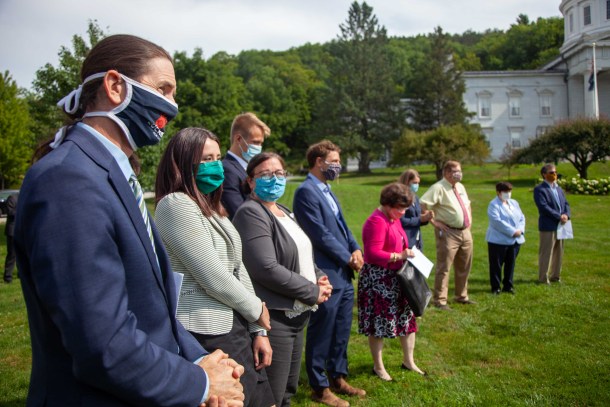
Zuckerman said his campaign is actively working with the party to utilize the resources and infrastructure at the organization’s disposal, to increase voter turnout in the general election and to highlight wage inequality and other issues facing working Vermonters.
Faisal Gill, who in 2017 was interim chair of Vermont Democratic Party, said the decision in 2016 not to give Zuckerman access to voter data when he ran for lieutenant governor was wrong and that, in 2020, Zuckerman should receive the full backing of the party.
“Whether they wanted Rebecca or somebody else to be the nominee, it’s David, and no matter what anybody’s issues with David are, he’s certainly going to be 10 times better than Phil Scott,” Gill said.
“I think you’ll find that the Democratic Party is not going to let the Dem/Prog thing get in the way of running a very robust election to try to defeat Gov. Scott,” he said.
Rep. Mary Sullivan, D-Burlington, who is one of Vermont’s two members of the Democratic National Committee and who holds a seat on the state party’s executive board, said she supported Holcombe in the primary, but is now backing Zuckerman.
“He’s our nominee now and we will move forward,” she said. “I don’t think we’ve had a candidate ever — including in my races — where absolutely every Democrat was totally, completely, on board.”
Conor Casey, who was executive director of the Vermont Democratic Party from 2015 to 2018, said he is sure a deal can be reached to give the candidate what he needs.
“An arrangement can be made to get Dave the resources to be competitive in a statewide election for governor,” Casey said. “I’ve got to think the devil will be in the details.”
But Casey said the Democratic Party has to be careful with its voter data and must tread carefully when deciding who gets access and who doesn’t.
“Until we reach a point where Progressives and Democrats are not running against each other, the Democratic Party also just needs to be cautious with its data and make sure that it stays in the hands of people really underneath the party banner and not a party that is competing against them,” he said.
Pollina, who ran for governor unsuccessfully as a Progressive in 2000 and again in 2008, said while there are people in the Democratic Party who mistrust Progressives, it goes both ways. He pointed to a faction in his own party that does not want to cooperate with the Democrats or be potentially subsumed by the Democratic Party.
“There’s various degrees of feelings as to how important it is to work with the Democrats or not,” Pollina said.
Tension down the ticket
While Zuckerman is the Democratic nominee in the most high-profile race in Vermont, candidates and Vermont Democratic operatives grumbled throughout the primary season about Progressive candidates running in Democratic primaries.
In the Aug. 11 primary, Democrat Jean O’Sullivan lost her re-election bid for the Chittenden 6-2 House seat, beaten by former Vermont Progessive Party chair Emma Mulvaney-Stanak. In the weeks before the primary, O’Sullivan told VTDigger that, while her opponent was running in the Democratic primary, she was not a true Democrat.
“She’s in the Democratic primary trying to knock out a Democrat so she can caucus with the Progressives,” O’Sullivan said at the time, voicing a common complaint among the Vermont Democratic Party and one that mirrors concerns held by Democrats when Zuckerman entered the House.
Ahead of the primary, Mulvaney-Stanak said she identifies as a “proud Progressive” and was clear about her ideology throughout the campaign.
“I will run as a Progressive Democrat and I will caucus with the Progressives and I will work with the Democrats,” she said.
Mulvaney-Stanak said she believes that the Progressive-versus-Democrat tension is “an old narrative” and that having more fusion candidates gives voters a better idea of where someone stands on the issues.
“More options and more clarity on what people’s values are, based on party labels, becomes clear when you have a fusion versus someone who is in a huge Democratic tent,” she said.
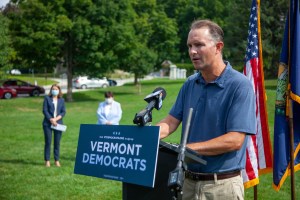
Attorney General TJ Donovan, a longtime member of the Vermont Democratic Party and a friend of Zuckerman, said some people in the Democratic Party still feel “animosity” toward Zuckerman, and Progressives generally.
“There is some historical ill will and hard feelings there and we need to air the grievances, if you will,” Donovan said. “But we have got to move past it and unite behind him.”
Donovan drew a parallel between progressives coalescing behind Joe Biden at the national level, and how moderates should do the same for Zuckerman in Vermont.
“What we need is the inverse here, where you have the left and progressive left behind Zuck and now you need the center and moderate wing of the party to unite behind him. That’s what the Democratic Party does and I’m confident we will do that,” Donovan said.
The attorney general added that he “would be surprised and disappointed” if the party did not give Zuckerman the full power of its infrastructure.
“He’s the Democratic nominee; he should get full access to all the resources — frankly, all the data that’s critical in terms of running a campaign,” he said.

