

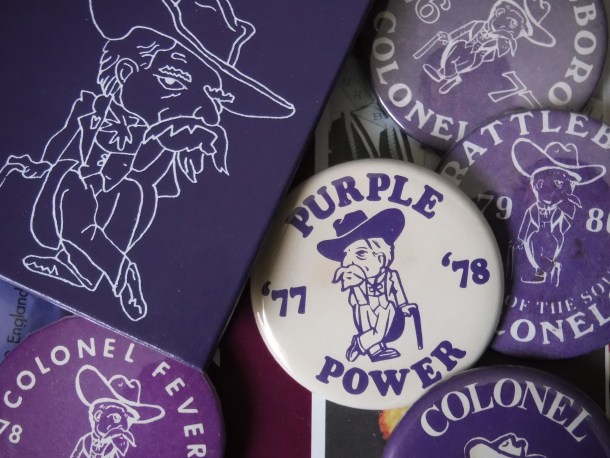
BRATTLEBORO — Sixteen years after retiring a longtime “Pride of the South” Confederate mascot, Brattleboro Union High School hopes to quell a potential Civil War over retaining its “Colonels” team moniker.
The nearly 800-student school boasts graduates as progressive as Vermont’s only Nobel Peace Prize winner, class of 1968 anti-landmine activist Jody Williams. Yet its uniforms once bore the same image of a plantation owner used by the University of Mississippi until both institutions dropped the logo during the 2003-04 academic year.
At the time, Brattleboro — where about 15 percent of ninth- through 12th-graders are students of color — decided to keep calling its teams the “Colonels” in deference to such historical figures as the town’s 1700s namesake, Col. William Brattle.
But recent Black Lives Matter protests have sparked a “Change the Racist Colonel” petition signed by more than 1,000 people.
“While changing the image was a step, it simply was not enough,” the petition states in part. “By having a name with an overt connection to slavery, the Civil War South and the racist history of Brattleboro, BUHS is telling its students of color that it is not a space meant for them.”
In response, a counter “Save the Name Colonels” petition had drawn a similar number of supporters who argue the moniker no longer is connected to the Confederacy.
“How would the town afford the rebrand?” the petition states in part. “Especially during this pandemic when a lot of people are not working?”
The debate has extended to the school’s Facebook page and two administration-sponsored online meetings for students and alumni. But local education leaders, struggling to reopen classrooms during a pandemic, appear in no mood to answer questions about if or when they’ll address calls for a name change.
“We’re not taking that up,” David Schoales, chair of the Windham Southeast School Board, said at its most recent meeting. “It hasn’t come on our agenda, and it’s unlikely to make it on our agenda for a good long time.”
Longtime locals have offered several different origin stories for the team name, with the most repeated one being that the school adopted “Colonels” in the 1950s after learning its sports field was once a mustering grounds for Vermont soldiers getting ready to defend the North in the Civil War.
The current debate was sparked nearly two decades ago when Curtiss Reed Jr., moving to town to become executive director of the locally based Vermont Partnership for Fairness and Diversity, couldn’t believe the logo he saw on school uniforms was the same “Colonel Rebel” used in his native South.
“Colonels are vestiges of a time when blacks, the descendants of slaves, were openly and defiantly denied their civil rights by white Americans,” Reed wrote at the time in a newspaper commentary. “Do we want to develop future generations of local employees incapable of ‘sealing the deal’ with ethnically, racially and linguistically diverse consumers and suppliers because of their ‘innocent displays’ of hate-perpetuating symbols on their desks, in their cubicles or in their speech?”
Reed’s call sparked a torrent of letters to the editor for and against the name and spurred the Brattleboro Reformer to drop the Colonel logo from its sports pages.

“Those in positions of power — the power of the press, the power of elected office, and, yes, even the unwitting power of our own white skin — must step up to the plate,” the newspaper wrote in an editorial at the time. “The sentimental allegiance the Colonel inspires in some is a small price to pay for the creation of an open, welcoming environment for all.”
Soon after, the high school board decided to retire the mascot but retain the Colonel moniker. Since then, Brattleboro has heard periodic calls to change the name but hasn’t — in part because it can’t agree on an alternative. Take one recurring suggestion to become the “Kernels.”
“It’s a bit corny,” one resident wrote in a letter to the editor, “but by choosing a plant, rather than person/ethnic group or even an animal, our high school could avoid political embarrassment while celebrating Vermont’s agricultural traditions.”
