

Bill Schubart, a retired businessman, is a regular columnist for VTDigger.
We face a difficult choice in Vermont. Do we struggle to recapture the past and preserve the self-interests designed into it, or do we exercise the courage and leadership to step up, face down, and address the simmering challenges laid bare by the pandemic and made more difficult by an inept administration in Washington?
The challenges are familiar. Most Vermonters live with them. They’re mostly access problems: health care, education and child care, housing, food, broadband, civil rights, public transportation, and living-wage employment.
The tired banner that says our problems can all be solved by lower taxes and less regulation that will spur development fades in our current reality. Like most simple answers, it belies the complexity and risk that real solutions present. Oversimplification is consumed like a bag of potato chips — easily swallowed but lacking in nutrition.
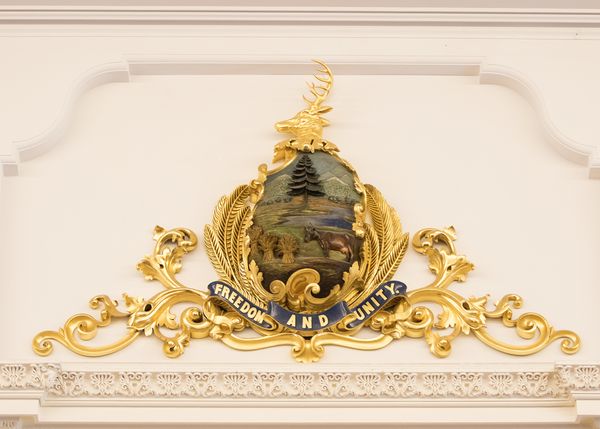
We have enough money; we need strategic leadership and shared intelligence. We need to rebalance our state motto “Freedom and Unity” and reinvest in unity.
Gov. Phil Scott has been one of the finest crisis managers in the country and we Vermonters owe him a great debt of gratitude. Many of us are alive because of his leadership and humility. Like any great leader, he has enlisted and deferred to experts to develop and deploy a plan for the safety of his citizens, and I, for one, am deeply grateful.
But as conditions change, so do the calls on leadership. For Vermont to recover fully and grow again, we must address our endemic challenges. They won’t go away with a vaccine or herd immunity.
Various strategic groups are studying how to salvage Vermont’s past institutional and administrative infrastructure. But these distract from the need to focus first on Vermonters’ real needs. For now, we must ignore existing delivery systems and reimagine how we might deliver these needs more cost-efficiently, starting from our people, our families and our communities, not our institutions.
Progress will depend on our willingness to leave ideologies and self-interests at the door and examine how we make governing decisions, especially how we move from costly consulting studies to transformative action. We will need to:
• Ignore the endless “problem statements” and focus on articulated “opportunity statements.”
• Abandon the natural inclination to insulate the current infrastructure’s self-interests from any change.
• Start by defining the needs of the individual, the family, or the community,
• Move our socioeconomic investments upstream from remediation and repair to prevention.
Health care is a good example. It’s far less expensive to educate Vermonters on how to lead healthy lives, and prevent and treat early onset of disease, than it is to repair late-stage disease, especially chronic conditions like diabetes. So why do we have so few primary, pediatric, and geriatric docs and so many specialists? Repairing broken people is a far more lucrative business; less so, ensuring their wellness. A recent article in the Journal of the American Medical Association by Donald Berwick called “The Moral Determinants of Health” expresses this succinctly.
Education and child care is another. We know enough to move ahead:
• Science tells us that critical brain development begins prenatally and accelerates significantly in the preschool ages.
• Lack of child care inhibits employment and regular income.
• Lack of income complicates housing and food security.
• The homeless, hungry, or abused child does not learn normally and will be more expensive to help downstream.
Rather than closing local schools, let’s use our knowledge of early childhood learning and begin at birth, making the most of those early child-development years. Combine this with early intervention, trauma-informed family care and we will significantly lower the downstream costs of special ed, criminal justice, and corrections.
What will higher ed look like next year? Even as each of the system’s component colleges has its own group working to ready that institution for the future, the Vermont State Colleges System board of trustees has assigned a statewide task force to design the future of the system as a whole. In addition, the Vermont Legislature created a Select Committee on the Future of Public Higher Education in Vermont (Act 120). This group is focusing its initial inquiry on the changing needs and profiles of students and their future employers. The vitality of the component institutions and communities remains important, but if the redesign doesn’t meet the future needs and financial capacity of Vermonters of all ages, we’ll simply be furthering the decline of public higher ed in Vermont.
And how does higher ed’s future tie into other challenges? Can unused dorms become temporary affordable or homeless housing … alternatives to corrections? Can empty campuses become labs of innovation and entrepreneurship in partnership with business? Most critical, will we have built out the broadband necessary to reduce residency and infrastructure costs as we move classrooms online?
Environmentally, it’s vastly cheaper to care for the communities, natural spaces, and working landscapes we have now than it is to remediate the damage we’re doing to our soils, water, and air with antiquated sewer systems, fossil-fuel emissions, and weed killer and chemical fertilizer applications to our soils. We’re making significant progress here with the emergence of regenerative agriculture and regional food systems that supply Vermonters at increasingly competitive prices with food grown nearby without the injurious health impacts of additives and distribution costs from a deteriorating industrialized food supply chain.
In public transportation — I can land in Stockholm, Sweden, board a train into Stockholm and travel by unmanned light rail to many small towns in Sweden without ever renting a car. Such low-impact, high-delivery public transportation systems will require major national funding — perhaps a better long-term investment than the F-35s that rattle our homes. During its 60-year lifetime, the Government Accounting Office projects this single-pilot, deeply flawed fleet of 535 fighter planes will cost $1.12 trillion. Imagine if this had been invested in a national rail system.
We can do this. It will take courage, leadership, and a deepened sense of community. Our egos and privilege haunt our past. But our families, communities, and institutions are our future.
The pandemic has presented us both with an accelerant to our problems and a time to reflect and reinvent a better life for ourselves and our children.
