


Could an obscure county position that harkens back to the 18th century provide a path to police oversight and reform in modern times?
A crop of new candidates, many without law enforcement backgrounds, are eyeing the little-understood, often-overlooked position of high bailiff as a way to foster civilian oversight of county law enforcement agencies. And in the process, they are giving voters an option.
But their hopes may be beyond the scope of the limited powers of the unpaid position. In the process, they’ve triggered a discussion about what kind of experience, or lack thereof, one should have to be a high bailiff. While some say it’s a job for a civilian, others say that as a practical matter, the role is best filled by someone with some law enforcement background on their resume.
First, some history.
The duties are limited. Historically, one task is to serve writs to the sheriff, should it be necessary (a responsibility that has largely become irrelevant in Vermont’s modern law enforcement system). The other is to fill in heading the county law enforcement office while the sheriff is behind bars — or otherwise steps down from the role.
It’s a niche position that, according to Vermont legal expert and attorney Paul Gillies, is rarely mentioned in state legal records. The role has been on the books in Vermont since 1797, and origins date earlier, he said.

About half a dozen times in the early 19th century, high bailiffs used their authority to imprison the sheriff, according to Gillies’ research.
When Franklin County Sheriff Shiveric Holmes was convicted of neglect of duty in 1826, it fell to the high bailiff to collect a state tax — if he failed to do his duty, he’d have to pony up twice the sum of what was due, Gillies found in his research.
While according to Gillies, Vermont’s legal architects undoubtedly borrowed the role from elsewhere, today, Vermont is the only state in the country that has a high bailiff position. Indeed, Gillies has come across just one other jurisdiction in the world that has a high bailiff: the Isle of Man, in the United Kingdom, where the position is more like a municipal judge.
In modern times, the high bailiff is most frequently called upon to step in when a sheriff leaves office for some reason. The high bailiff, or their designee, can step in to run the office in the interim until the governor appoints a new sheriff.
In 2006, when Windham County Sheriff Sheila Prue resigned as part of a plea deal in a criminal embezzlement case, High Bailiff Dr. Robert Backus stepped in as sheriff for all of about two hours before designating a former Brattleboro police chief to take the role, the Rutland Herald reported at the time.
The other statutory role of the high bailiff — to arrest the sheriff should the need arise — is less relevant in modern times, especially since the advent of the Vermont State Police in the 1940s. The high bailiff’s job is merely to serve writs; investigating and charging the sheriff with a crime is beyond the position’s authority.
Day-to-day, high bailiffs aren’t called upon to do much. Very few ever exercise their authority in the role. But despite the very limited duties of the high bailiff, several hopefuls for the county office around the state say they believe it is a role most appropriately filled by a civilian who can bring outside perspective.
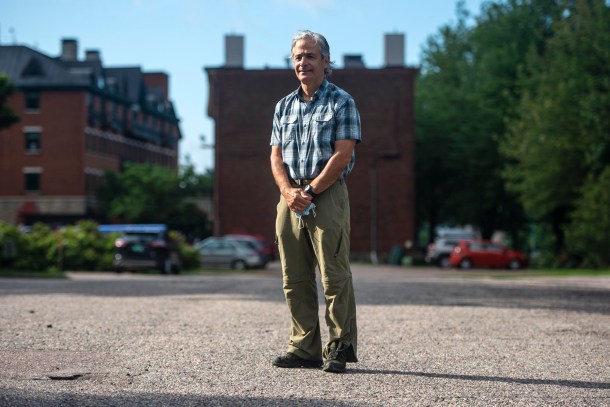
Bobby Sand, a longtime advocate for criminal justice reform and former Windsor County state’s attorney, said based on his research into the origins of the position, he believes it came about as a check on the power of the sheriff.
“The position was created, as best as I can glean, to serve as an independent actor within the criminal justice system,” Sand said.
While Sand is clear on the limitations of the role, and said he is “not exactly” sure what he’d do as high bailiff should he be elected, he said he could imagine the high bailiff position evolving.
“Is there the potential for the high bailiff position to blossom into a more engaged and active position within a county or statewide criminal justice system?” Sand said. “I think so.”
Sand, like many high bailiff candidates around the state, said his candidacy is not a negative reflection of the work of any particular sheriff.
However, he said he does have some concerns about how sheriff’s offices operate in Vermont. To bolster the funding sheriffs get from the state to support certain required functions, sheriffs support their budgets with money from contracts with towns, construction companies, courts and more. And, as Seven Days reported in 2018, it can be big business.
Sand said he has “considerable difficulty with the notion of law enforcement as a business,” and sees the operations of sheriffs as a “problematic model” that should be looked at.
“If you extrapolate from the historical rationale for the position to have an independent actor, well, I think, in a contemporary setting an independent elected official within the criminal justice system who’s willing to weigh in and discuss shortcomings, deficiencies, areas that need to be changed,” Sand said. “I think that Vermonters could see some real value in that.”
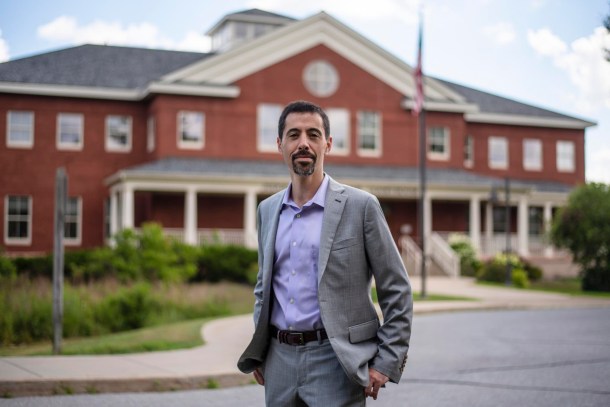
Attorney Dave Silberman, an advocate for drug policy and criminal justice reform, is running for high bailiff in Addison County.
“I think electing a civilian as high bailiff, who’s independent of the police who’s truly independent of the sheriff is part of a process of seizing back the power of oversight and taking back for the people, this crucial need, this crucial power of oversight that we just don’t effectively have anymore,” Silberman said.
Like Sand, Silberman acknowledged the limitations of the job. As high bailiff, he wouldn’t have authority to conduct an audit of the sheriff’s office, for instance, he said. But Silberman said he’d continue his work on drug policy and criminal justice reform, and be able to speak from a “soap box” that the position provides.
Both Sand and Silberman had decided to seek the office in their respective counties before the protests against racism and police brutality erupted across the country following the May 25 killing of George Floyd. But Silberman said he was glad to see more people paying attention to the systemic racism of the policing and criminal justice systems.
“George Floyd’s murder is not the particular thing that motivated me to enter in this race or fight for criminal justice reform more broadly, but it is an really important example of the broader problem that needs to be addressed,” he said.
While candidates emphasize the oversight role of the high bailiff, whether the office is necessarily meant to be an oversight role is less clear to some.
“It’s an office that has no qualifications whatsoever,” Gillies said.
In Gillies review, he said it’s not specified that the high bailiff is necessarily meant to be a civilian. There also are no prerequisites for law enforcement training. (Nor, he said, are there for sheriffs — unlike deputies who do have mandatory training.)
“I can appreciate the difficulty of having, in your candidacy for high bailiff, of having to answer the question what are your policies and future plans,” he said. “Because, really, it’s to wait.”
Law enforcement experience
While new candidates are touting their outsider’s perspective as a plus for the office, others argue that a background in law enforcement is a valuable qualification to be high bailiff.
Mike Elmore, who is running without a party affiliation in Addison County, is currently a sergeant in the sheriff’s office. Since the primary responsibility of the high bailiff would be to fill in heading up the office until the governor could appoint a replacement, Elmore says it should be someone with a law enforcement background who could keep the office running smoothly.
Ron Holmes, Silberman’s opponent in the Democratic primary for high bailiff of Addison County, served in the role in 2017 and 2018. Previously, he’d been deputy sheriff in the county for 25 years.
Holmes believes it is important for the high bailiff to have a background in law enforcement, though he does see some potential for the role to be one that involves some oversight — albeit likely in a limited capacity.

“Probably he’s not going to be able to do much,” Holmes said. “I mean he can be a sounding board for the people that have concerns about it. I think by statute, he’s not really going to make a big difference.”
From Lamoille County Sheriff Roger Marcoux’s perspective, the high bailiff position should have “intimate knowledge” of law enforcement. If that person were to step in to lead the sheriff’s office, they’d be overseeing responsibilities like transporting prisoners and working with courts.
“A sheriff has to be three things,” Marcoux said. “He has to be a good politician, he has to be a good businessperson, and he or she has to be, you know, have some, you know, knowledge of law enforcement.”
Still Marcoux said that even in the instance that a high bailiff needs to step in to fill in for the sheriff, it likely won’t be for long; the governor typically appoints a replacement in short order.
When asked about the importance of the high bailiff position, Marcoux was blunt: “I don’t think it’s very important at all.”
Royce Lancaster, in Newport, said he decided to run when Sheriff Jennifer Harlow asked him to. Lancaster, a 23-year-veteran of the Newport City Police Department, is running as a Republican.
Since the primary function of high bailiffs would be to step in to fill the sheriff’s shoes if they leave office, Lancaster said he thinks a background with knowledge of the office and law enforcement is important.
“I think it’s important to have some understanding of what law enforcement’s about especially in Vermont,” Lancaster said. “So, I would think that having some background would be important.”

Having choices
Sam Young, a Democratic state representative who is not seeking another term in the House, is waging a write-in campaign for the Democratic nomination for high bailiff in Orleans County. Like Sand and Silberman, Young sees value in having the role filled by someone who hasn’t worked in policing.
“It’s always been this position that seems to be passed around amongst the law enforcement community,” Young said. “And I think it should be civilian.”
Young decided to run after the May deadline to get his name on the primary ballot, so he’s seeking write-in supporters in the Aug. 11 election. Because there’s no Democrat in the primary, 50 write-ins would be enough to get him onto the ballot as a Democrat in November.
That’s another reason he’s running, he said. Even for the relatively insignificant position, he’d like Orleans County voters to have a choice.
“I go through my ballot and I get to the end of the ballot and I get to the high bailiff and I go, well there’s just one guy on there I guess I’ll vote for him,” Young said. “One of the things that I’ve always been into promoting is like making sure that people have choices, and not just a checkbox for incumbents.”
In Lamoille County, 15-year-old Simon Rosenbaum is also running a write-in campaign for the Democratic nomination for high bailiff.
Rosenbaum, who would be 16 by November, first came across the position when he was doing some research as a campaign intern for Rebecca Holcombe. No one was running in Lamoille County, and he decided to campaign.
“I believe that people should have a choice to vote for who they want to vote for,” he said.
Rosenbaum also advocates for the role to be filled by someone outside of law enforcement, rather than from within it. But before he joined the race, he had to do some research to learn more about what exactly a high bailiff is.
“I didn’t wake up and say, you know what, I want to be a high bailiff,” he said with a laugh. “No one does that.”
