


As the August 11 primary election draws closer, we wanted to give voters a clear picture of the policy positions of top office seekers on some of the most pressing topics facing Vermonters: gun reform, climate change, minimum wage, systemic racism and property taxes.

We pressed them for details about the policy positions they would pursue in response to a series of statements about those aforementioned hot button issues. And we asked them to indicate how they felt (strongly agree to strongly disagree) about specific statements on those topics.
We found that most candidates were split by party. But there was agreement between Republicans and Democrats on one issue — high property taxes.
Scroll through the graphics above to see where the leading candidates for governor and lieutenant governor stand. For specific policy proposals, click the links below.
Gun reform | Climate change | Minimum wage | Systemic racism | Property taxes
[Related—9 Candidates, 8 Questions: Explore VTDigger’s video voter guide]
Gun reform
Candidates for governor

David Zuckerman
— Supports a 24-hour waiting period for gun purchases.
— Open to supporting a requirement that all guns kept in a home need to be stored with a lock, though not 100% committed to the idea.
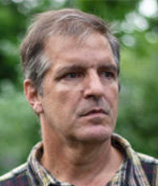
John Klar
— Believes Vermont’s magazine ban and the background check laws are unconstitutional.
— Wants to freeze all gun laws “as a truce” so that more focus can be placed on the economy and the Covid-19 crisis.

Rebecca Holcombe
— Wants to close the Charleston loophole, which can allow people to purchase guns without completing a background check if it is not completed within a certain amount of time.
— Supports a 48-hour waiting period.
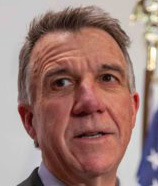
Phil Scott
— Believes the state should give reforms enacted in 2018 time to work.
Candidates for lieutenant governor

Brenda Siegel
— Supports a 48-hour waiting period between purchasing and obtaining a gun.
— Supports a ban on assault rifles.

Debbie Ingram
— Supports a 72-hour waiting period for gun purchases.
— Supports closing the Charleston loophole.

Tim Ashe
— Supports a waiting period for all firearm purchases.
— Wants to improve the state’s red flag law allowing medical personnel to alert police of any suspected or potential gun violence.
— Supports a measure to remove guns from those accused of domestic violence if they have been served a relief from abuse order.
— Supports closing the Charleston loophole.

Molly Gray
— Supports expanding background checks and waiting periods before a gun purchase. Wants to close the Charleston loophole.
— Supports investments in mental health services to specifically limit “suicide by cop” situations.
— Wants Vermont to adopt the California model of officer-involved shooting assessments, which would allow lethal force when “necessary,” i.e. when there are no other options. The state now allows an officer to shoot in self defense if they reasonably thought their life, or that of a bystander, was in danger.

Meg Hansen
— Wants to repeal the package of gun legislation Gov. Phil Scott signed into law in 2018, specifically measures requiring gun purchasers to be 21 or above, and the ban on high-capacity magazines.

Scott Milne
— Doesn’t think any new gun laws need to go into effect and doesn’t think any need to be repealed.
Climate change
Candidates for governor
David Zuckerman
— Supports a “green new deal” for Vermont, or regionally, that implements a tax on the highest earners to fund green initiatives like weatherization programs for low-income or fixed-income homes.
— Supports a larger investment in broadband to encourage remote work and less commuting.
John Klar
— “Shut off your lights and turn down your heat,” Klar said. Thinks Vermonters should reduce their personal consumption.
— Would install tax credits to local farmers to incentivize growing local food to reduce pollution associated with shipping food to Vermont.
Rebecca Holcombe
— Wants to reduce Vermont’s dependence on out-of-state energy. Wants to develop new, greener energy sources.
— Supports the creation of energy storage sites and modernizing the state’s electric grids.
— Supports the Transportation Climate Initiative, a 12 state collaboration that seeks to lower carbon emissions from transportation.
Phil Scott
— Committed to the state’s clean energy goal of 90% renewables by 2050.
— Opposes any “regressive carbon tax.”
— Says Vermont should focus on the transportation sector, particularly electric vehicle incentives and infrastructure.
Candidates for lieutenant governor
Brenda Siegel
— Wants to tie climate solutions to racial and economic justice initiatives.
— Supports the development of electric buses and trains. Reroute the state’s bus routes to be more cohesive and attract more people to public transit. Supports fare-free busing.
— Supports incentives for electric vehicles and renewable energy for Vermont homes, as well as additional subsidies for low- and moderate-income homes.
Debbie Ingram
— Supports expanding Efficiency Vermont, a program that helps Vermonters install renewable and efficient energy sources.
— Wants to support continued innovations around using Vermont as a storage center for electricity, solar and wind power.
Tim Ashe
— Supports a “substantial” weatherization bond for the state to expand energy efficiency for both commercial and residential real estate.
— Wants Vermont to invest in becoming a “vanguard” on renewable energy storage.
— Supports the Transportation Climate Initiative, with a caveat that he has not seen the details of the final deal. (TCI would require Vermont fuel importers to purchase emissions allowances in an effort to reduce carbon output and drive revenue for green infrastructure.)
— Supports divesting the state’s pensions system from fossil fuels.
Molly Gray
— Supports investments and solar and expanding weatherization for Vermonters’ homes.
— Supports the Vermont Green New Deal. (A proposal that would tax the top 5% of earners over a five-year period to fund climate change solutions.)
— Supports the Transportation Climate Initiative.
Meg Hansen
— Doesn’t want environmental policies to come at a cost to the economy.
— Supports the reopening of Vermont’s nuclear energy plant as a source for cleaner energy.
Scott Milne
— Doesn’t think climate change is solved by opening up Vermont taxpayers to lawsuits under a Global Warming Solutions Act proposal.
— Prefers global and national solutions because climate change is a global problem. Doesn’t support environmental policies that would put Vermont at an economic disadvantage to others states, like the Transportation Climate Initiative.
Minimum wage
Candidates for governor
David Zuckerman
— Thinks the state should implement stepped increases above inflation to get to a $15 an hour minimum wage over the next few years.
— Once the state hits $15, believes wage increases should be tied to inflation.
John Klar
— Believes a government-mandated $15 minimum wage would lead to inflation and the closure of small businesses.
— Is comfortable with the current annual inflation increases for the minimum wage.
Rebecca Holcombe
— Supports instituting a $15 minimum wage over the next few years, in tandem with working to bring down the costs of benefits such as health care and child care.
— Also wants to grow wages through state support for post-secondary opportunities in specific high-value industries such as the green energy and medical sectors.
Phil Scott
— Believes the current status quo — tying increases to the minimum wage to the cost of living — should remain as is.
Candidates for lieutenant governor
Brenda Siegel
— Supports a “true livable wage,” above $15, in the $22 range.
— Supports legislation that has proposed a pathway to a $15 minimum wage by 2024. She thinks that wage should be tied to inflationary increases once it is set.
— Small businesses would be eligible to receive grants or subsidies in order to afford higher wages.
Debbie Ingram
— Ingram would support setting the minimum wage at $15 right now, but said because of “political realities,” she proposes reaching that mark by 2024.
Tim Ashe
— Supports a pathway to a $15 minimum wage by 2024.
Molly Gray
— Supports establishing a $15 minimum wage in the next 2-4 years.
Meg Hansen
— Wants to let market forces determine wages, and believes deregulation and tax reforms will achieve increased wages.
Scott Milne
— Doesn’t think there should be a government-mandated $15 minimum wage, but thinks Vermonters should have access to wages at $15 an hour or above through organic economic growth.
Systemic racism
Candidates for governor
David Zuckerman
— Supports bias training for all educators, state employees and law enforcement.
— Wants to assess the state’s economic development policies and determine whether Vermont is perpetuating wealth inequality brought on by historical systems like redlining.
John Klar
— Believes Vermont is imposing policies perpetuating systemic racism against white people, pointing to Covid-19 business grants that were only available to women and minority business owners as an example.
— Does not think Vermont is systemically racist but that interpersonal racism exists.
— Supports racial sensitivity training for police.
Rebecca Holcombe
— Expand race data collection across government sectors, to identify bias and assess its impact. The data will inform policy action.
— Implement widespread bias training for state employees.
— Supports an increased role for community review boards in assessing use-of-force incidents involving police.
Phil Scott
— Wants to continue ongoing racial justice efforts.
— Looks forward to reviewing recommendations from a Racial Equity Task Force, which he created earlier this year.
— Supports the continued work of the Racial Equity Executive Director position in his administration to identify and promote best practices in state government.
Candidates for lieutenant governor
Brenda Siegel
— Wants Vermont to implement hate speech laws informed by an Illinois Supreme Court verdict — libelous speech against a racial group is not protected by free speech and can be prosecuted.
— Supports policies that would diversify workplaces, both in state government and the nonprofit sector.
Debbie Ingram
— Expand and fortify the state’s race data collection among law enforcement, housing services and health care.
— Carry out recommendations set by the state’s Racial Equity Advisory Panel and the ethnic studies task force.
Tim Ashe
— Supports expanding race data collection on sentencing, parole and furlough decisions.
— Supports implementing an oversight structure if certain entities, like corrections, don’t address racial disparities.
Molly Gray
— Wants to further strengthen the Vermont Human Rights Commission in its work to root out bias in education, employment and housing — and then commit resources to prosecuting those cases.
— Supports expanded cultural competency and awareness training for law enforcement officials. Also supports expanding use-of-force assessments of police to account for bias.
Meg Hansen
— Doesn’t believe in systemic racism; thinks there are racist people but says government systems are not inherently racist.
Scott Milne
— Doesn’t support any specific policies that relate to racial justice.
Property taxes
Candidates for governor
David Zuckerman
— Wants the top 30% of earners to pay a higher share of property and education taxes, in relation to their income, in an effort to shift more of the burden of property taxes to the state’s highest earners.
John Klar
— Reduce education spending to reduce property tax costs.
Rebecca Holcombe
— Believes school boards can be more efficient in their spending of property taxes.
— Supports an income-based property tax system.
— Supports moving social services provided by schools out of education budgets to lower property taxes.
Phil Scott
— Wants to continue holding down income, estate and property taxes.
— Wants to repeal the tax on military retirement pay.
Candidates for lieutenant governor
Brenda Siegel
— Wants to tie education funding to income tax rather than property taxes, believing that would create a more equalized system for low-income earners.
Debbie Ingram
— Supports an income-based property tax system, specifically to raise taxes on the highest earners.
— Supports keeping the current property tax system in place for second homes and commercial real estate.
Tim Ashe
— Supports finding alternative revenue sources to fund the growing expenses for schools, particularly around social services. Pointed to alternative sources including revenue from a legal marijuana market and property transfer taxes on the highest-priced homes.
Molly Gray
— Supports an income-based property tax system that factors in a homeowner’s ability to pay and not solely their property value.
Meg Hansen
— Thinks the current education property tax system “pits Vermont families against one another” because some families receive income sensitivity and others do not.
— Doesn’t have a solution or idea about how to lower property taxes because “there’s a lot of political opposition and it’s not going to change either way.”
Scott Milne
— Supports policies that strengthen the economy, which will help lower property taxes by creating a larger revenue pool.
— Wants to listen before acting on any policies that could change the tax codes to lessen property taxes.

