


State and federal authorities are investigating “hundreds” of complaints from Vermonters who have received mysterious seeds from China without asking for them.
Cary Giguere, the agricultural resource management section chief for the Vermont Agency of Agriculture, said this mysterious seed spreading is not unique to Vermont, as people in at least 30 states have reported similar occurrences.
But recently, the agency has received hundreds of complaints from Vermonters through its online system.
“Over the last few months and more so in the last week, folks all over the country have been receiving packages unsolicited originating from China,” Giguere said. “Now in Vermont, there are hundreds of reports of folks being sent seeds unsolicited.”
The U.S. Department of Agriculture said in a statement on its website that the agency was aware that across the country people have reported similar events, but evidence suggests that this is a “brushing scam.”
“At this time, we don’t have any evidence indicating this is something other than a ‘brushing scam’ where people receive unsolicited items from a seller who then posts false customer reviews to boost sales,” according to the agency. “USDA is currently collecting seed packages from recipients and will test their contents and determine if they contain anything that could be of concern to U.S. agriculture or the environment.”
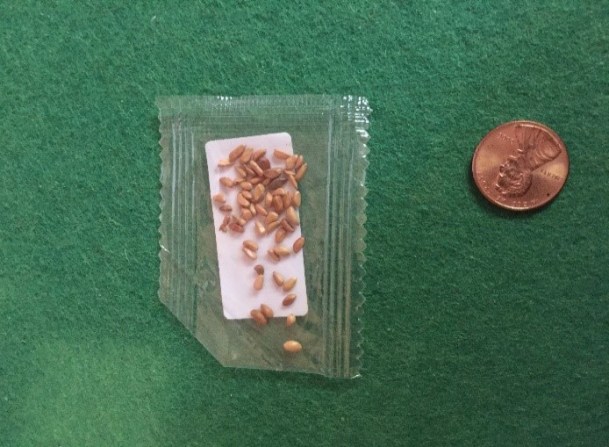
Officials are concerned because pests and plant diseases impacting forests and farms across the United States and Vermont have been of Asian origin, Giguere said.
“If you go back, the Asian longhorn beetle, the emerald ash borer; these are all pests that originated from Asia,” Giguere said. “They upset the ecosystem if they’re released here in the Northeast. So a lot of our current plant pests and invasive species that we are combating have come in through uninspected agricultural products, or as ride-alongs.”
It seems many of these cases stem from Amazon or Wish.com customers, which may indicate some sort of data or account breach, but specifics are still under investigation, investigators said.
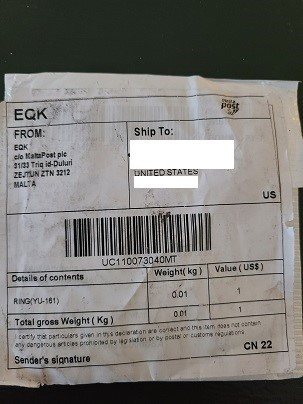
In most instances, a person has received a package randomly, without ordering it, and inside found the seeds in packages that often had Chinese lettering and words on it, Giguere said.
He said that he’s been working primarily with the USDA as well as Customs and Border Protection, the FBI and the Department of Homeland Security.
A spokesperson for Customs and Border Protection said the agency is involved in the investigation, but since the packages were not stopped or seized at a port of entry, the USDA is leading the investigation.
“U.S. Customs and Border Protection (CBP) continues to work closely with the U.S. Department of Agriculture and other partner agencies to target, detect, intercept, and thereby prevent the entry of these potential threats before they have a chance to do any harm,” according to the spokesperson.
The agency also said it does seem that Immigration and Customs Enforcement’s Law Enforcement Support Center, located in Williston, is receiving and processing tips regarding the seeds and sending them to Homeland Security investigators.
An ICE spokesman would neither confirm nor deny it was handling tips but instead suggested directing questions to CBP and USDA.
CBP generally does serve as the first line of defense as international items generally have to go through a screening process, the spokesperson said.
However, in this case the packages containing the seeds did not indicate that they were biological matter, meaning the packages were able to slip past customs officials, Giguere said.
“And, you know, they’re marked as jewelry and if they were jewelry, this would be a consumer protection issue,” he said. “But because they’re seeds and they’re uninspected, USDA and state agencies are concerned.”
Although the investigation is ongoing, Giguere said there is no indication that any act of bioterrorism is suspected and that people who receive these seeds are safe, but should not plant them.
Instead, Vermonters who do receive these seeds should reach out to the Vermont Agency of Agriculture, which will then collect them. If they are found to be hazardous or pose a risk, recipients of the seeds will be notified, Giguere said.
The USDA did not respond to a request for comment.
