

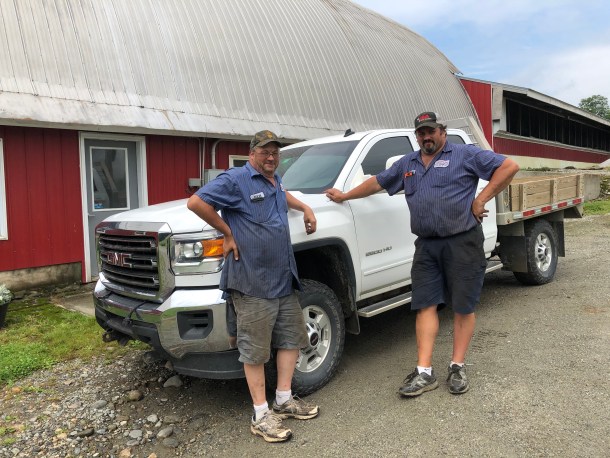
NORTH HYDE PARK – Vermont’s goat milk supply, which has been creeping up over the last five years, will take a big leap forward this autumn when two brothers start switching their 500-cow dairy farm over to goats.
The 600-acre Joneslan farm in Hyde Park and Johnson will import 1,500 goats this year and next as it gears up to become a supplier for Vermont Creamery, the Barre-based dairy company that was purchased in 2017 by Land O’Lakes, one of the biggest dairy cooperatives in the country.
The move is a bold one for Brian and Steve Jones, who are the fifth generation to operate the 150-year-old family farm. But it’s also essential in the face of low milk prices and other burdens on dairy farmers, said Brian Jones, who started looking into switching to the smaller animals about two years ago.
The way the two brothers see it, the only way to compete against other dairy farmers these days is to get very big, something neither wants to do.
“We have no intention of milking 1,500 cows,” said Brian Jones. The two added that the sale of St. Albans Coop to the huge midwestern dairy cooperative Dairy Farmers of America in 2019 gave them another reason to sell the cows.
“With St. Albans Coop, you could call any board member and they knew who you were,” Brian Jones said. “At DFA they’re so big, nobody knows who you are. Once that transition happened, the attitude was completely different.”
And then there are the prices for cows milk. After years of lows followed by some minor relief last year, average milk prices plunged in April after restaurants closed as a result of Covid-19. Farmers dumped milk last spring in the crisis. The Vermont Agency of Agriculture said in July that the state has lost 25 dairy farms in the last four months, compared to 1.5 per month before the Covid-19 crisis. Vermont has just 636 farms milking cows now.
Even before Covid-19, consumption of cows milk was stagnant or declining nationally. Meanwhile, goat cheese sales have been rising for the last half-dozen years, according to Cheese Market news.
“I think if it works, you’ll see more of it,” said Brian Jones, 50, of goats. “This cow thing, in my opinion, isn’t getting any better.”
Early last year, Vermont Creamery and one of its larger farmers, Miles Hooper, started actively encouraging Vermont dairy farmers to switch over to goats. That’s been the goal of the company for 35 years, said Hooper, whose mother, Allison Hooper, started Vermont Creamery in 1984 with business partner Bob Reese. Vermont Creamery is working on an expansion that will up its cheesemaking capabilities by 40%. Right now, Vermont Creamery still gets most of its milk from farms in Ontario and Quebec.
“We always wanted the milk to come from Vermont,” said Miles Hooper, who milks about 400 goats at his Ayers Brook Farm in Randolph. “We bought every drop of it that was available in Vermont, and then we had to go elsewhere.”
Miles Hooper said he thinks it has taken a long time for goat dairying to catch on in Vermont because it’s associated with hippies and hobbyists. But with cow’s milk prices stuck at historic lows, a presentation he made at the Vermont Dairy Summit in Jay in April 2019 garnered a lot of interest in milking goats. Brian Jones – who attended that presentation – reached out to Miles Hooper when he decided to seek more information about switching over.
The state Department of Agriculture, which has been trying to help dairy farmers diversify in order to stay on the farm in the face of low milk prices, has also been selected as one of the USDA’s three national Dairy Business Innovation sites that will focus on six areas, including market research on sheep and goats milk.
The Jones Brothers this year won a $150,000 Working Lands Program grant from the state to convert their extensive barns and milking parlor to hold goats instead of cows.
Steve Jones expects milking 1,500 goats to bring in the same gross income – with a price set in contract – as milking 500 cows did. But the goats, which generally weigh about one-tenth what a cow does, are less expensive to keep. Their feed needs are different, and their manure is dry and pelletized, making it far more convenient to handle, transport, compost and sell. The farm will save about $200,000 because it doesn’t have to plant corn for cow feed – goats eat mostly hay, with some grain – and the two brothers have heard it’s easier to find help when it’s goats that are being milked.
“It’s cleaner, and the animal is less intimidating,” said Brian Jones.
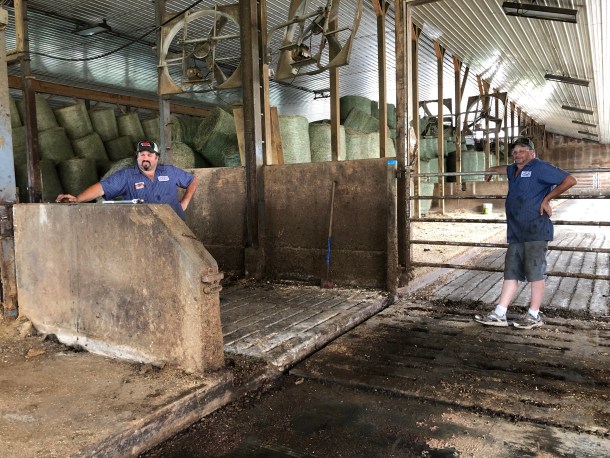
The two brothers have five children between them, ages 21 to 29, and none so far have shown a strong interest in goat dairying. But “certainly no one was interested into going into cow dairy,” noted Steve Jones.
Hooper believes a goat dairy needs to have at least 400 animals to make money. So far, not counting the Jones Brothers, he only knows of a few farms in Vermont with that number.
“Goat’s milk and goat milk products are an important instrument for capturing value from our working landscape,” said Hooper. Vermont can’t compete in the cow’s milk category when there are dairies in the Midwest producing an enormous amount of high-quality milk, he said. “I really feel that goat’s milk is the way we can stay relevant here.”
Vermont had 42 goat farms registered with the state last year, and has 47 this year, according to the Agency of Agriculture. Vermont Creamery was taking 2.4 million pounds of milk from 3,600 milking goats in 2015 – half of that from Vermont farmers – said Kara Young, the cheesemaker’s director of communications. This year, Vermont Creamery will receive 16 million pounds of milk from 8,000 goats – only about a fifth of that from Vermont, she said. The rest of the milk comes from Ontario and Quebec.
The Jones brothers had started their switch to goats by setting an auction date of March 25 for their cows. They’ve hit Covid-19-related delays ever since. They had expected to have their goats – and their milking equipment, which is coming from Italy – in place by August, and now they’re looking at October for their first shipment of goats.
But the two are optimistic about their new path, and expect others to follow. Hooper is committed to helping them succeed.
“It’s the quintessential example of the fifth-generation dairy farm that has pivoted to stay in business and really gone out on a limb and taken a big chance,” Miles Hooper said. He added that the two have done the necessary research to succeed. Brian Jones has visited several dairy farmers in other states and has prepared for a very different animal, with different needs. The Joneslan animals will stay in the barns, and won’t go out to pasture.
“I think a lot of people who have failed in goat farming have failed because they treated goats like small cows,” said Miles Hooper. “They really are a different critter altogether.”
