

The Deeper Dig is a biweekly podcast from the VTDigger newsroom, hosted and produced by Sam Gale Rosen. Listen below, and subscribe on Apple Podcasts, Google Play, Spotify or anywhere you listen to podcasts.
While Vermont continues to see a relatively low rate of new Covid-19 cases, the virus is spreading rapidly in other parts of the country. Could that lead to another surge at home?
“To be anxious and to be concerned is an extremely rational response to the current situation,” said Richard Hopkins, a retired epidemiologist who’s worked for the Centers for Disease Control and several state health departments. But outbreaks in other regions are unlikely to have an immediate impact on Vermont, he said.

Right now, Hopkins said, “we have a series of regional epidemics that are not very tightly articulated with each other.” The national surge in cases, while “anxiety-provoking,” appears concentrated in regions like the South and Southwest, while Vermont and other Northeast states have largely controlled their early outbreaks.
In states experiencing high infection rates, “things are going to get worse over the next month or so before they get better,” he said. But corrective behavior — whether government-enforced or driven by the public — will likely help those regions curb the spread in the coming weeks.
For Vermont, a future surge would be hard to predict, Hopkins said. But the state’s success does depend on the success of the region as a whole. “Vermont is not an island,” he said. “It would be really hard for Vermont to do this well if New York were back to where it was in April.”
**Podcast transcript**
This week: COVID-19 cases are suring in regions across the United States, while Vermont continues to see relatively low rates of infection. But there are still plenty of unknowns about the long term trajectory of the coronavirus. All this week, we’re running stories that explore the range of possibilities for the next several months of the pandemic — and looking at how healthcare systems, businesses, and public officials are preparing.
Richard Hopkins: Okay, you can see me live.
I can, can you hear me?
Richard Hopkins: Yes. We are both working from our homes, I see…
This is Dr. Richard Hopkins. Richard lives in Middlebury, where he’s been quarantining with his wife since March. He’s also a renowned epidemiologist and public health expert. Richard has worked for the U.S. Centers for Disease Control, and for state health departments in Montana, Colorado, Ohio, West, Virginia, and most recently in Florida, where right now the virus is continuing to surge.
Richard Hopkins: I worked for the Florida Department of Health from 1990 until 2012, basically.
So you’ve done the reverse of the usual migration. I feel like most people are in Vermont and they end up in Florida. You’ve done the opposite.
Richard Hopkins: Well, we said to people, there are all these empty moving trucks coming back from Florida, you know, it’s cheap to get space on a moving truck…
Richard is now retired, but he’s been continuing to track the spread of COVID-19 across the country. And he says that while the national trends may look alarming, the outbreaks in different regions are so unique that right now, Vermonters don’t have much reason to panic.
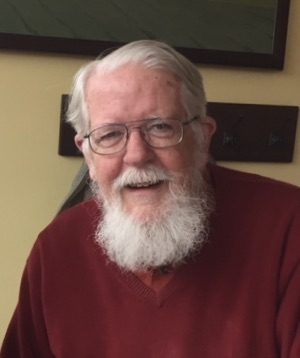
Richard Hopkins: I’m really glad that I’m retired. This is a very stressful time to be working in public health. It’s exciting, but it’s stressful. So I look at the state by state numbers. I look at some of the international members. I read some of the hundreds of publications that are coming out every day that are trying to enable us to understand the epidemic better.
As you’re reading through all this material, what has been sticking out to you lately? What information do you think is most relevant for people, given where we are in this stage of the epidemic?
Richard Hopkins: For individuals, the message hasn’t changed a bit. Stay home if you’re sick. Keep six feet away from people that are not part of your household. Wear a mask when you’re in a place where you can’t keep six feet of distance. Wash your hands when you come in the house. Those recommendations remain valid now. They were valid in February, and they’re still valid and they’re still important.
Are there things that have changed? Are there things that you see us now in somewhat of a different phase of the development of all this?
Richard Hopkins: It’s really frustrating — it’s not surprising, but it’s frustrating — to see how politicized the response to COVID-19 has become. There are extraordinarily capable public health workers who could explain what’s going on, and who could provide leadership, and who are really not being allowed to do so.
The White House went through a period of time when it was all over COVID-19 and having daily press conferences. And then they figured out they weren’t going to win, and so they stopped doing that. In both phases, both when they were having daily press conferences and then since then, they’ve really not allowed the public health experts to talk at a national level. And many governors have followed suit.
This is not new, it’s just higher stakes, higher profile. In the first weeks of the H1N1 influenza epidemic of the year 2009, I was interviewed by a radio reporter in the lobby of our building in Tallahassee. And he asked me, so how big is this epidemic going to be, how many people are going to get infected? And I said we could have as many as 5 million people get infected just here in Florida, out of 20 million.
He led with that, of course, in his story. And I wasn’t allowed to talk to the press for months after that.
Wow.
Richard Hopkins: Later, when we went back and ran the numbers at the end of the epidemic to estimate how many people have been infected in Florida, there had in fact been just about 5 million infected people. Maybe I wasn’t very smart about how I dealt with that interview, but I was not allowed to talk to the press. And that kind of suppression of expertise has been going on, not just at the federal level, but in a lot of state health departments as well.
I hear what you’re saying about it being unfortunate how politicized this has become. At the same time, I feel like given the economic stakes involved in doing these types of shutdown measures, whether there’s any other way it could have gone? Like when these things are in conflict, having businesses open versus the public health needs here, how could this have gone differently in your eyes?
Richard Hopkins: Public health is always political. And as it should be, you know. You have a structure of scientists and physicians and public health experts that are running this public health agency. And they’re human, they have perspectives, they have opinions. They try to be led by the data. And then you have typically a boss person — you know, a director of the state health department who was appointed by the governor. The director of the state health department takes what the experts tell her or him, and then integrates that with other considerations. And you try to make a decision within the political system about how to set priorities.
I don’t envy governors for the position that they’ve been in these last four or five months. Should you close schools? There are lots of implications to closing schools. Should you not close schools? How much do you close down your economy? What are the consequences and how do we deal with this?
This is not new. At a much smaller level, most public health decisions have economic impacts. So if you say, okay, we’re going to inspect restaurants four times a year and we’re going to fail some of them. And we’re going to post the scores on the doors of the restaurants.
Right, pretty standard stuff.
Richard Hopkins: Enlightened restaurant owners of course want this to happen, but there’s a cost to the regulation, the short term cost. Some people think the regulations are burdensome, some think they’re unnecessary. Some people think that their insurance companies already require them to keep clean kitchens, and the extra requirements imposed by the state are unnecessary and are just bureaucratic.
I mean, every kind of public health decision that you might want to make has economic implications and social implications. And it is proper that those other factors be considered. What’s not proper is if the people who understand the data and understand the health implications of these decisions don’t even get to the table — if they don’t even get listened to, they don’t even get a chance to present what they know and their predictions as to what will happen if various decisions are made. That’s what’s not acceptable.
You’re saying those same tensions with Covid are playing out on a much broader scale, with much higher stakes.
Richard Hopkins: Yeah. I was never in a position during my working career to make a recommendation that was as drastic as these shutdowns have been during March and April and May. I would not have wanted, as a public health official, to be making those decisions all by myself. I would want them to be made by the governor and with the advice of the Legislature. The technical part that I’m the expert on is not the only consideration that the decision makers should have. That’s proper.
Right. And it seems like in some ways, the decision about when to lift those measures and when to begin reopening things is equally, if not more, challenging.
Richard Hopkins: Well, when you see governors who are opening up their states at the same time their case rates are rising rather than falling, that seems rather backwards. The time to be opening up your state, as was done in Vermont, is at a time when the epidemic is quiescent. When it’s clearly going away and perhaps gone away, then you can start to be able to back off from your restrictions. You can do it carefully.
Instead, we have states — Florida was one of them — where they said, oh, we’re going to stop our lockdown. We’re going to open up the state at a time when the daily number of cases was in a rapid upswing already, before they even took their liberalizing measures. I don’t see how they can justify that.
You think our timing in Vermont was good.
Richard Hopkins: Yeah. Vermont is not an island. I don’t mean that just metaphorically — I mean, New Zealand was able to eradicate Covid-19 essentially, and Vermont in some ways is kind of like New Zealand. It’s got mountains and a fairly homogeneous population. If Vermont were an island, we could have eradicated Covid-19 totally.
As it is, we are depending on the fact that the states around us, New York and Massachusetts and — New Jersey, New Jersey is not right next to us, but — that the States that had really intense epidemics have got them under control. And so the chances of people importing the virus into our state are much reduced by the fact that our neighbors have also brought their epidemics under control. If we were sitting right next to Texas or Arizona, it would be much harder to prevent importation.
One thing I find interesting about the moment that we’re in is that here in Vermont, we’re consistently hearing from our public health officials and from our governor that the numbers are about where we want them to be, that we can feel relatively safe with these reopening measures going through. At the same time, like you’ve said, in all these other states, cases have been surging. When we look at the national numbers, they’re still quite high.
There is just somewhat of an unsettling feeling — even though we know that within the boundaries of our state, things are under some degree of control here — to constantly be hearing the national messaging that things are trending in the other direction always feels a bit unusual. What do you make of that?
Richard Hopkins: I really don’t know. In Florida and Texas and Arizona and Oklahoma, Georgia, things are going to get worse over the next month or so before they get better. Even if they were to totally lock down those dates tomorrow, which they’re not going to do — but even if they did, it would take two, three weeks before the impact of that would be felt in reduced case rates. And I don’t see any reason why the case rates shouldn’t keep going up in those places over the next month or so.
Individuals may well act in those states, even if their governors don’t tell them to. Human behavior is going to change. There is going to be less face to face contact in Texas, even if government doesn’t act.
If you’re looking out over four to six months, I think we’re going to have ups and downs and ups and downs and ups and downs as those people’s behavior changes. And not all those behavior changes are going to be driven by government action. A lot of it’s going to be driven by people just wanting to be safe again.
I guess you can’t see this in the recording, but the hand motion that you made that was sort of a series of ripples, I wanted to ask you about. Because part of the reason that we decided right now to take a step back and look at the big picture view here is because there’s been a lot of chatter about the possibility of a “second wave” — even in some of the planning that’s being done at the state level, for things like schools opening in the fall and things like that, sometimes that phrase gets thrown around. And I’m curious, one, how you would define that. And two, how you think that does or does not apply with this, or whether we even know.
Richard Hopkins: I don’t think the concept of wave is a useful concept here. It was developed in the context of influenza, and influenza goes away in the summer and it comes back in the fall. And in the 1918, 1920 pandemic, it was intense disease in the winter, and then it went away in the summer, mostly, and then it came back the following winter and then it went away in the summer and then it came back the following winter. It really wasn’t over until 1920 or 21, sort of a series of ripples.
Influenza acts in waves. This disease does not seem to act in waves. Even back in the spring, back in February and March, it was clear that the coronavirus was spreading vigorously in Australia, which was in the summer, and in South Africa and in Argentina. In tropical areas in South America and Brazil and Peru and Bolivia, Colombia, it was spreading very, very vigorously under hot, humid, tropical conditions.
There was no reason to think it would go away in the summer. And in fact, it’s not going away in the summer. So this concept of sort of a seasonal wave for the coronavirus — it’s just not a useful concept.
What we do have is, we have a series of regional epidemics that are not very tightly articulated with each other. We had a Northeastern urban epidemic involving New York and in suburbs in Massachusetts and New Jersey and Pennsylvania. You had very intense disease in February and March, April into May. And it’s due to concerted social action those epidemics are brought under control. And at the moment, at least New York and Massachusetts and Connecticut and Vermont are enjoying very low levels of disease, while other parts of the country are experiencing very, very intense epidemics. And it’s going to get worse.
In some places — like, you can look at Virginia or look at Minnesota — there was a peak in April and then it never really went away. It stayed quite active for weeks at a time, and then it started going up again. Those are different patterns, those are different outbreaks in different parts of the country. And trying to somehow shoehorn them into a wave concept doesn’t help any, I don’t think.
Why do you think we have this tendency to look at things on a national level? I feel like so often we are seeing: “Here’s what the case numbers are doing nationally, and here’s what those trends look like,” when you’re saying that information doesn’t really provide us with much useful data at all.
Richard Hopkins: It’s like Tip O’Neill used to say, “All politics is local.” All public health is local. You know what I mean? The actual transmission events happen in people’s homes and in people’s workplaces and people’s churches and so on, right where they are. It’s all local. And then you aggregate up all this local stuff and you get a regional picture, and a national picture.
What’s been going on for the last six weeks or so, if you look at the national numbers, is that the case counts in the urban Northeast have been going down and down and down and down, while case counts in the Southwest are going up and up and up and up. And the net was a pretty much a flat national picture. But that national plateau was made up of the sum of something going up very fast and something going down very fast, that now what’s happened is that the places that in the urban Northeast that have gotten down close to zero, they don’t have any further to go. So the rapid upswing in the South and the Southwest is not being balanced by a decrease elsewhere in the country anymore. What we’re seeing at the national level is the effect of that big crescent of states across the South and Southwest that are having big outbreaks.
And like you said, those regional outbreaks are somewhat separate from each other. We shouldn’t be sitting here in Vermont being too worried about what’s happening in Georgia.
Richard Hopkins: Yeah. And you know, each state, each region is a little different. Mississippi and Louisiana are not experiencing the same intense outbreaks that Arkansas and Alabama and Georgia and Oklahoma and Texas are. I don’t know why. If you go across from South Carolina and Georgia, Florida, Alabama, they’ve all been very hot. And then Arkansas and Oklahoma and Texas have been very hot, and then New Mexico, not. And then Arizona, Nevada and Southern California have been very hot. And that’s bleeding over into Oregon and Idaho and Utah, Montana.
Even if you sort of step back a little bit, it’s really interesting to watch. If you’re a public health official, it’s a lot more than interesting. It’s very intense.
I can imagine. I’m going to come back to this idea that you talked about these “cycles of behavior” affecting the numbers in a certain way. Based on what you’ve seen in terms of the response here in Vermont, is something that you’re expecting we might see down the line somewhat of a resurgence, even if it’s a mild one, based on those kinds of cyclical, behavioral effects?
Richard Hopkins: Well, I strongly suspect that people in Arizona are behaving differently now than they were three weeks ago. Because they’re looking around this and saying, “Oh my God, look how intense this outbreak is. Maybe I better actually wear my mask. And maybe I better stay out of that bar. Maybe I should stay six feet away from my friends when I see them, not give them a big hug.”
The recommendations haven’t changed any. The legal environment probably hasn’t changed any. But I’m sure that people are looking around at their environment saying, you know, I better be careful and my kids had better be careful, and the people around me need to be careful. Those messages haven’t changed any, but people’s compliance with them is likely to change.
It seemed like compliance levels here in Vermont were pretty high when those measures were first rolled out. Now, we are in the midst of these reopening steps. I’m curious, what might we see more locally in the next few months? What trends might we be looking for?
Richard Hopkins: As a friend of mine used to say, if I could answer a question like that, I could get rich on orange juice futures. A friend of ours said the other day that the reason why we’ve gotten this virus under control in Vermont is that Vermonters are very good at social isolation, and they were good at it even before the epidemic. That’s facetious, but may be some truth in that.
I have to imagine the overall physical isolation plays a role, too. Just looking at our reader feedback, comments and questions that we get, a concern though is that some of that goes out the window when you get into a tourist season like this, and there’s a lot of fear and concern about that. Talking to you about all this, it sounds like you don’t seem too worried about what’s ahead. You seem pretty confident in how Vermont’s been treating this.
Richard Hopkins: I think Vermont has been doing an exemplary job, and I think at the moment we’re being protected by the fact that the states around us are doing well. It would be really hard for Vermont to do this well if New York were back to where it was in April, Massachusetts.
I have to say, talking to you about all this has been somewhat comforting — to hear some confidence that at least regionally, it seems like we are in a pretty controlled place. I think a lot of people are glad to hear that.
Richard Hopkins: Well, to be anxious and to be concerned is an extremely rational response to the current situation. If you’re not anxious, there’s probably something wrong. It’s like the old saying that anybody who says they understand the current situation is misinformed. If it doesn’t make you anxious, you’re probably misinformed, because it is anxiety-provoking.
Recently, I’ve been pretty relaxed because Vermont is doing so well in this epidemic. And I’m not so worried that I’m going to end up on a ventilator for three weeks, and my family not being able to visit me, and then maybe die — but in any case, die alone in the hospital without my family being able to be there. That’s a very scary prospect. And currently it’s not keeping me awake at night. But if Middlebury was having five cases a day — which we’re not, but if we were — I would be pretty anxious.
Either way, Richard, I really appreciate you taking the time to talk to me about all this.
Richard Hopkins: Nice talking to you, Mike.
Correction: An earlier version of this transcript incorrectly suggested that travelers from Texas or Arizona would not have to quarantine in Vermont. Travelers from those states are subject to quarantine requirements.

